
A deep coal mine used to be next to this concrete slab in White County, which served as the elevator base for miners to descend into the mine
The eastern part of White County was dominated by coal mining from about 1870 until 1950.
The company that owned most of the coal mines was originally known as the Bon Air Coal Company, but after 1926 it was called the Tennessee Products Company. Its main two investors were “Big Bill” Cummins of Nashville and William Wrigley of Chicago.
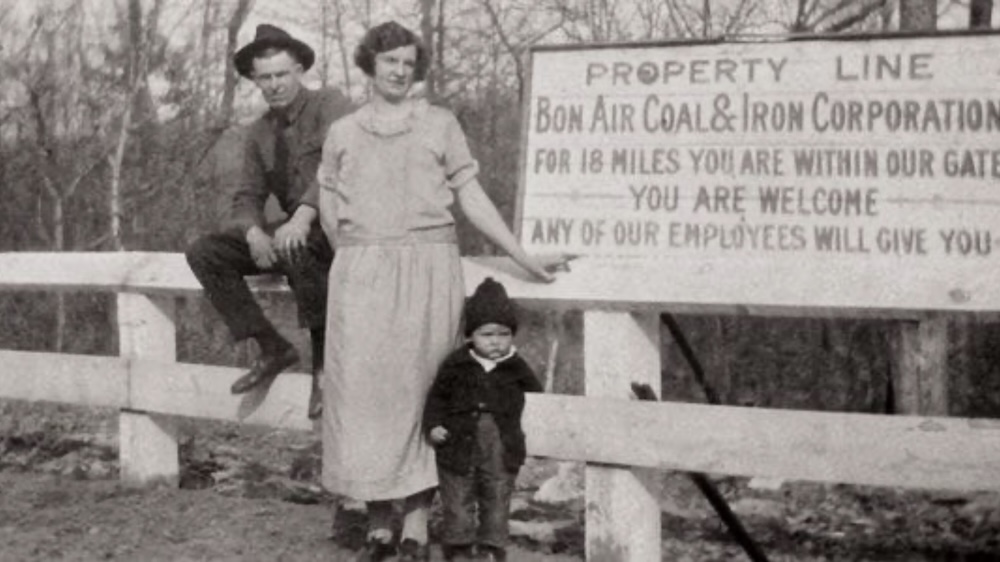
Bon Air Mountain Historical Society photo
Wrigley, who is better known for chewing gum and the Chicago Cubs, at one point invested more than a million dollars in the Tennessee Products Company. At its peak, the company completely owned at least 12 Tennessee communities. Those were:

A history fair at BonDeCroft Elementary School in White County
Bon Air, Ravenscroft, DeRossett, Eastland and Clifty – in White County
Wrigley, Lyles, Goodrich and Aetna — in Hickman County
Allens Creek and Ruppertown — in Lewis County
Collinwood, in Wayne County
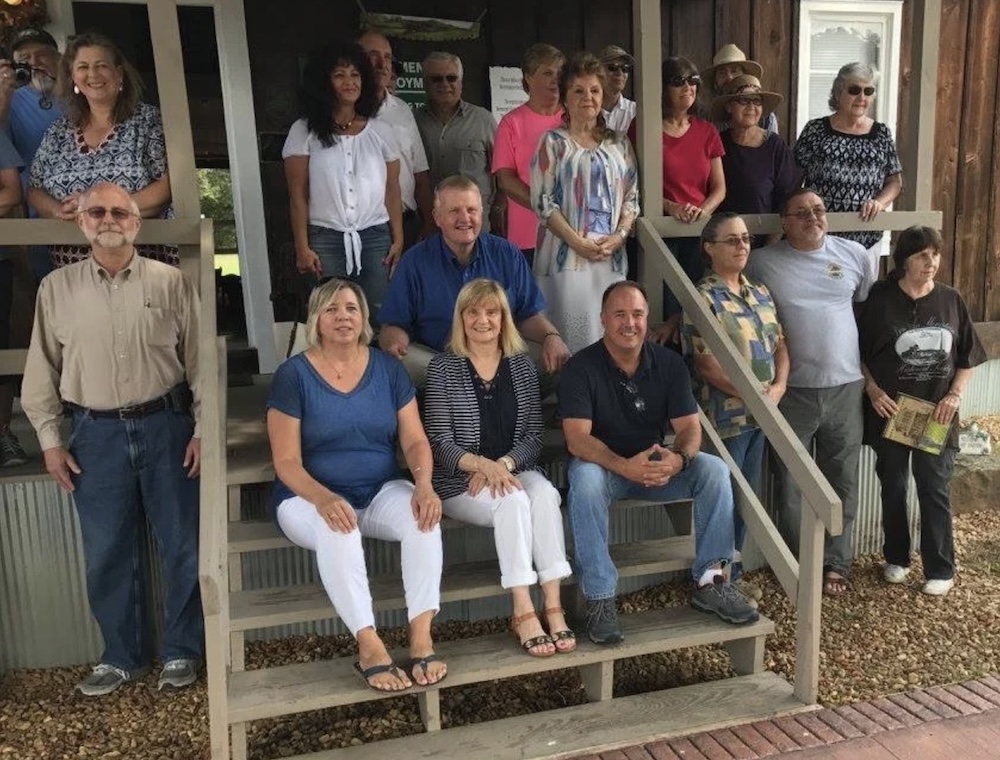
The good folks at the Bon Air Mountain Historical Society, sitting on the steps of their museum
All of this probably would have been forgotten were it not for a group of educators and history buffs in White County. In 1994 they organized a coal mining reunion and history festival at BonDeCroft Elementary School. The event became an annual thing, and led to field trips with students from White County Schools.
Today the Bon Air Mountain Historical Society has a museum with this website.
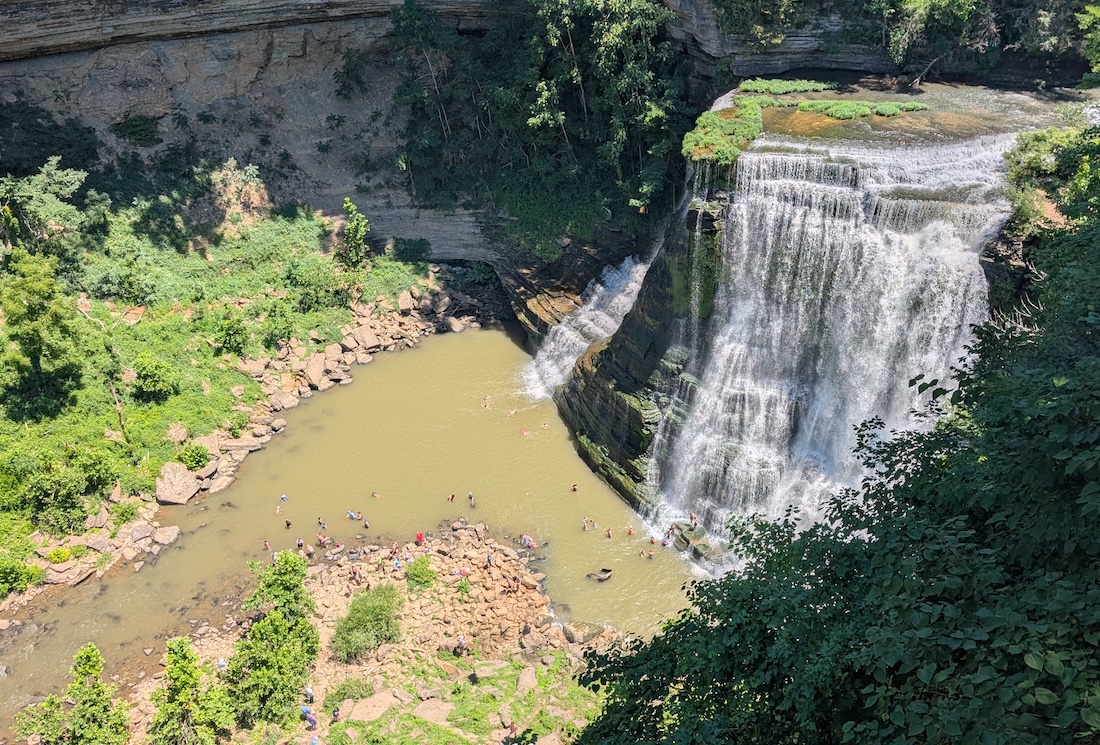
The biggest of the waterfalls at Burgess Falls State Park
Today, White County is better known for its waterfalls. At the northern edge of the county is Burgess Falls State Park, the site of one of Tennessee’s first hydroelectric dams (not to mention an incredible series of waterfalls.)
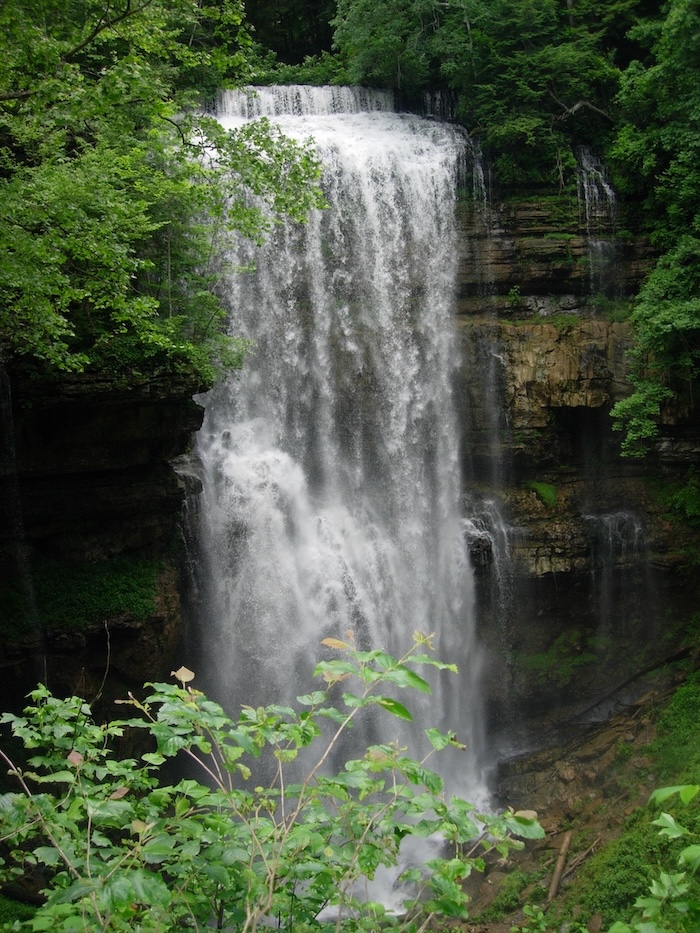
Virgin Falls (TN State Park photo)
On the southeastern edge of White County, you will find the brand new Scotts Gulf Wilderness State Park — home to about half a dozen waterfalls. The best know of these in Virgin Falls, pictured on the left.

Twin Falls
On the southwestern edge of White County, you will find yet another state park with a breathtaking waterfall.
The state park is Rock Island State Park. The waterfall is called Twin Falls; its comes gushing out of a cliff in Warren County and tumbles into the waters of Caney Fork River, along the boundary between White and Warren counties.
The strange thing about Twin Falls is that it was made by people. The falls didn’t used to exist, but water began pouring out of the side of the mountain shortly after the Tennessee Electric Power Co. built Great Falls Dam in 1916.
The dam, you see, caused the water level of the Collins River to rise several feet. When it did, water from the river began finding its way through the mountain that separated it from the Caney Fork River.

The White County Courthouse in Sparta is kind of, well, white — even at night!

