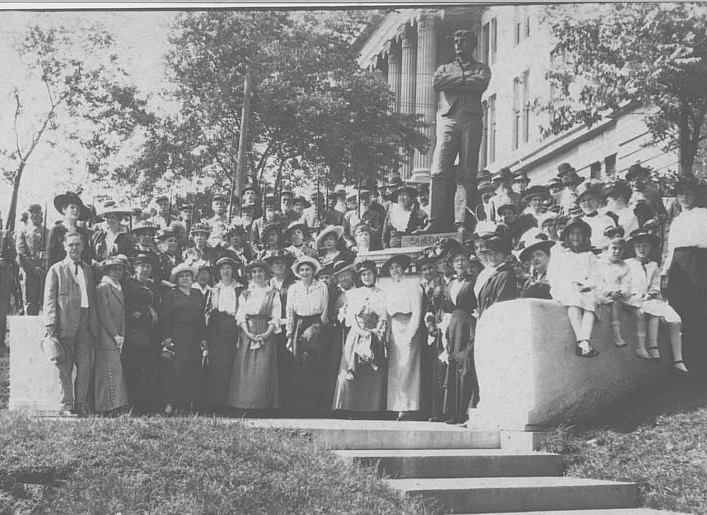
The dedication of the Sam Davis statue at the Tennessee State Capitol in 1915
PHOTO: TN State Library and Archives
Here one of the most famous executions in American history occurred.
The young man’s name was Sam Davis, and he is known as the “Boy Hero of the Confederacy.” He was born in Rutherford County, and went to military school in Nashville. When the Civil War broke out, he enlisted with the Confederacy, eventually becoming a spy for the army.
On November 20, 1863, Davis was captured by the Union Army in Giles County, carrying with him information about troop movements. Union General Grenville Dodge offered Davis his freedom if he would tell him where he had gotten the papers he was carrying. Davis refused, and he was tried in a military court.
Davis was found guilty of spying and sentenced to be killed by hanging. Before he was executed, General Dodge again offered to spare his life if he would reveal his compatriots. “I would rather die a thousand deaths before I betray a friend,” was Davis’s response, and thus his last words. Today there is a statue of Sam Davis on the grounds of the Tennessee State Capitol and a monument to him next to the Giles County Courthouse.
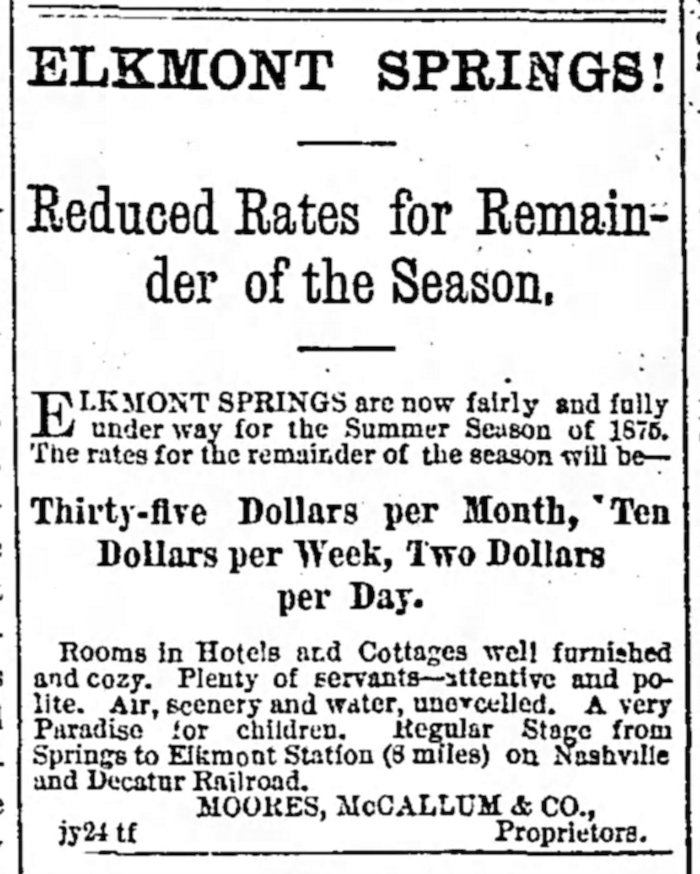
An ad in the July 24, 1875, Republican Banner newspaper
Another story: Most people today have forgotten all about them, but there used to be small, charming hotels all over Tennessee that were located near natural springs.
These small resort hotels were very popular between about 1840 and 1920 — before air conditioning, modern water treatment plants and private automobiles. Families that could afford to do so would vacation at these hotels for weeks at a time, often in attempt to escape the oppressive heat of the summer.
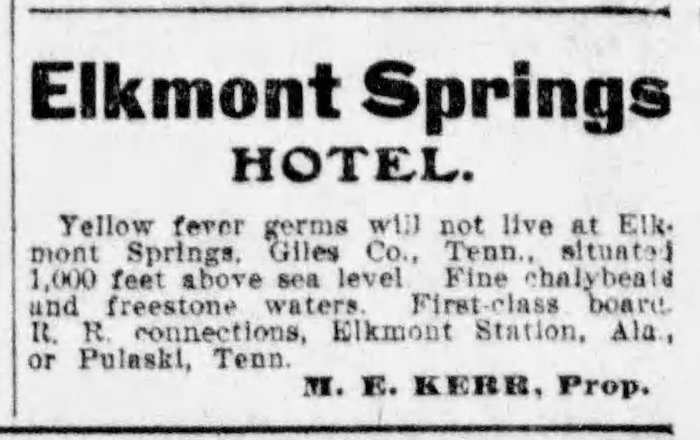
Memphis Commercial Appeal; Aug. 17, 1905
One of the least remembered of these places was the Elkmont Springs Hotel in Giles County. As early as 1858, this hotel had more than 100 rooms, a dance pavilion and a bowling alley. It declined, thrived, declined again, thrived again, and finally closed for good in 1928.
A tornado destroyed the hotel building in 1933, and its former site is now a Presbyterian camp.
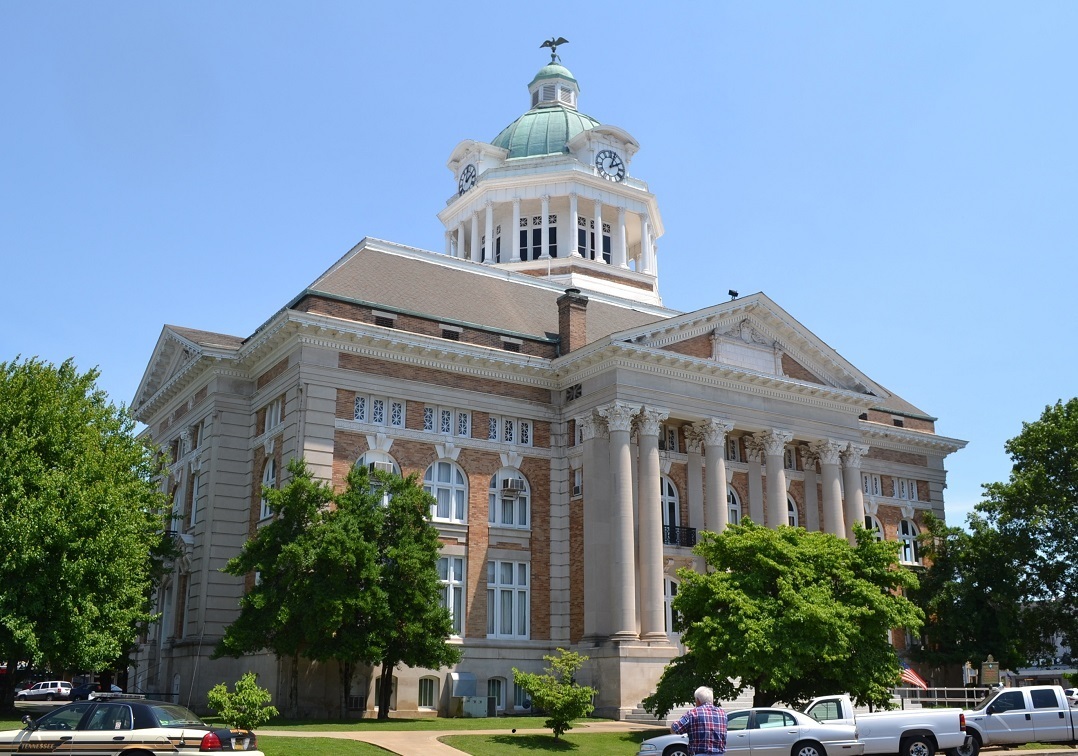
And here is the Giles County Courthouse.