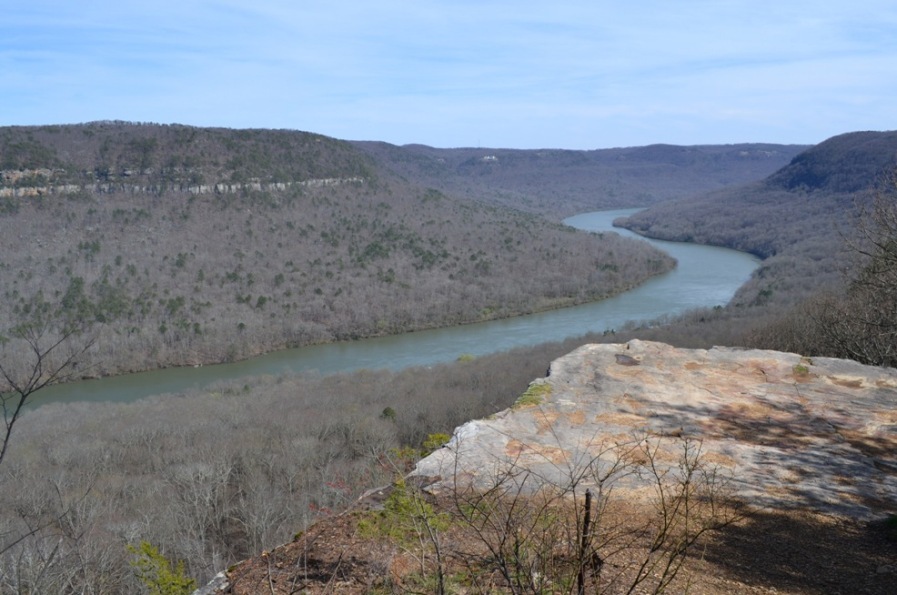
The view from Snoopers Rock, in Marion County
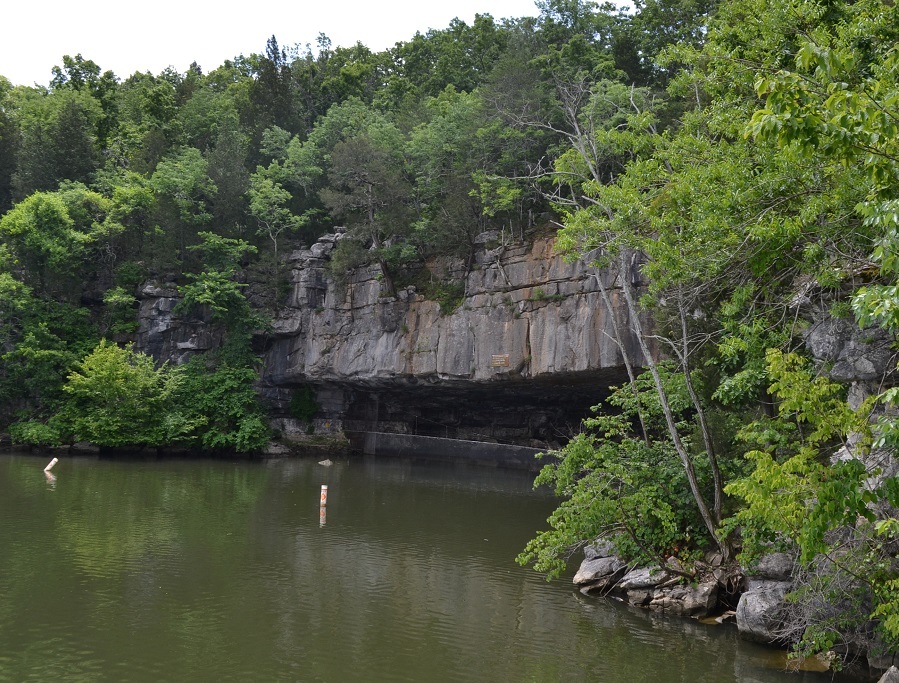
Nickajack Cave
Marion County was the site of the bloodiest engagement between settlers and Native Americans in Tennessee history.
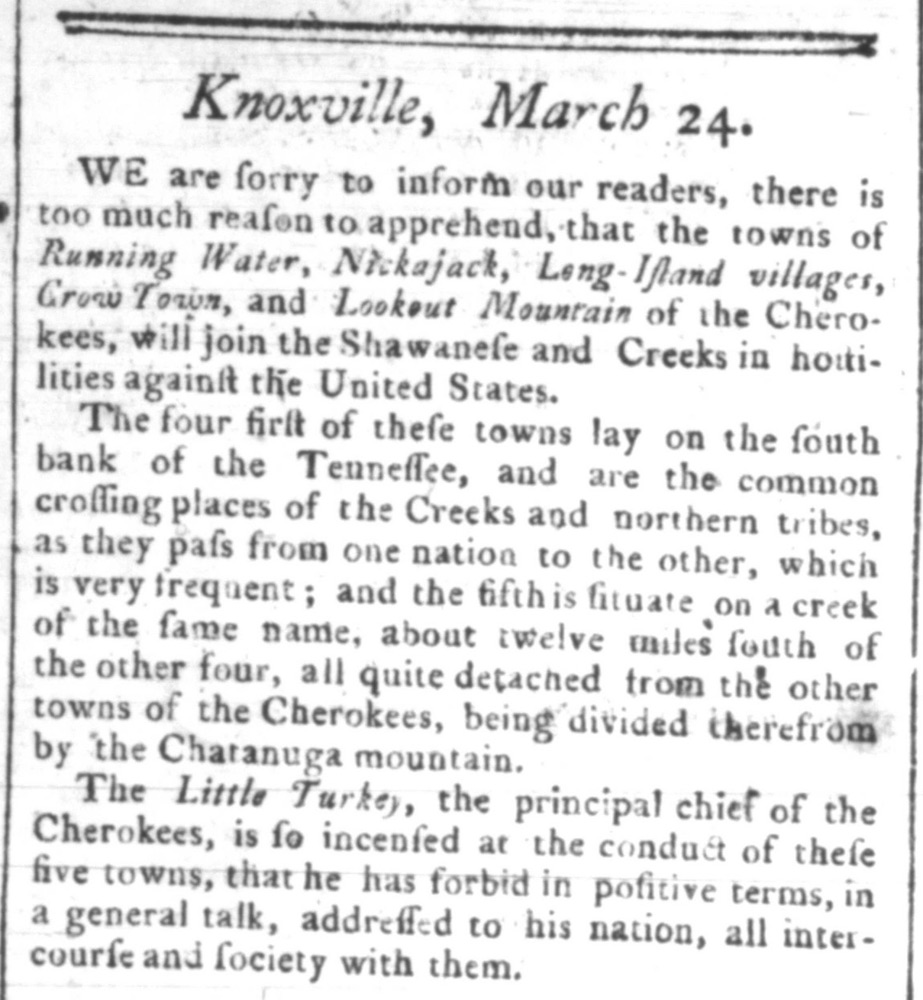
From 1779 until 1794, settlers in Middle and East Tennessee were terrorized by a warlike tribe of the Cherokee known as the Chickamaugans. Led by a warrior called Dragging Canoe, the Chickamaugans lived in villages along the bank of the Tennessee River starting at present-day Chattanooga and continuing the next 30 miles downstream, which is where the river is surrounded by mountains.
The most notorious of these villages was Nickajack, which was located between a big cave and the Tennessee River.
In September 1794, an army of settlers from Middle and East Tennessee and Kentucky attacked and destroyed Nickajack and another village called Running Water, which was just upstream from there.
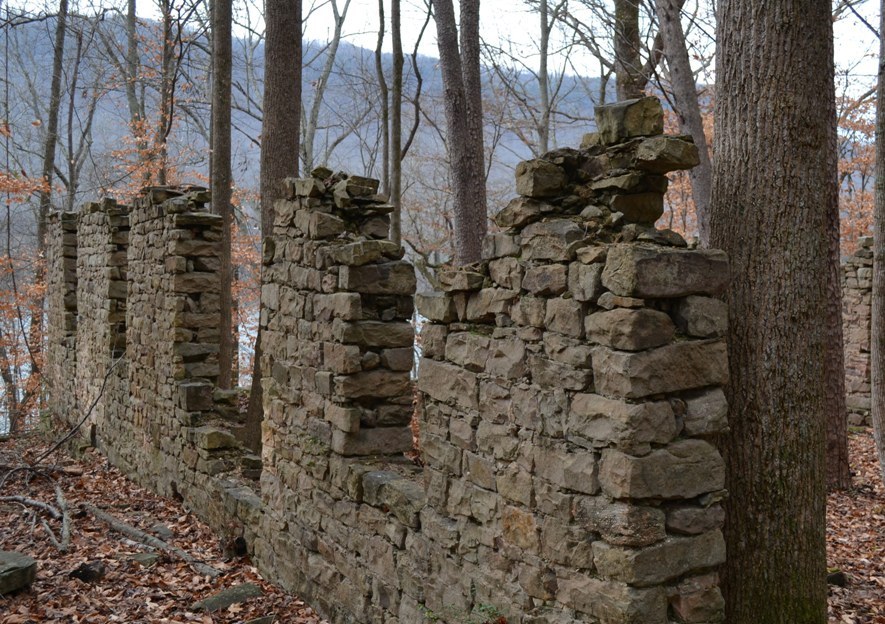
What’s left of Shake-Rag
Today both of these villages are underwater, flooded forever by Nickajack Dam. Interstate 24 passes right over the former site of Running Water. However, you can still see Nickajack Cave in Marion County.
Another fascinating Marion County community of yesteryear was Shake-Rag. It was a mining town on the Tennessee River, owned by the Durham Coal and Iron Company. For many years, Shake-Rag was an active town with miners, homes, schools and churches, but the mine was eventually shut down, and the town abandoned.
If you drive along the Tennessee River in Marion County you can still see the stone foundations in what was once the town of Shake-Rag.
Another story:
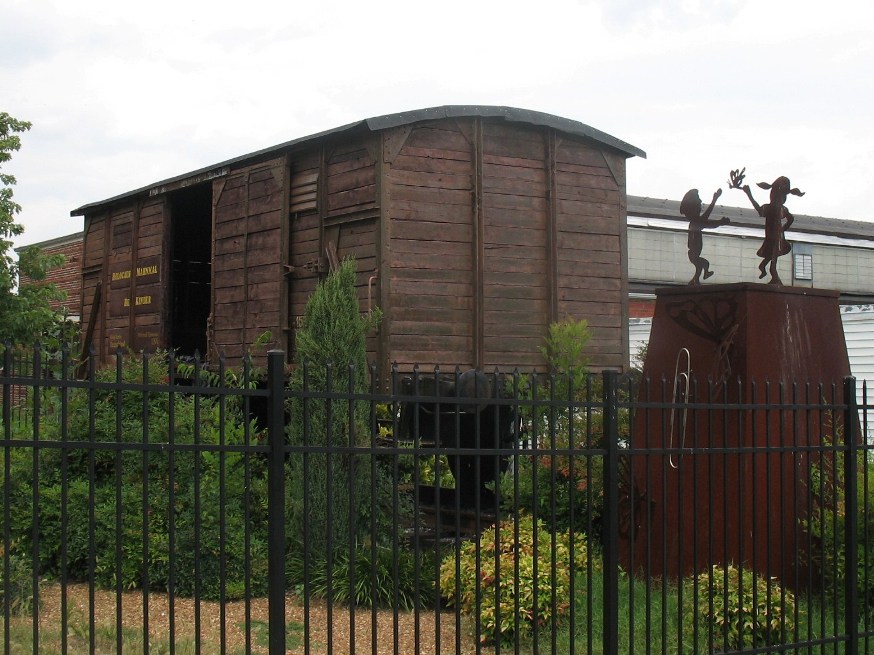
The railroad boxcar at Whitwell Middle School that was
used during the Holocaust
Do you know what the Holocaust was? In the 1930s and early 1940s, a political party called the Nazis ruled Germany. During World War II, the Germans tried to exterminate — or kill — every single Jewish person in Europe. This terrible event is called the Holocaust, and it is believed that at least 6 million Jews died during the Holocaust.
A few years ago, teachers at the Whitwell Middle School in Marion County were looking for a way to help students understand the magnitude of this event. They started trying to collect 6 million paper clips from around the world to demonstrate this. Next thing you know, they had drawn national attention to what they were doing, and they were getting mail from all over the world.
Today there is a small museum at Whitwell Middle School of the Holocaust. It is housed in a German cattle car that was used to transport Jews to concentration camps during World War II.
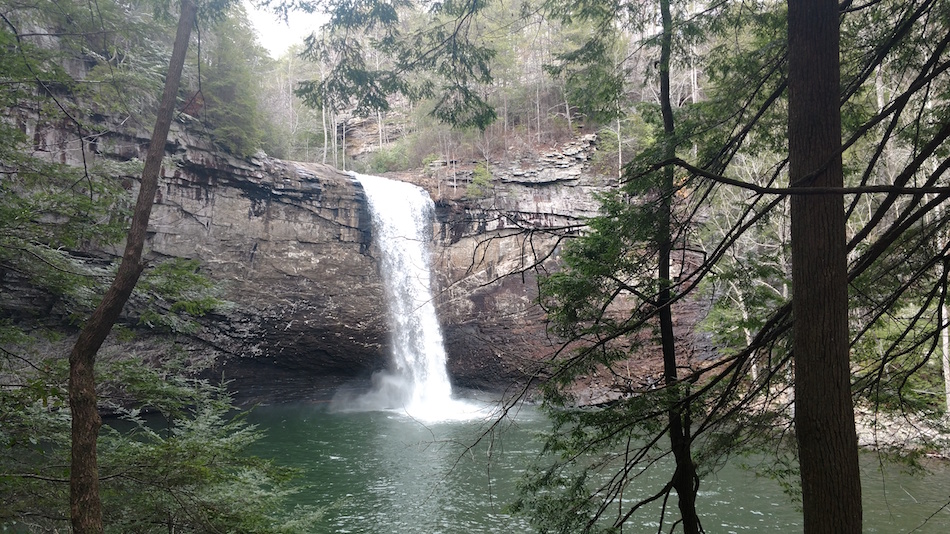
Foster Falls
Finally, Marion County contains one of the most underpublicized scenic places in Tennessee. Within the Prentice Cooper State Forest you can find waterfalls, fascinating rock formations (including a giant rock shaped like a mushroom), and several of the most spectacular overlooks in Tennessee (such as Snoopers Rock, shown above).
At the very northern edge of Marion County, just south of Tracy City (which is actually in Grundy County) you will also find Foster Falls–one of the most breathtaking waterfalls in Tennessee.