Tuesday October 20, 4-6 pm Central:
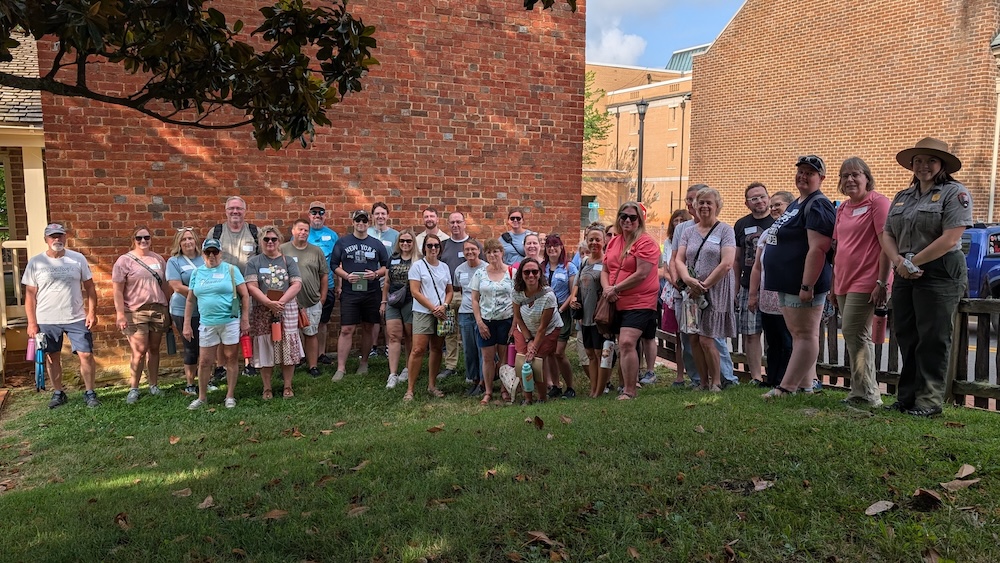
Ashley Burns (far right) at the July 2025 Tennessee History for Kids Summer Road Show in Greeneville.
Andrew Johnson AND How Tennessee Dealt with Abolitionists
First Hour: When Abraham Lincoln was assassinated, the presidency passed to a former tailor from Greeneville, Tennessee named Andrew Johnson. ASHLEY BURNS, ranger at Andrew Johnson National Historic Site, will give a fascinating power point presentation about President Johnson’ background as small business owner, then local political leader, then statewide political leader, then national political leader, then president, then ex-president.
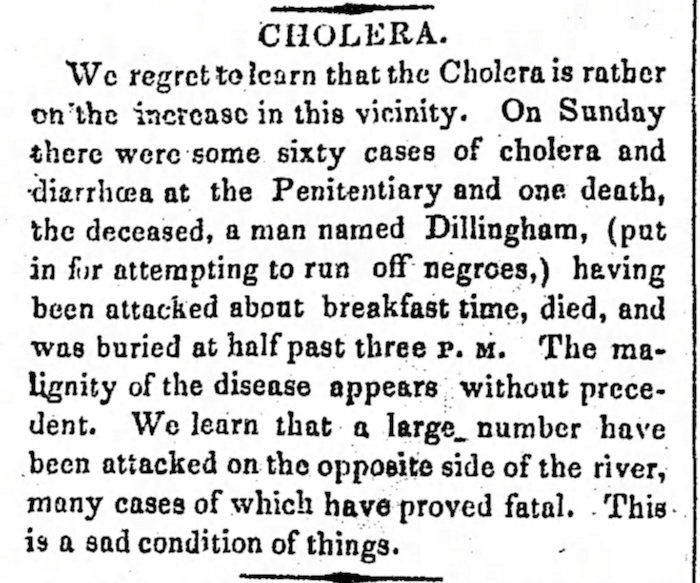
As the Nashville Banner reported on July 2, 1850, Dillingham died in prison while being punished for trying to help slaves escape.
Second Hour: Tennessee likes to think of itself as a state that bred abolitionists and a state that didn’t have harsh slave laws like the rest of the South. But the truth of the matter is that, after 1830, Tennessee did not tolerate people who were opposed to slavery and dealt harshly with people who violated Tennessee’s anti-abolitionist laws. “History Bill” will tell the story of the bookseller who was arrested and tried in Maury County for the simple act of selling a sketch, and the story of Richard Dillingham, who was thrown in prison for trying to help slaves escape, where he died of cholera.
Click here to register for Andrew Johnson AND How Tennessee Dealt With Abolitionists.
WEDNESDAY October 28, 4-6 pm Central:
The Cumberland Gap AND the Fascinating World of Tennessee Geography
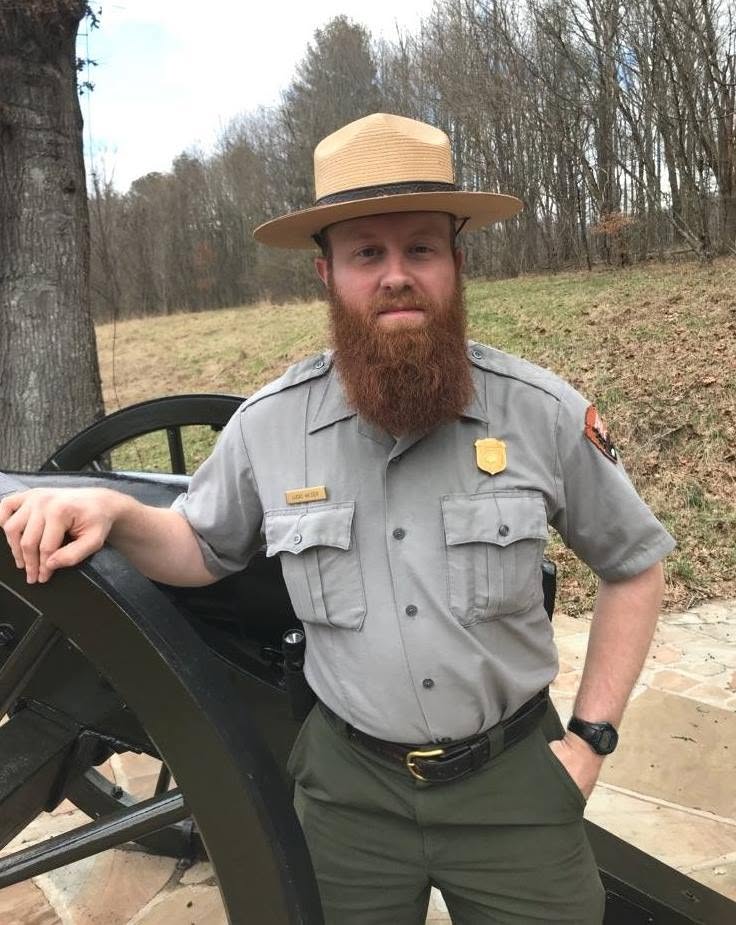
Lucas WIlder
First Hour: LUCAS WILDER, ranger at Cumberland Gap National Historic Park, presents. For centuries, the Cumberland Gap has served as a natural gateway through the Appalachian Mountains, shaping the movement of people, cultures, armies, and ideas across the American landscape. This program explores the Gap’s importance from Indigenous history and early European exploration through westward migration, the Civil War, and the development of the modern United States. Teachers will discover how the Cumberland Gap connects local and regional history to larger themes in the American story, including migration, conflict, expansion, and national development. The program will also provide educators with historical context and stories they can use to help students understand why this seemingly small passage through the mountains played such an important role in American history.
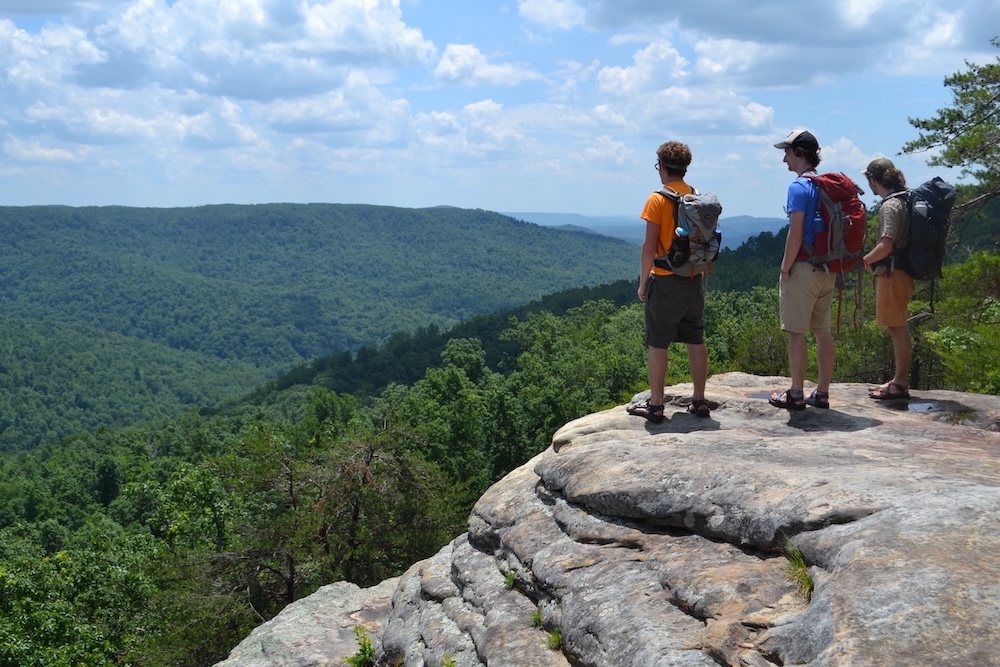
Bee Rock, in Putnam County, is one of many places in Tennessee where you can look down on the Highland Rim.
Second Hour: K through 12 teachers in grades 1, 2, 3, 5, 8 and 11 are all tasked with teaching things about Tennessee geography. However, do you know why the northern border of Tennessee is NOT a straight line? Do you know that Tennessee has more caves than any other state? Do you know that parts of South Carolina are west of parts of Tennessee? Do you know that the western boundary of Tennessee is NOT the Mississippi River? And do you know why it was, in the era before air conditioning, that well-to-do people in Nashville vacationed in places like Grundy, White and Putnam Counties? “History Bill” does the presentation.
Click here to register for the October 28 inservice on “the Cumberland Gap AND the Fascinating World of Tennessee Geography.”
PLEASE NOTE THAT THE OCTOBER 28 INSERVICE WAS PREVIOUSLY SCHEDULED FOR OCTOBER 27!
Wednesday November 4, 4-6 pm Central:

Nat Taylor
Tennessee’s Reconstruction Era AND the History of Tennessee’s Governors
First Hour: NAT TAYLOR, former director of Franklin’s Moore-Morris History and Culture Center, knows a LOT about Tennessee’s Reconstruction Era. Taylor will tell us about why President Andrew Johnson vetoed the bill that created Freedmen’s Bureau, and how Congress passed it anyway, and how much good the Freedmen’s Bureau eventually did. He will tell us how Tennessee dealt with the three post-Civil War constitutional amendments. He will tell us about how Tennessee Governor William “Parson” Brownlow extended to right to vote to former slaves, and how that led to the creation of a terrorist organization called the Ku Klux Klan, and how Brownlow tried, but failed, to deal with it.
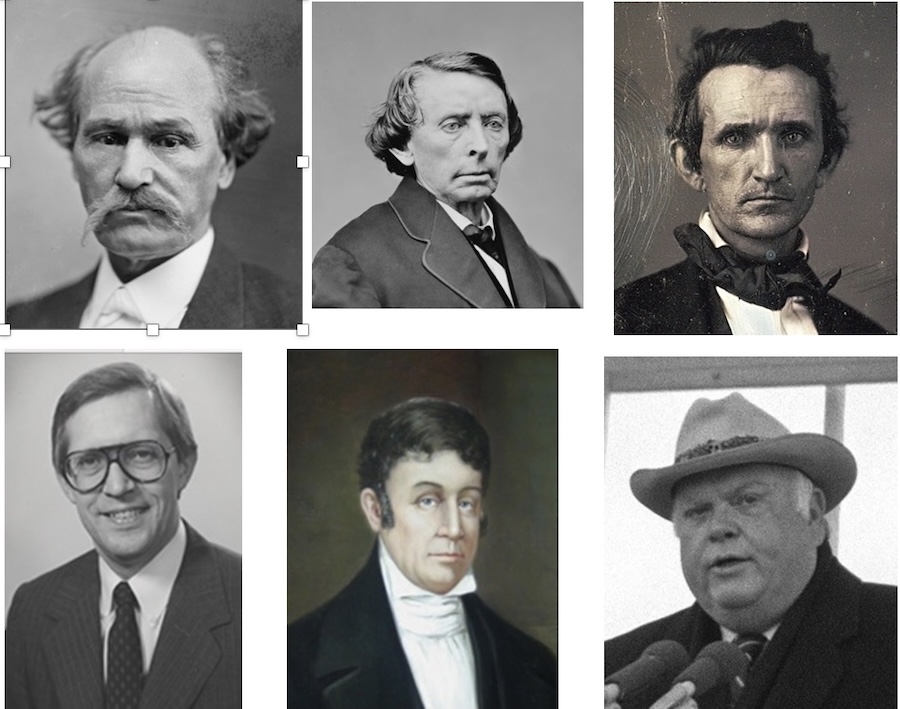
It’s safe to say that Aaron Brown (top right) was Tennessee’s handsomest governor of all time.
Second Hour: On the day after Tennessee elects a new governor, “History Bill” runs through an interesting power point about the governors of Tennessee. He will tell you why Tennessee’s first governor, John Sevier, HATED Tennessee’s second governor, Archibald Roane. He’ll tell you about the governor who has a county named for him, but could not get the General Assembly to pass a bill authorizing his divorce. He’ll tell you about how “Lean Jimmy” Jones defeated a man who later became the 11th president of the United States. He’ll tell you about the governor, who in 1921, said that if all able-bodied men volunteered for a day of work, Tennessee wouldn’t have to raise taxes to make roads!
Click here to register for the Wednesday, November 11, inservice on “Tennessee’s Reconstruction Era AND the History of Tennessee Governors.”
Wednesday, November 11, 4-6 pm Central:
The Kings Mountain Campaign AND the Greatest Teaching Maps in Tennessee History
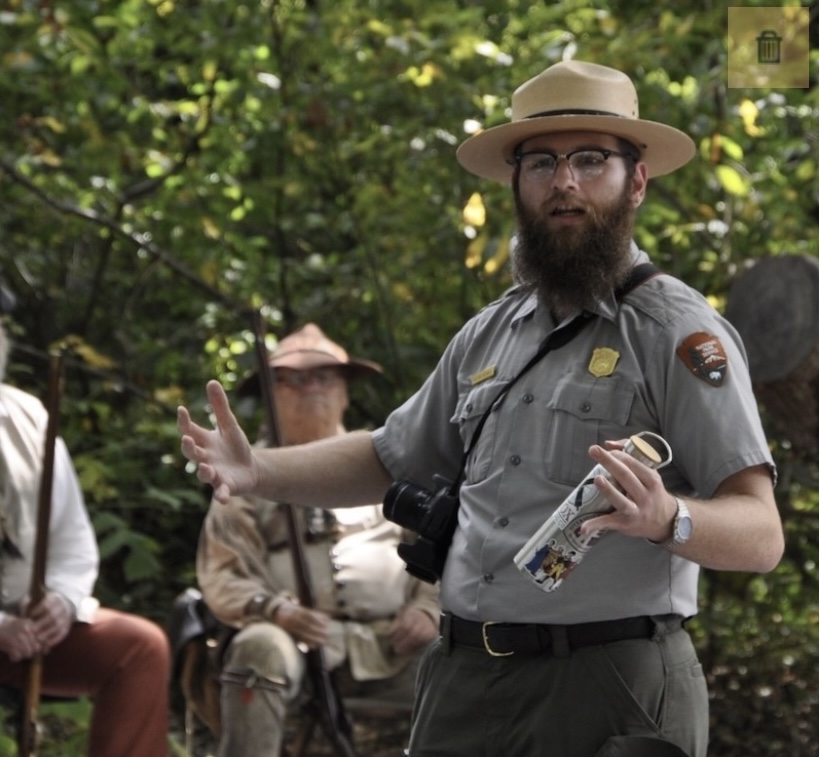
William Caldwell
First Hour: WILLIAM CALDWELL, Ranger at the Overmountain Victory National Historic Trail, will tell us about the long, memorable journey of the Overmountain Men to the Battle of Kings Mountain, and why and how we still honor what they did. He will also give a short rundown of what happened at the battle, and why some historians call it the turning point of the Revolutionary War.
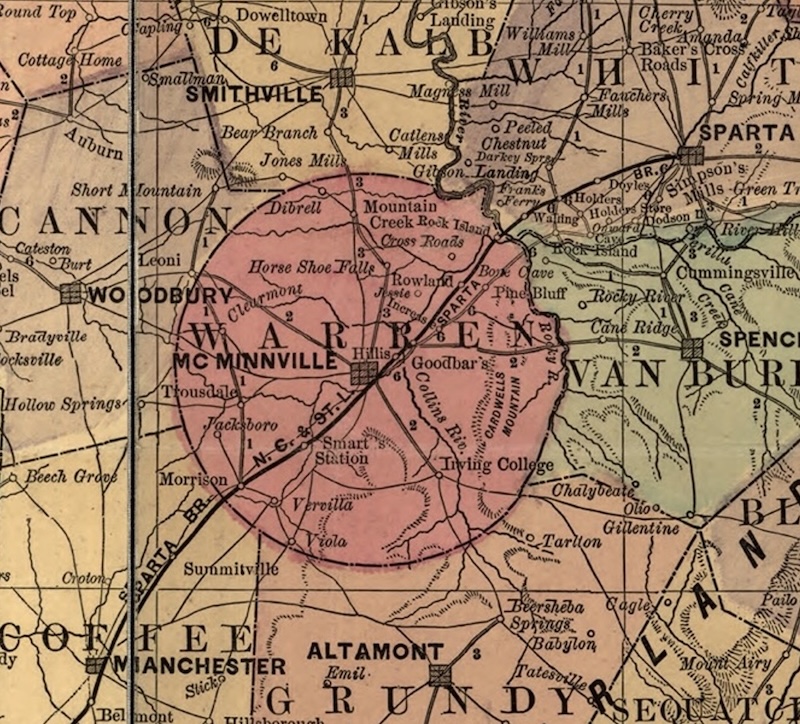
You can see on the 1888 Rand McNally map of Tennessee why Warren County was known as the “Round County.”
Second Hour: “History Bill” explains the 6 most fascinating maps in Tennessee history and shows teachers how to download them and use them in class. The list includes, among others, Daniel Smith’s 1796 map; Matthew Rhea 1832 map; Rand McNally’s 1888 map; and railroad maps that tell a lot about how Tennessee and its people have changed!
Click here to register for the Wednesday, November 11, inservice about “The Kings Mountain Campaign and the Greatest Teaching Maps in Tennessee History.”
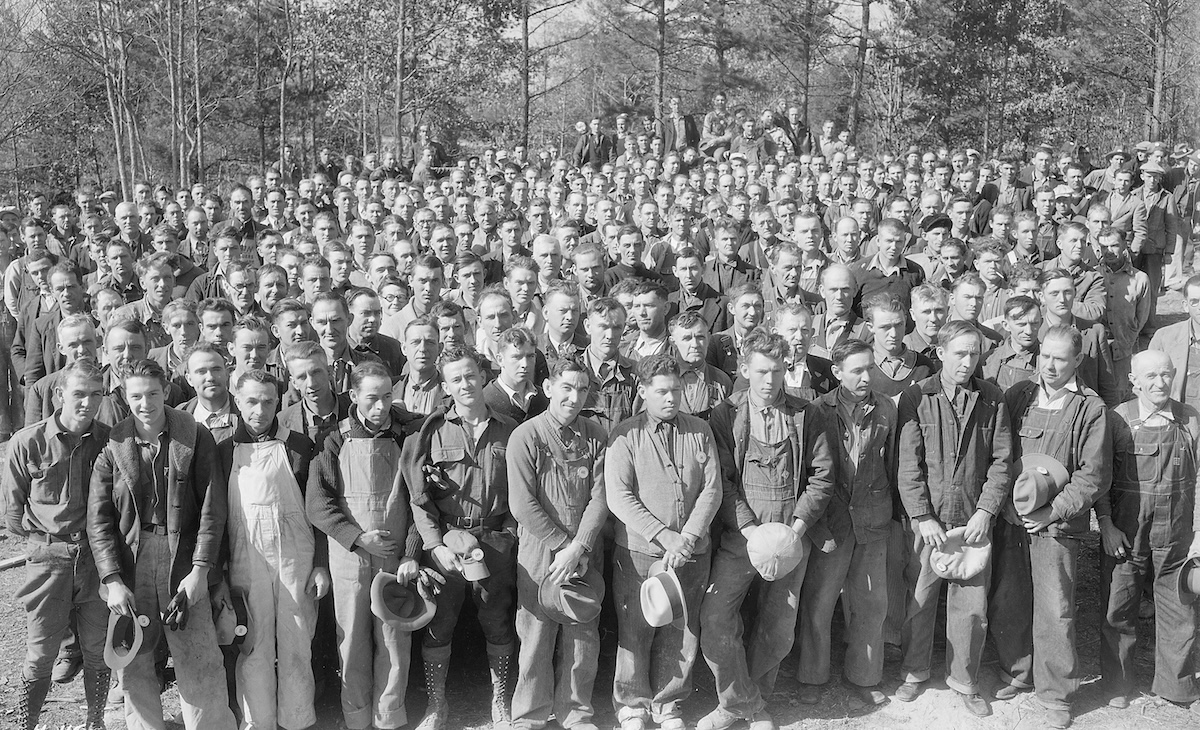
Workers at Norris Dam in 1933 (National Archives photo)
Wednesday, November 18, 4-6 pm Central:
The Tennessee Valley Authority AND the history of the Tennessee River before TVA

First Hour: JENNIFER THELEN, TVA’s official historian, will share TVA history and historic photography. She’ll answer the following questions, among others: Why was TVA started in the first place? What were its original goals (HINT: most people get these wrong!) Who was the Republican Senator from Nebraska who may have had more to do with TVA’s creation than anyone else? Besides Tennessee, what other states are part of TVA’s footprint? Why did TVA build coal plants in the 1950s and nuclear plants beginning in the 1960s? There will be time for discussion and questions.
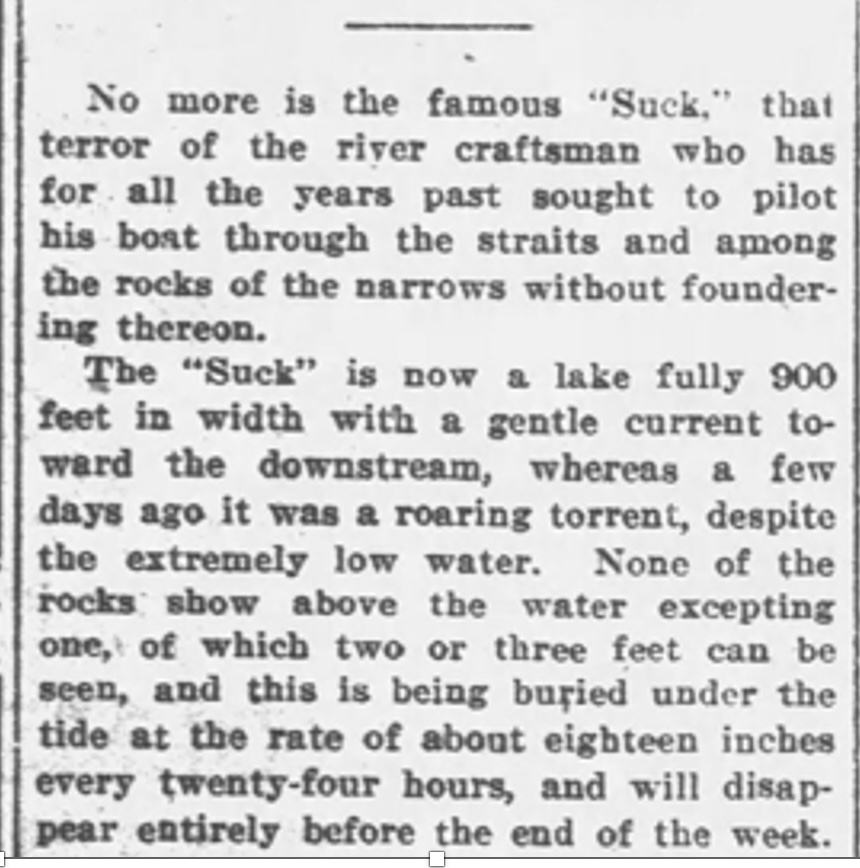
The most famous navigational barrier on the Tennessee River in Tennessee was called “The Suck” and it was forever buried by Hales Bar Dam in October 1913
Second Hour: “History Bill” will talk about the history of the Tennessee River before the 1930s. He will explain what the Tennessee River and its tributaries meant to the Cherokee nation. The Dragging Canoe and Chickamaugan era, when human blood ran on the river. Why, from a commercial point of view, the Tennessee River’s value was limited in early Tennessee history. The Tennessee River during the Civil War. Early dams and hydroelectric plants in the Tennessee River system
Finally, he will tell us about the country music star who intended to commit suicide in a place along the Tennessee River in which he would never be found, but became a born-again Christian deep in the darkness of a cave.
Click here to register for the Wednesday, November 18, inservice on The Tennessee Valley Authority AND the history of the Tennessee River before TVA.