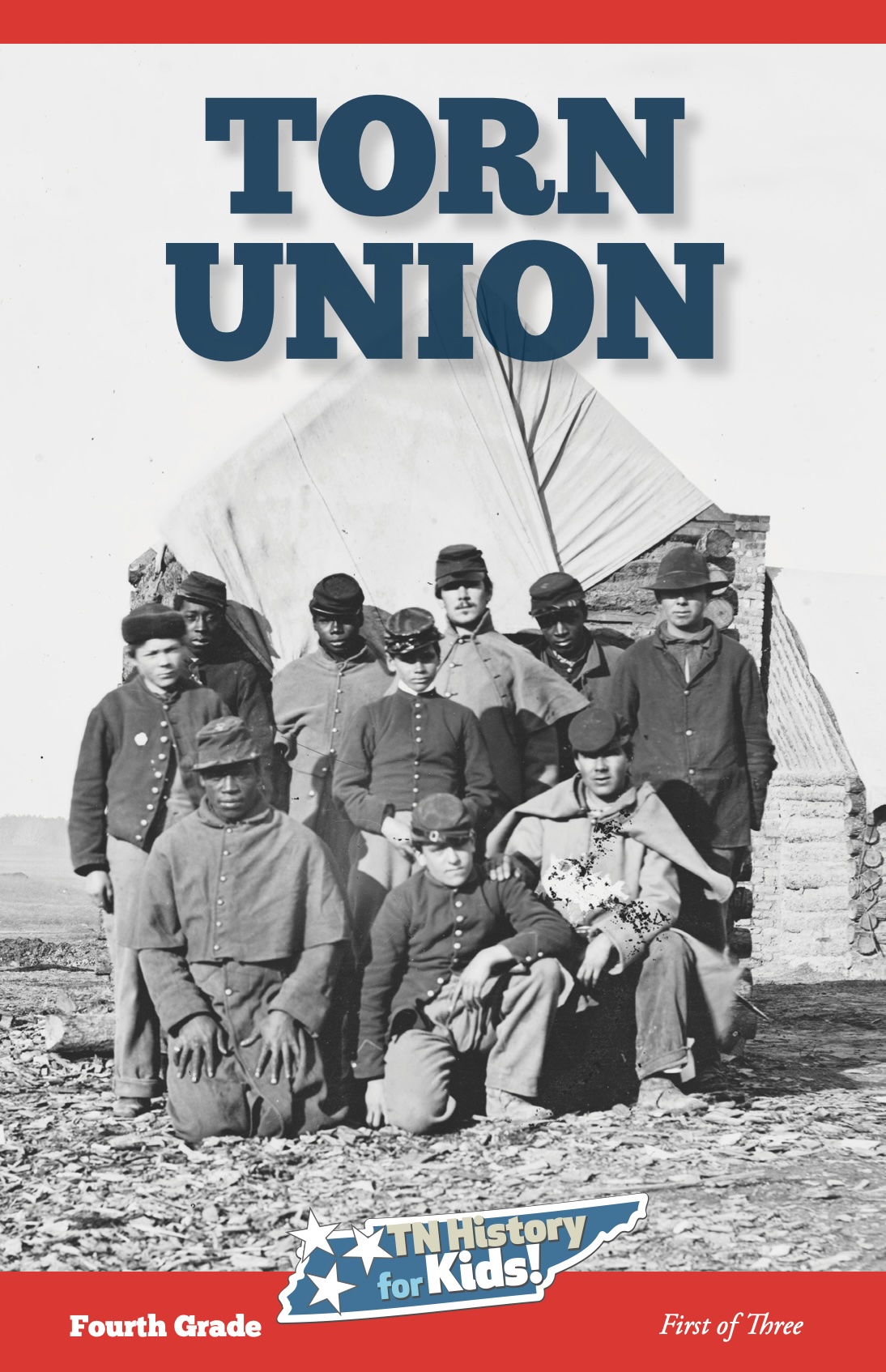
Teacher’s Guide to Torn Union (2027 edition)
Welcome to the teacher’s guide to the Tennessee History for Kids booklet called Torn Union (2027 edition).
Rather than buying a single classroom set, please consider buying one for every student. We sell these booklets for $3.00 and print them on non-glossy paper because we want students to write in their booklets and keep them.
Please do NOT copy the booklets. That is a violation of our copyright and makes it difficult for us to continue to exist.
If you have any comments about the booklet or would like the answers to the quiz questions, please email Bill Carey at bill@tnhistoryforkids.org.
Chapter One: Four Million Americans
Standard 4.01: Analyze the sectional differences between the North, South and developing West, including economic, population, social, and transportation
Standard 4.03: Compare characteristics of the lives of enslaved persons on plantations, in cities and on other farms
There’s a lot of material on this website to supplement Chapter One. Obviously, teacher know their students better than anyone else. So before you take you students to these links, look at them in advance.
John Baker is a native of Robertson County who spent several years reaching enslavement at a large tobacco plantation called Wessyngton. Click here to read a virtual tour.
Click here to read a virtual tour that goes into the relationship between newspapers and slavery.
Chapter Two: Divided Lines
Standard 4.01: Analyze the sectional differences between the North, South and developing West, including economic, population, social, and transportation
Standard 4.02: Explain how enslavement became a national conflict during the mid-19th century, including the significance of the Missouri Compromise, Nat Turner’s Rebellion, Compromise of 1850, Uncle Tom’s Cabin, Kansas-Nebraska Act, Dred Scott v. Sandford decision, John Brown’s Raid on Harper’s Ferry.
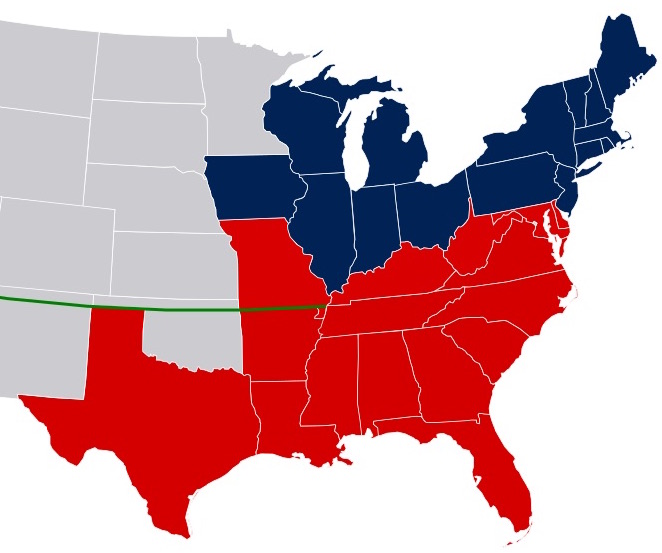
Julio Reisderivative map
Click on the image of the right to see the map on page 7.
Before students move onto the Civil War, it is important for them to notice a few things about free states and slave states. Americans who know about the Civil War generally know that states such as Georgia, Virginia, Mississippi, Tennessee and Texas were slave states. However, they often don’t realize that Maryland, Delaware and Missouri were slave states.
Maryland is most important of these from a strategic point of view. When the Civil War started, Washington D.C. was surrounded on all sides by slave territory. That’s why President Lincoln was so worried about Maryland seceding. That’s also why General Robert E. Lee invaded Maryland in the summer and fall of 1862. Lee was hoping his army would gain support as it moved through Maryland (which didn’t really happen.)

In regards to the Nat Turner Rebellion, click on the left to see a newspaper article about the event at the time.
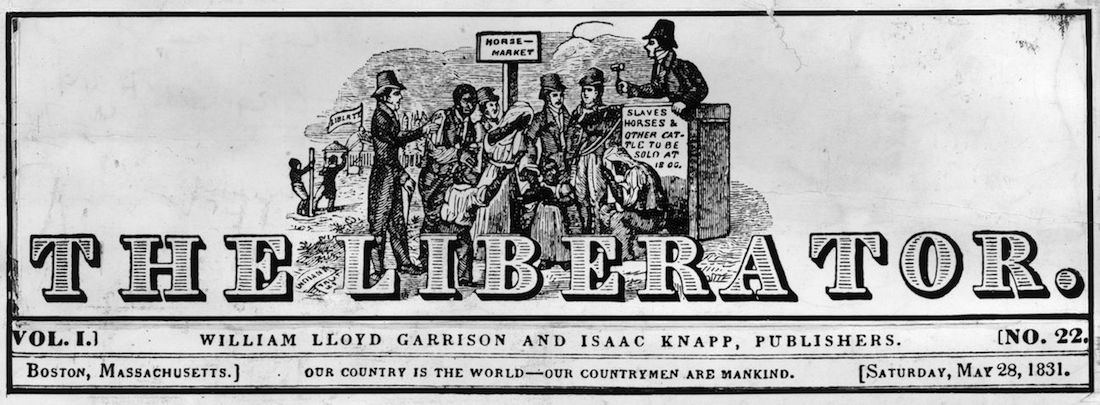
On the right is the masthead for William Lloyd Garrison’s newspaper, the Liberator. Click here to read a National Park Service website about this newspaper.
There is a National Historic Park in Seneca Falls, New York, about the Grimke Sisters. Click here to be taken to its website.
 Sidebar: Like Gold Through the Trees

Standard 4.03: Compare characteristics of the lives on enslaved persons on plantations, in cities and on other farms.

Harriet Tubman (far left) and her family in 1887. (William Cheney photo)
Standard 4.04: Identify abolitionist leaders and their approaches to ending enslavement, including Frederick Douglass, William Lloyd Garrison, the Grimke Sisters, Harriet Tubman and Sojourner Truth.
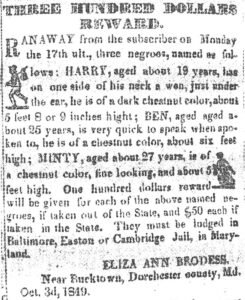
Click on the image on the right to see the runaway slave ad for Harriet Tubman, who was referred to as “Minty” in the ad.
Click on the left to the see the photo on page 15.
Chapter Three: War Clouds
Standard 4.02: Explain how enslavement became a national conflict during the mid-19th century, including the significance of the Missouri Compromise, Nat Turner’s Rebellion, Compromise of 1850, Uncle Tom’s Cabin, Kansas-Nebraska Act, Dred Scott v. Sandford decision, John Brown’s Raid on Harper’s Ferry.
The Tennessee History for Kids primary sources booklet Powerful Words 5 has an excerpt from Uncle Tom’s Cabin, with questions at the end. Click here to see about getting a copy.
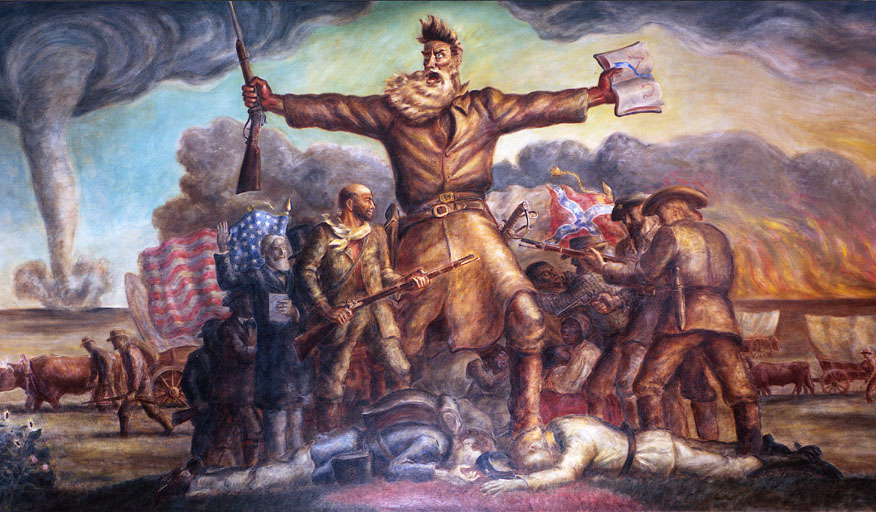 Finally, I’ve always been intrigued by the painting of John Brown (on the right). The fact that it used to be the cover of an album I owned when I was a teenager (by the rock group Kansas) added to this fascination.
I’ve recently learned that the artist of this painting was John Steuart Curry, and that members of the Kansas legislature objected to its content, which is why it wasn’t placed on the wall of the Kansas State Capitol after it was finished.
In any case, click on it, show it to your students, and see if they find it as intriguing as I did.
Chapter 4: Endowed by Their Creator
Standard 4.04: Identify abolitionist leaders and their approaches to ending enslavement, including Frederick Douglass, William Lloyd Garrison, the Grimke Sisters, Harriet Tubman and Sojourner Truth.
 The quiz on 31 applies to both chapter 4 and the Dred Scott sidebar.
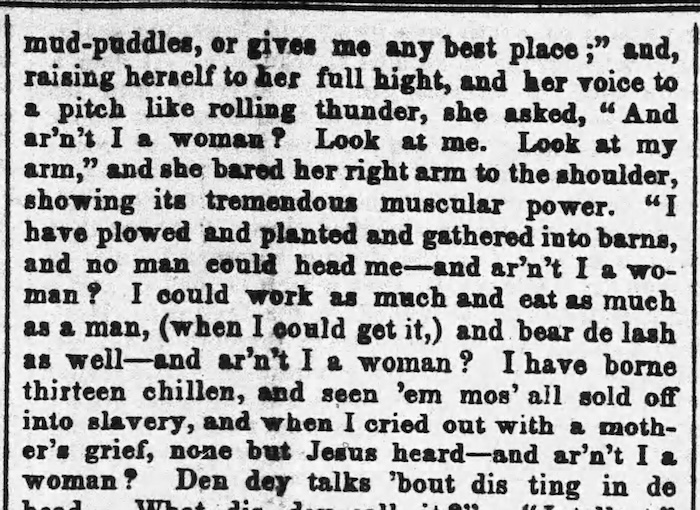
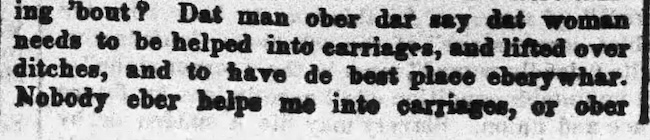
Click on the images on the right and left to see the direct quotes from Sojourner Truth’s 1851 speech as reported in the April 23, 1863, New York Independent.
Click here to read a 2013 New York Times story about when Frederick Douglass met President Lincoln.
SIDEBAR: Tombstone with Pennies on Top
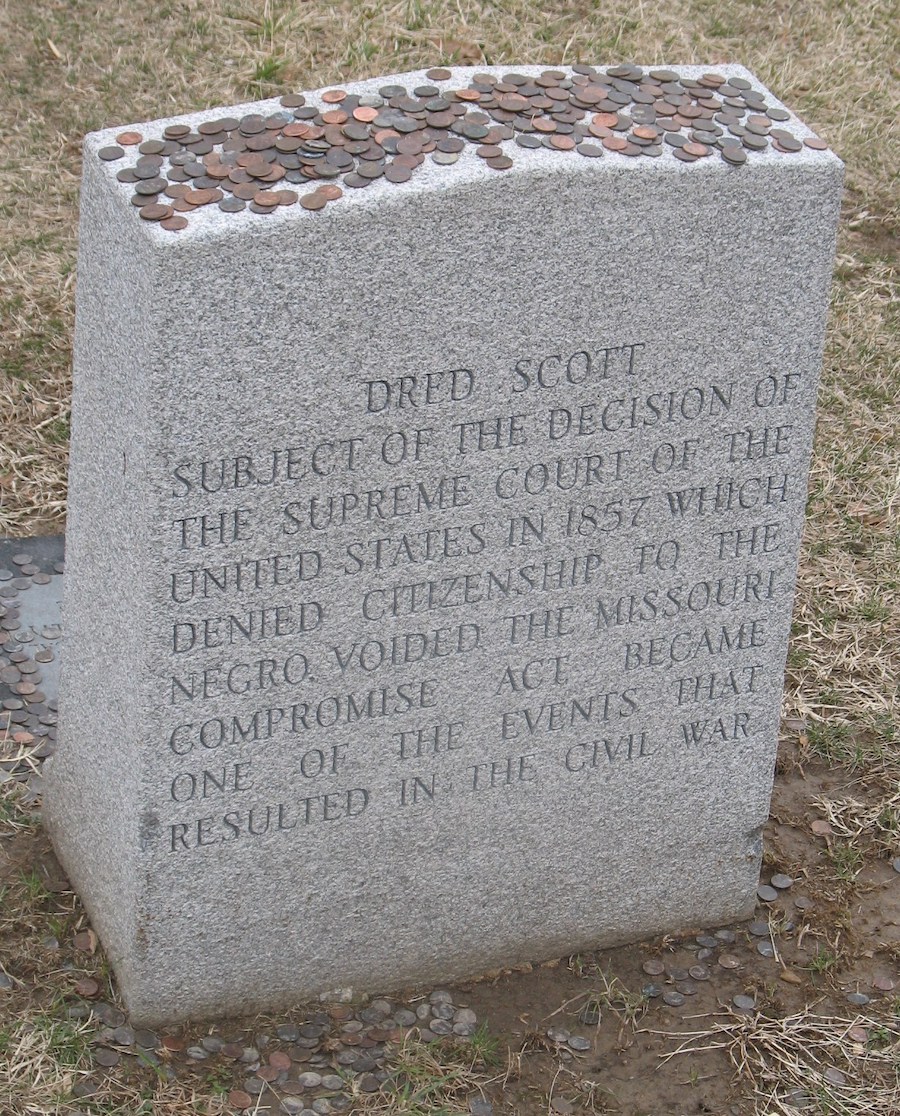
The back of Dred Scott’s tombstone
Standard 4.02: Explain how enslavement became a national conflict during the mid-19th century, including the significance of the Missouri Compromise, Nat Turner’s Rebellion, Compromise of 1850, Uncle Tom’s Cabin, Kansas-Nebraska Act, Dred Scott v. Sandford decision, John Brown’s Raid on Harper’s Ferry.
Click here for a Tennessee History for Kids tour “In Search of Dred Scott.”
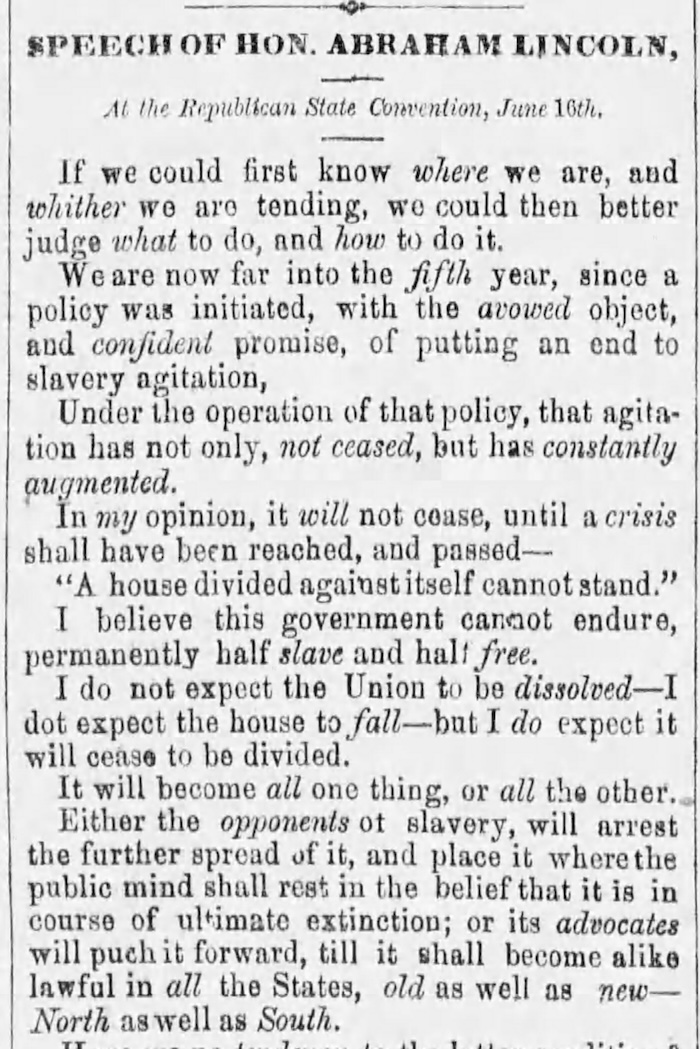
Daily Illinois State Journal, June 18, 1858
Chapter 5: Life of Lincoln
Standard 4.05: Compare and contrast the various sectional stances on states’ rights and enslavement represented by the presidential candidates in the election of 1860.
Standard 4.09: Describer the roles of major leaders during the Civil War, including Jefferson Davis, Ulysses S. Grant, Robert E. Lee, Abraham Lincoln.
Click on the image on the right to see a small excerpt from Lincoln’s “House Divided Against Itself” speech, as first reported in an Illinois newspaper two days later.
In Steven Spielberg’s movie Lincoln, there was a wonderful scene where Lincoln talks about Euclid with two junior Union Army officers. Click here to see that scene.
Click here to see a Tennessee History for Kids video about President Lincoln and (in the process) find out why there is an Abraham Lincoln museum near the Cumberland Gap, in Tennessee.
This is a good time to point out that one of the nation’s most respected and popular Abraham Lincoln interpreters lives in Nashville. His name is Dennis Boggs, and we have brought him to many Tennessee History for Kids events. Click here to learn more about him and his presentation.
Chapter 6: Election and Fort Sumter
Standard 4.05: Compare and contrast the various sectional stances on states’ rights and enslavement represented by the presidential candidates in the election of 1860.
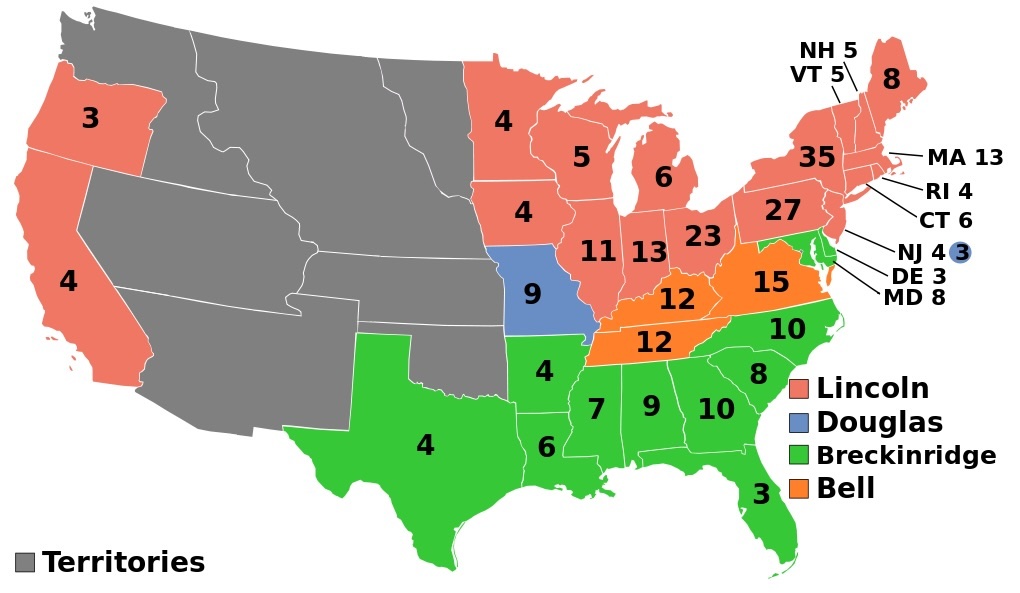
Wikipedia Map
Standard 4.06: Evaluate the significance of the Battle of Fort Sumter and the impact it had on secession.
The map on page 37 is pretty important. Click on the image to the right to see it larger.
There is much more content about Tennessee and it secession vote in the workbook Work for Freedom, which fifth grade teachers use to help cover the stand-alone semester of Tennessee history. As you go through the Civil War with your fourth graders, please remind yourself that students will come back around and learn more about Tennessee and the Civil War next year.
Click here to be taken to the website of Fort Sumter National Historical Park in Charleston Harbor.
Chapter 7: North and South

Library of Congress photo
Standard 4.07: Explain the efforts of both the Union and the Confederacy to secure the border states for their causes.
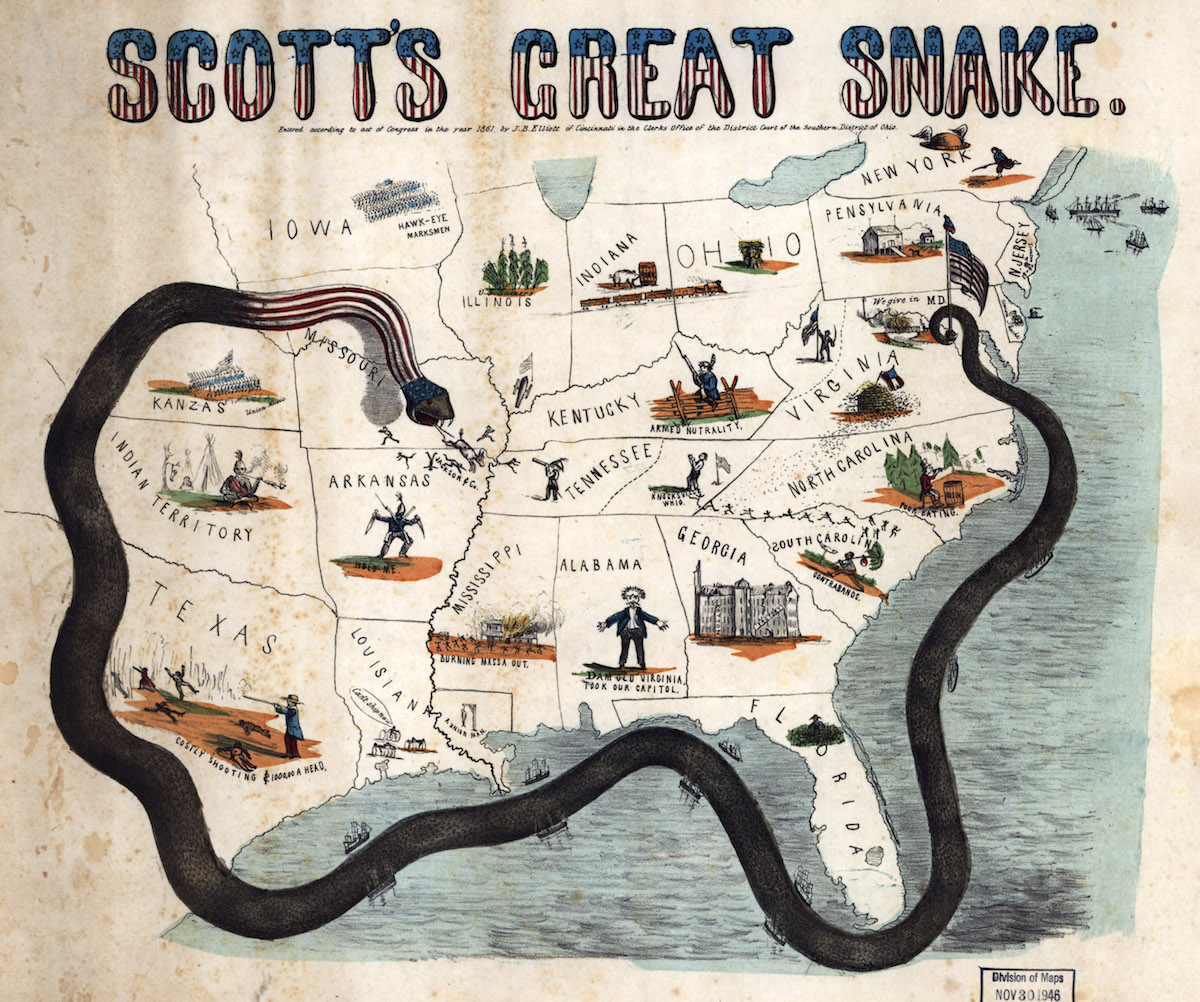
Standard 4.08: Explain how the Union’s Anaconda Plan used geographic features to isolate and defeat regions of the South and the Confederacy as a whole.
The photo on page 42 is remarkable. You can see the Tennessee State Capitol on the background. The area shown is now known as the “train gulch” and is taken from about where the Church Street viaduct is located now.
Click on the image on the right to see the cropped version of it, which shows the people better.
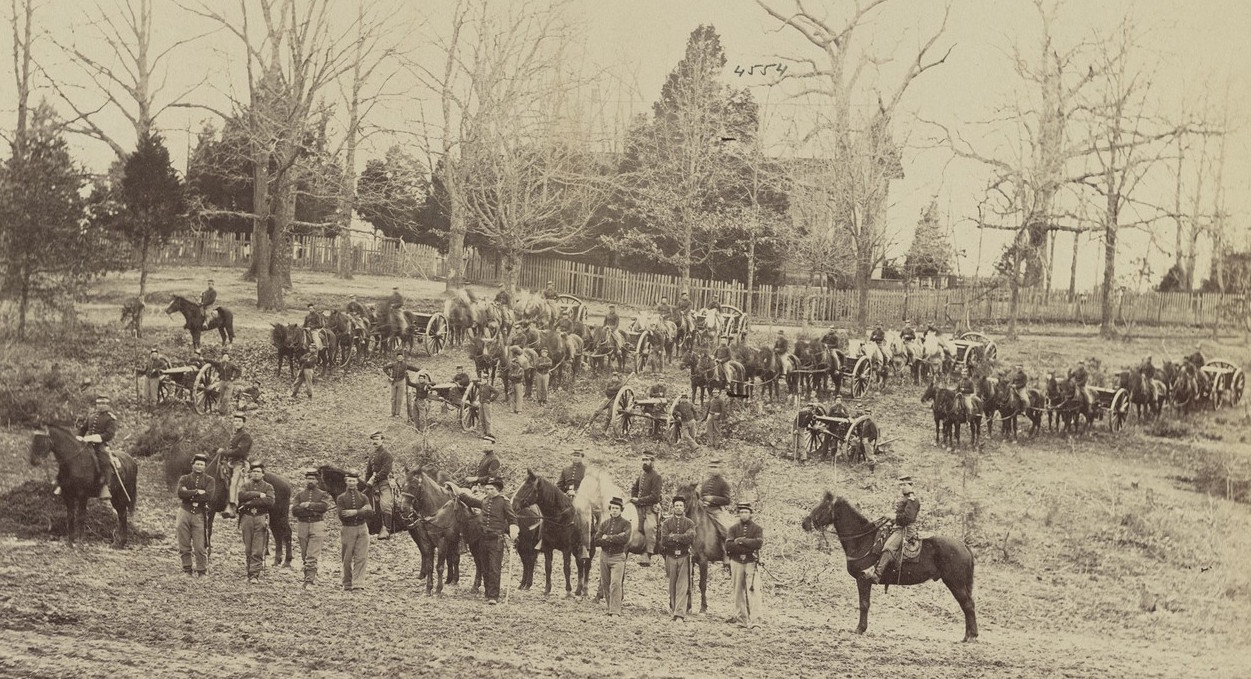
Library of Congress
The movie Gone With The Wind is not an accurate depiction of the Civil War or of the South, and I don’t think teachers should show the whole thing. However, there are some very good scenes in the movie. One of them is the one where Rhett Butler explains why the North has huge advantages over the South.
Click here to see this scene which, in my opinion, is appropriate to show to students.
Chapter 8: Three-Month War
Standard 4.07: Explain the efforts of both the Union and the Confederacy to secure the border states for their causes.

Library of Congress photo
Standard 4.08: Explain how the Union’s Anaconda Plan used geographic features to isolate and defeat regions of the South and the Confederacy as a whole.
There are two images in this chapter which really need to be blown up larger for detail. The first is the one on page 47 which shows the pro-union rally in New York in April 1861. (Click on the right to see it). It’s astonishing to realize just how many people attended this rally, considering how many people lived in the United States at the time.
Library of Congress
In the generations since the war, there has been a lot of talk about the fighting spirit of the Confederacy. What this photograph reminds us is that the fighting spirit of the North was amazing as well.
The second is the illustration of General Winfield Scott’s Anaconda Plan, shown on the left. If you click on the image and look at it carefully, you will see a lot of illustrations on the map which editorial writers couldn’t create today.
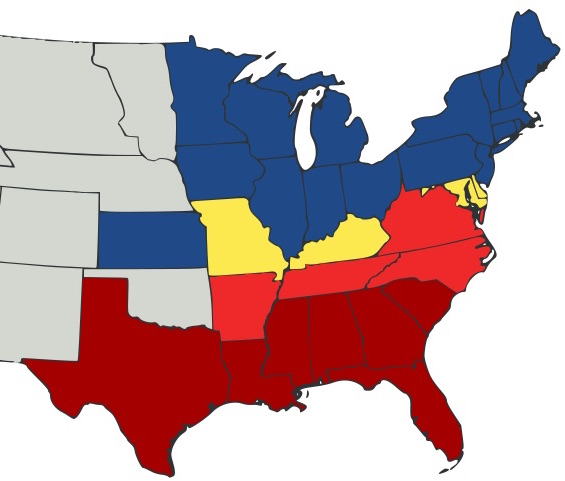
The third is the map on page 49, which shows Union states in blue, states that seceded before Fort Sumter in dark red, states that seceded after Fort Sumter in light red, and border states in yellow.
Library of Congress
Chapter 9: Shiloh and Antietam
Standard 4.09: Describer the roles of major leaders during the Civil War, including Jefferson Davis, Ulysses S. Grant, Robert E. Lee, Abraham Lincoln.
Standard 4.11: Examine the strategic significance and outcomes of key event of the Civil War (e.g., First Battle of Bull Run; Battles of Shiloh, Antietam and Gettysburg; Siege of Vicksburg).
Standard 4.12: Explain the purpose of the Emancipation Proclamation, and identify its impact on the country.
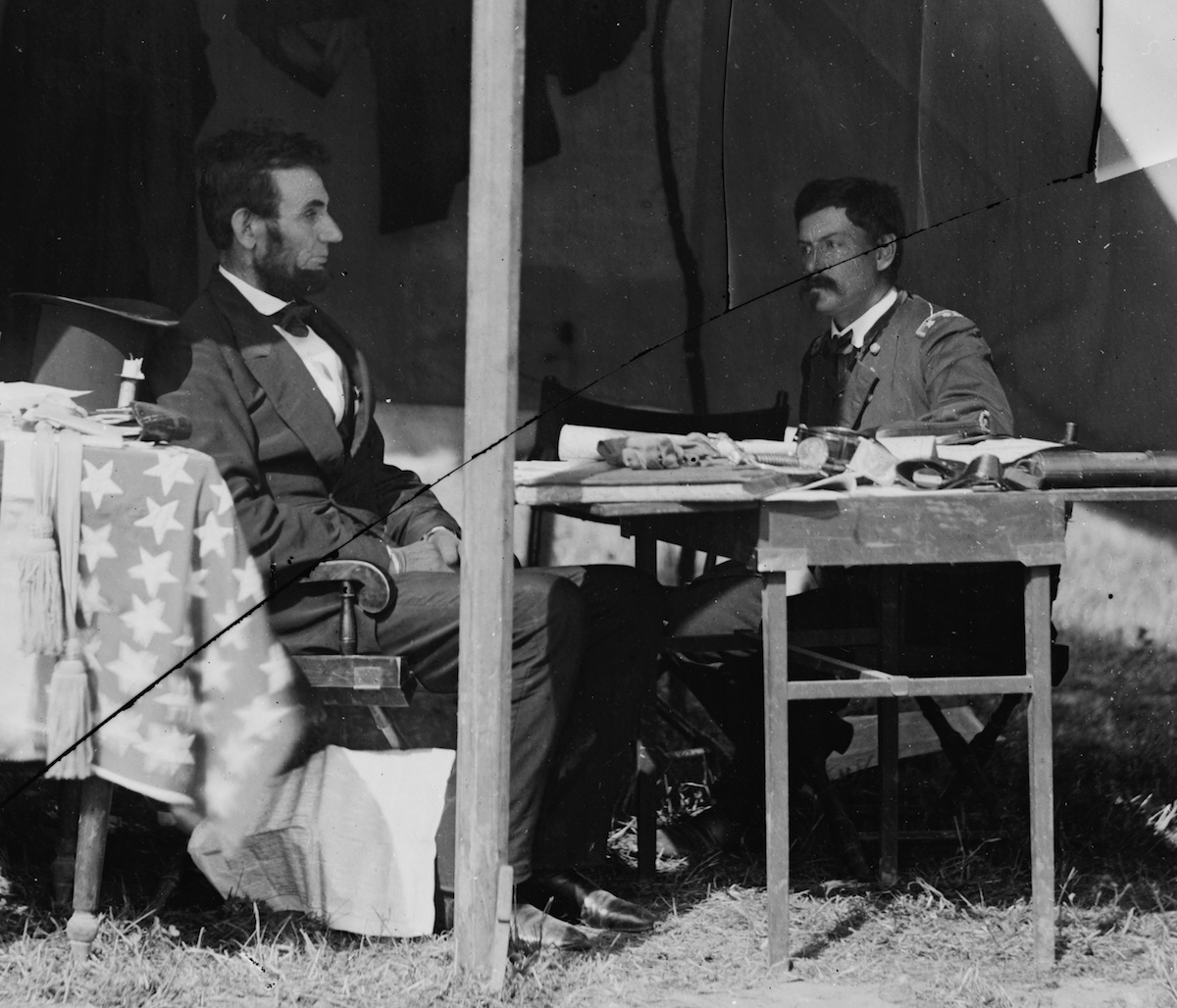
Click on the image on the left and look closely at the photo of President Lincoln with General McClellan. The look on McClellan’s face is interesting, because it turns out that he didn’t think much of the president. In fact, in a letter to his wife, McClellan once referred to Lincoln as “nothing more than a well-meaning baboon.”
Click here to read more about McClellan and the manner in which he snubbed Lincoln. To me, the interesting thing about this is that President Lincoln didn’t, apparently, lose his temper with the general.
Click here for a virtual tour of Fort Donelson National Battlefield in Stewart County.
Click here for a virtual tour of the battlefield of Shiloh, in Hardin County.
Sidebar — Angels of the Battlefield
Standard 4.10: Evaluate the significant contributions made by women during the Civil War, for example Clara Barton, Dorothea Dix, Susie King Taylor, Frances Clayton, Harriet Tubman and Dr. Mary Edwards Walker.
 Chapter 10 — Proclamation
Standard 4.09: Describer the roles of major leaders during the Civil War, including Jefferson Davis, Ulysses S. Grant, Robert E. Lee, Abraham Lincoln.
Standard 4.11: Examine the strategic significance and outcomes of key event of the Civil War (e.g., First Battle of Bull Run; Battles of Shiloh, Antietam and Gettysburg; Siege of Vicksburg).
Standard 4.12: Explain the purpose of the Emancipation Proclamation, and identify its impact on the country.
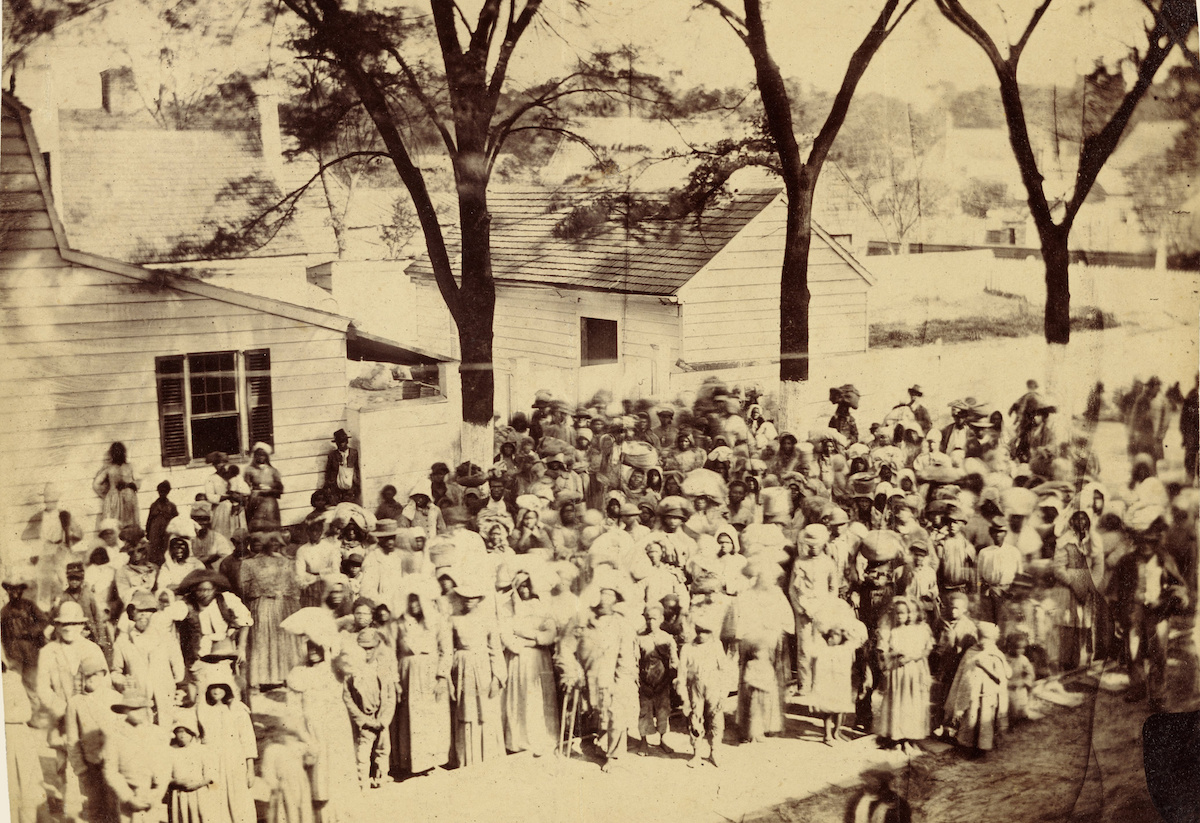
 When I researched and wrote a book on the history of slavery, I discovered that there aren’t very many photographs of slaves that were taken before the Civil War. However, there are some amazing photographs of slaves (or of people who had recently freed themselves from bondage) that were taken during the war. Here, on the right and the left, are two examples.
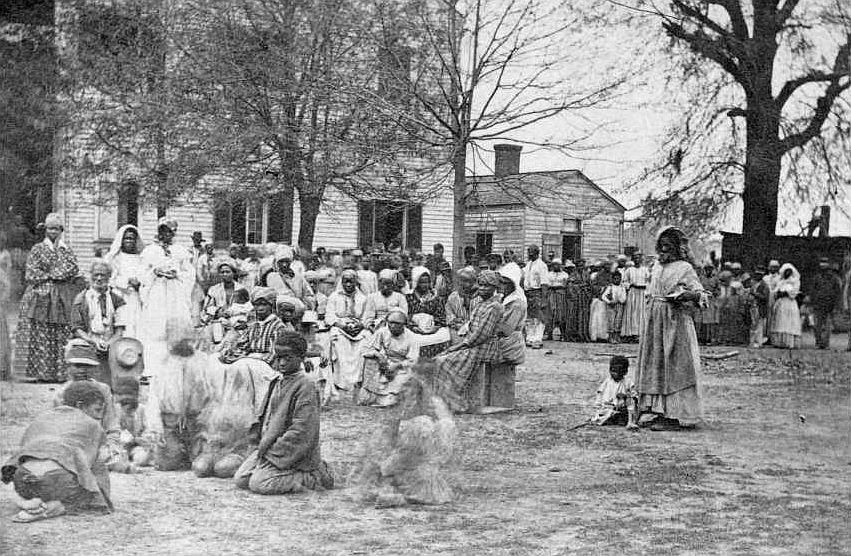 The photo on the right was taken in 1862 by Timothy O’Sullivan. Shown here are some of the enslaved people on a plantation in South Carolina owned by J.J. Stanton.
The photo on the left (photographer unknown) shows former slaves at a contraband camp which had previously been used as a female seminary. The photo is held by the Louisiana State Library.
Finally, this point: Many Americans misunderstand what the Emancipation did, and didn’t do. If you can help your fourth grade students understand it better than most Americans, you have gone a great job!
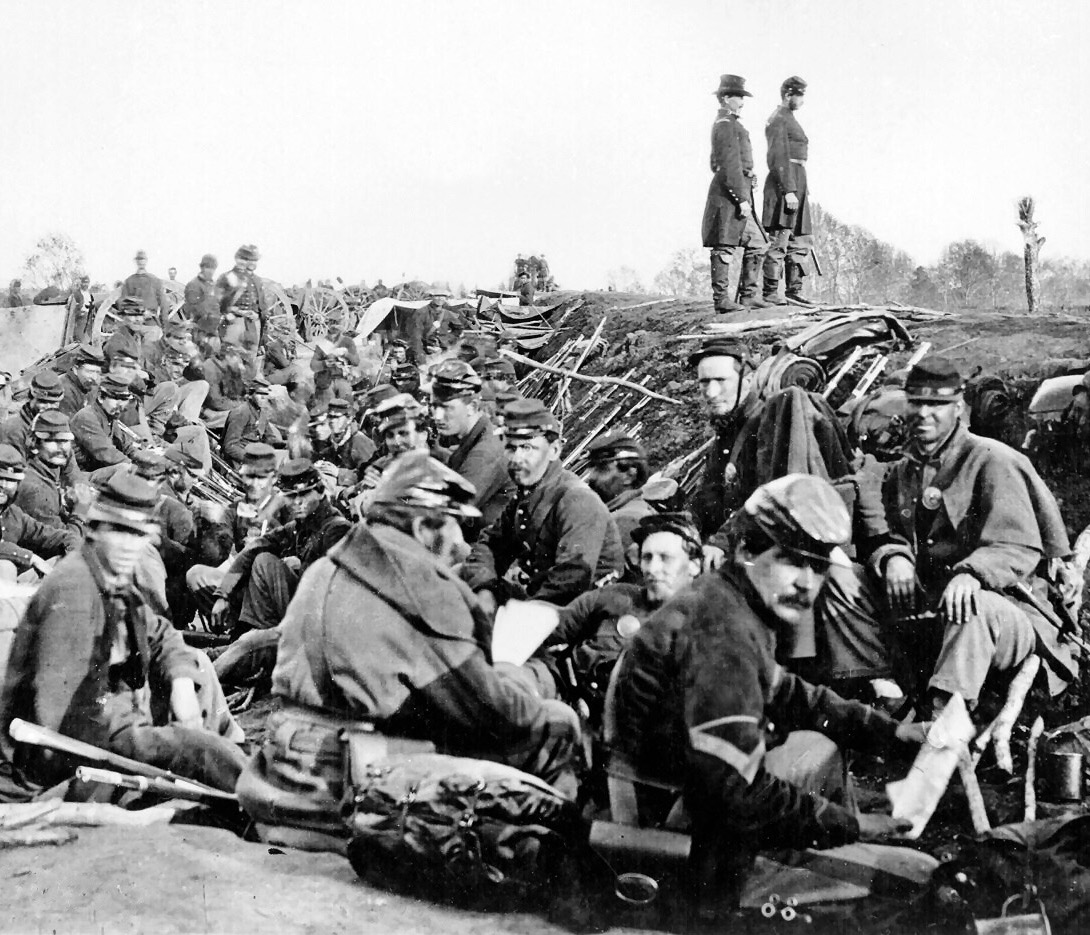
Library of Congress/A.J. Russell photographer
Chapter 11 — Vicksburg and Gettysburg
Standard 4.11: Examine the strategic significance and outcomes of key event of the Civil War (e.g., First Battle of Bull Run; Battles of Shiloh, Antietam and Gettysburg; Siege of Vicksburg).
Standard 4.13: Describe the significance of the Gettysburg Address
First of all, the photo on page 72 (on the right) shows Union soldiers at Fredericksburg on the day before the battle there. This was a disastrous battle for the Union Army, so we can assume that many of the soldiers shown in this photo died the next day.
I do realize that Ken Burn’s miniseries The Civil War is not entertainment for fourth graders. I do, however, believe that well-behaved and thoughtful fourth graders could get a lot from its 6-minute segment on the Gettysburg Address. (It has been known to bring adults to tears.) Click here to see it.

Library of Congress/photographer unknown
Also, click on this image and show it to your students. This is the only photograph that was taken at Lincoln’s Gettysburg Address (the red arrow points to the person who is believed to be Lincoln.) The reason that the photo is so blurry and that Lincoln is not shown standing straight up is that the photographer was taking his time. You see, he thought that Lincoln would speak for a long time, but he didn’t. That’s how short the Gettysburg address was!
There is now a disagreement about whether Lincoln is the man pointed to with the arrow. Click here to read about this.
SIDEBAR: Tender Mercies of the Advancing Foe
Standard 4.11: Examine the strategic significance and outcomes of key event of the Civil War (e.g., First Battle of Bull Run; Battles of Shiloh, Antietam and Gettysburg; Siege of Vicksburg).
Click here to see the Maury County page, where we show photos from Zion Cemetery (which is where Sam Watkins is buried.)
Chapter 12 — Surrender and Assassination
Standard 4.14: Describe the physical, social, political and economic consequences of the Civil War on the United States after the surrender at Appomattox Court House.
Standard 4.15: Describe the impact President Abraham Lincoln’s assassination had on the nation.
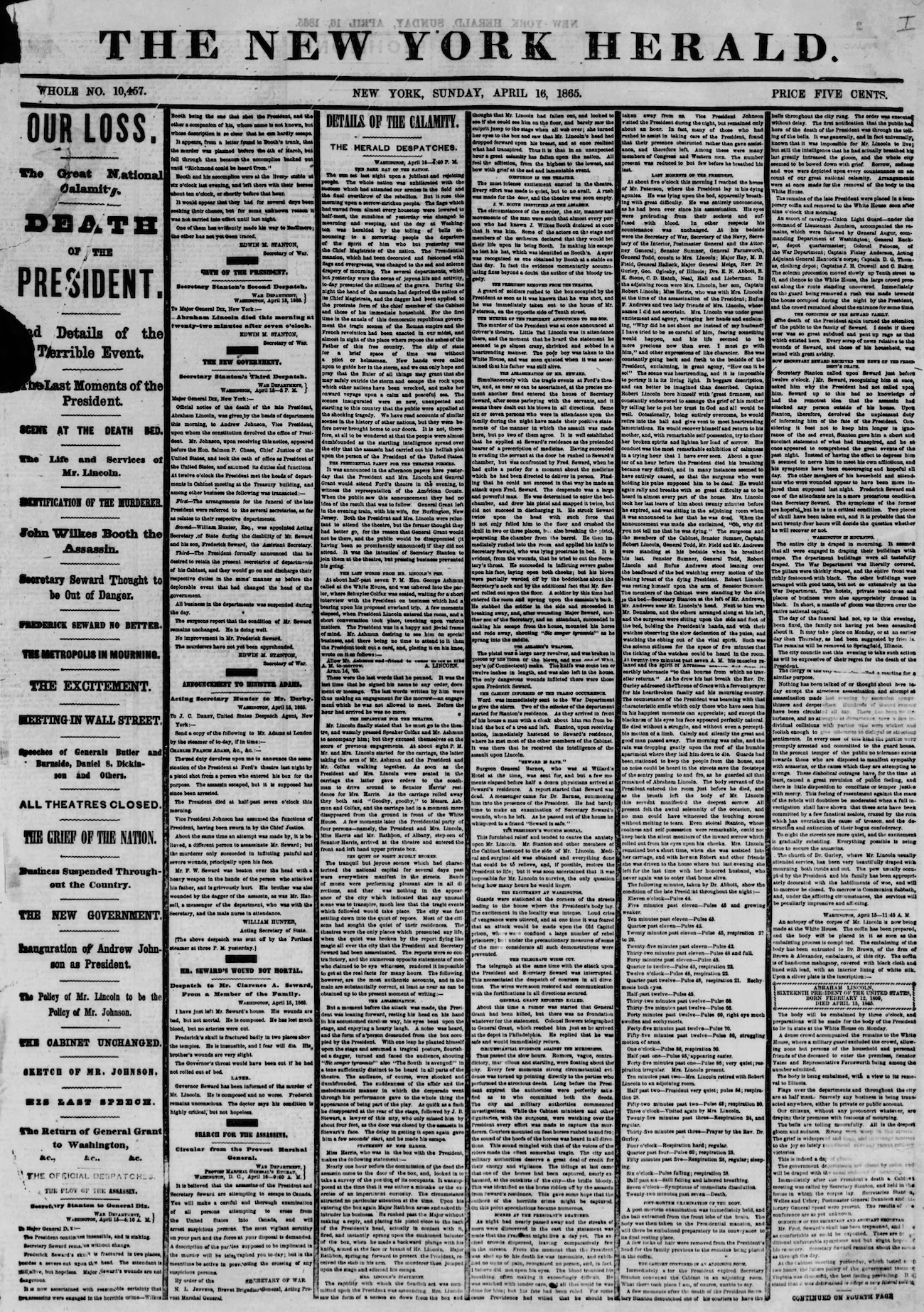
Click on the right to see the front page of the New York Daily Herald the day after Lincoln was assassinated.
Chapter 13 — New Amendments
Standard 4.14: Describe the physical, social, political and economic consequences of the Civil War on the United States after the surrender at Appomattox Court House.
Standard 4.16: Identity the 13th, 14th and 15th Amendments (i.e. Reconstruction Amendments) as efforts to help former enslaved persons gain the rights of citizenship.
Standard 4.17: Compare and contrast the goals of the Reconstruction plans of President Abraham Lincoln, President Andrew Johnson, and Congress.
Click here for a virtual tour of the Andrew Johnson Historic Site.