Teacher’s Guide to Free and Independent State (2027 edition) — Chapters 33-48
Welcome to the teacher’s guide to the Tennessee History for Kids workbook called Free and Independent State (2027 edition). Rather than buying a single classroom set, please consider buying one for every student, every year. We sell these workbooks for $3 and print them on non-glossy paper because we want students to write in their booklets and keep them.
Please do NOT copy the workbooks. That is a violation of our copyright and makes it difficult for us to continue to exist.
If you would like the answers to the quiz questions in the workbook, please email bill@tnhistoryforkids.org and tell him your name and the school at which you teach.
Chapter 33: War Heroes and the Kaiser’s Ashtray
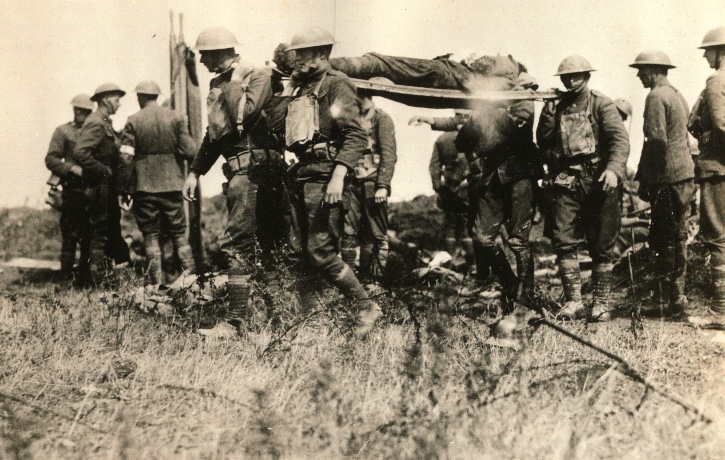
TN State Library and Archives photo
TN.50: Explain Tennessee’s connection to World War I, including the impact of Alvin C. York and the Alcoa Plant.
Click here to take a TN History for Kids virtual tour of the Alvin C. York State Historic Park.
Click here and here to read two columns that I wrote about the 100th anniversary of World War I.
Chapter 34: Ladies and Hunger Strikes
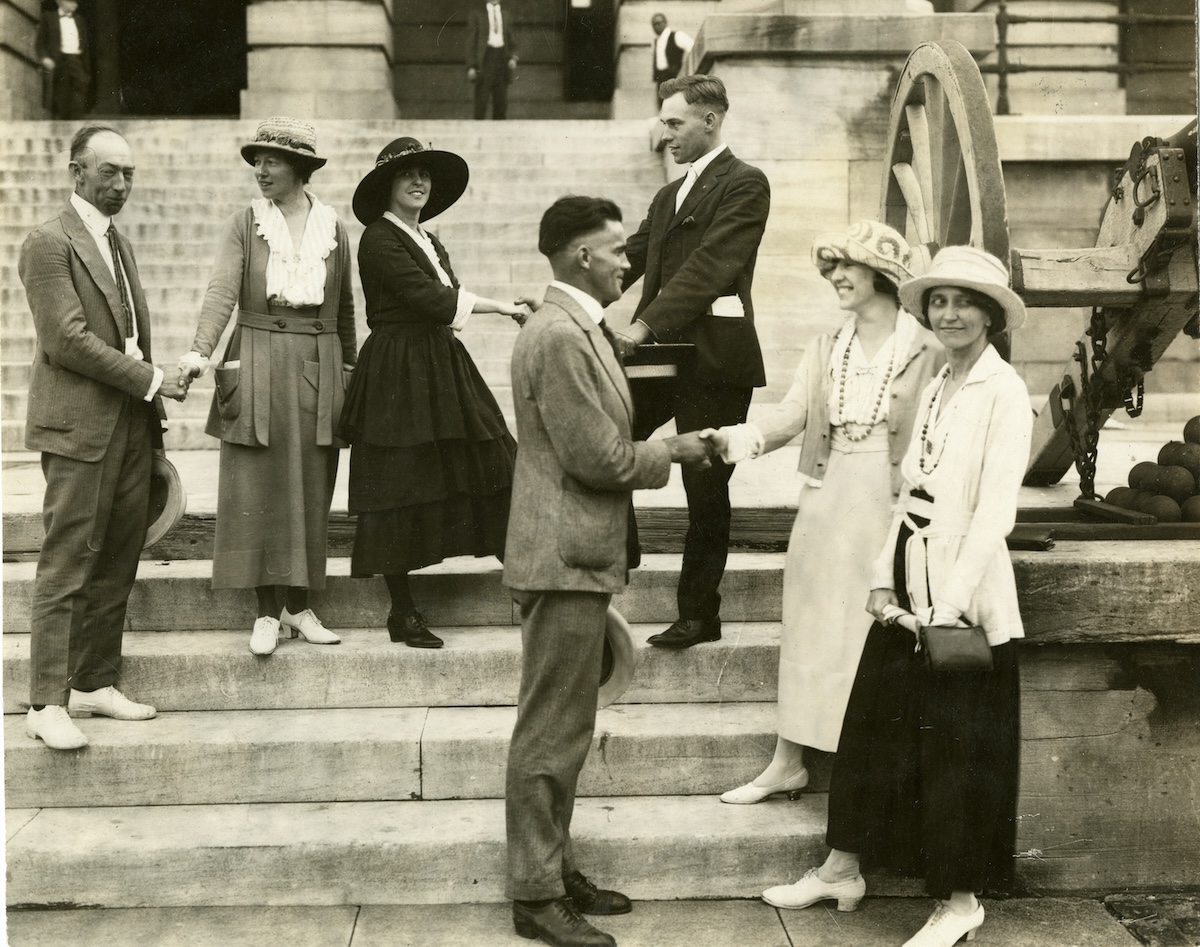
National Woman’s Party photo
TN.49: Describe Tennessee’s impact on the suffrage movement, including Harry Burn, Anne Dallas Dudley and A.H. Roberts
SPECIAL PROJECT:
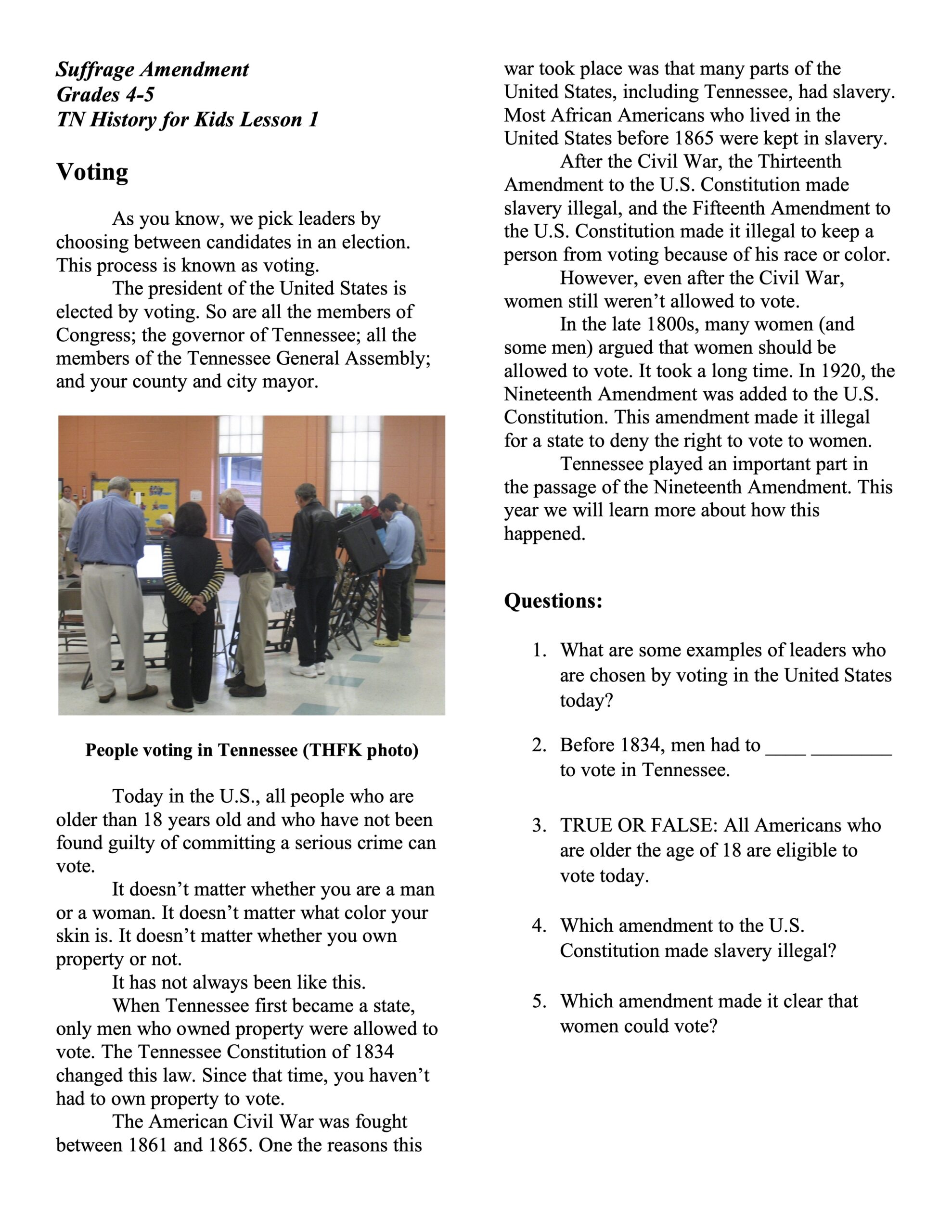
The 9-part series of worksheets about the passage of the suffrage amendment
In 2020, on the 100th anniversary of the passage of the suffrage amendment, TN History for Kids created a series of worksheets for elementary school students about the suffrage movement. Each of the 9 worksheets has a quiz. Click on the image of the right to download them.
Chapter 35: Trumpet and Fiddle
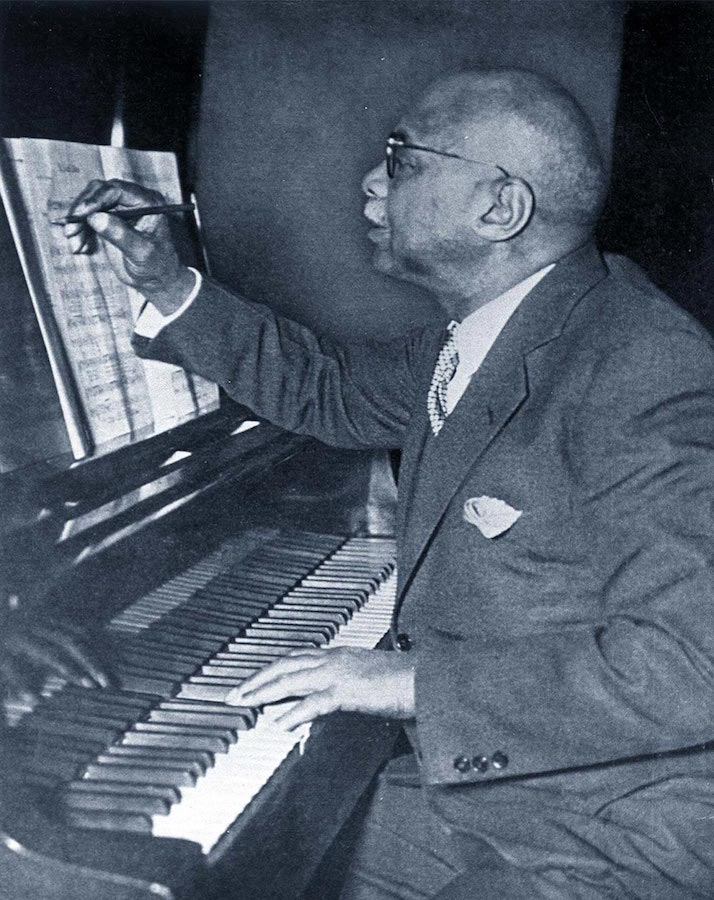
Memphis Special Collections photo
TN.53: Describe major developments in music in Tennessee during this era: Country Music (e.g. Grand Ole Opry, WSM, Carter family, Bristol Sessions); Blues Music (e.g. W.C. Handy and Bessie Smith)
Click here to read a column about myths and truths about the Grand Ole Opry.
Turn up the speakers and clear a space in the classroom for students to move their feet if they like! If you click on the following links, you will hear some of the music referred to in this chapter:
* W.C. Handy “Memphis Blues”

Country Music Foundation photo
* W.C. Handy, “St. Louis Blues”
* Humphrey Bate and his Possum Hunters, “How Many Biscuits Can You Eat?”
* Uncle Jimmy Thompson, “Lynchburg”
* DeFord Bailey, “Davidson County Blues”
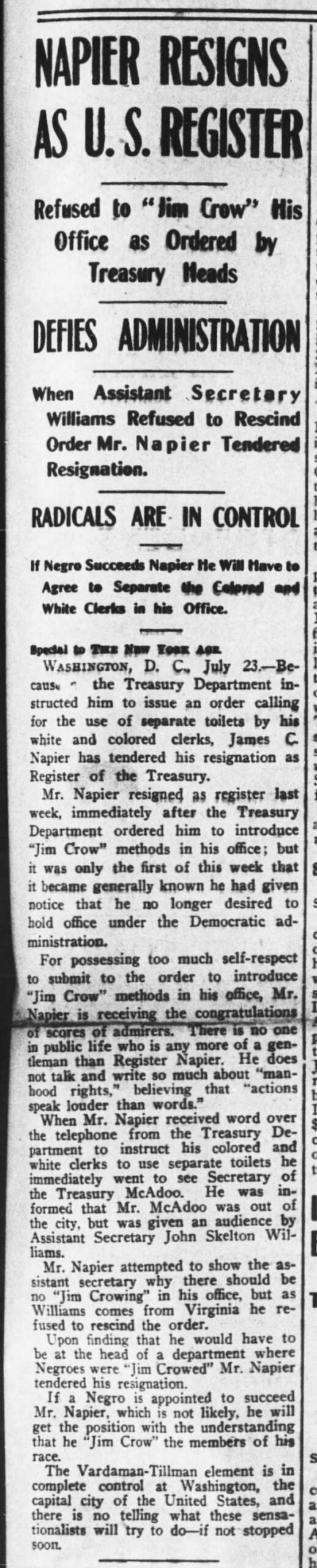
New York Age; July 24, 1913
Chapter 36: Jim Crow Comes to Tennessee
TN.47: Analyze the effects of Jim Crow laws on Tennessee, including the efforts of advocates for African Americans: James Napier, Ida B. Wells-Barnett.
Click here for a virtual tour “In Search of Ida B. Wells.”
Click on the right to see an article about James Napier resigned his job as Registry of the U.S. Treasury because President Wilson’s administration ordered all departments to adopt “Jim Crow” policies.
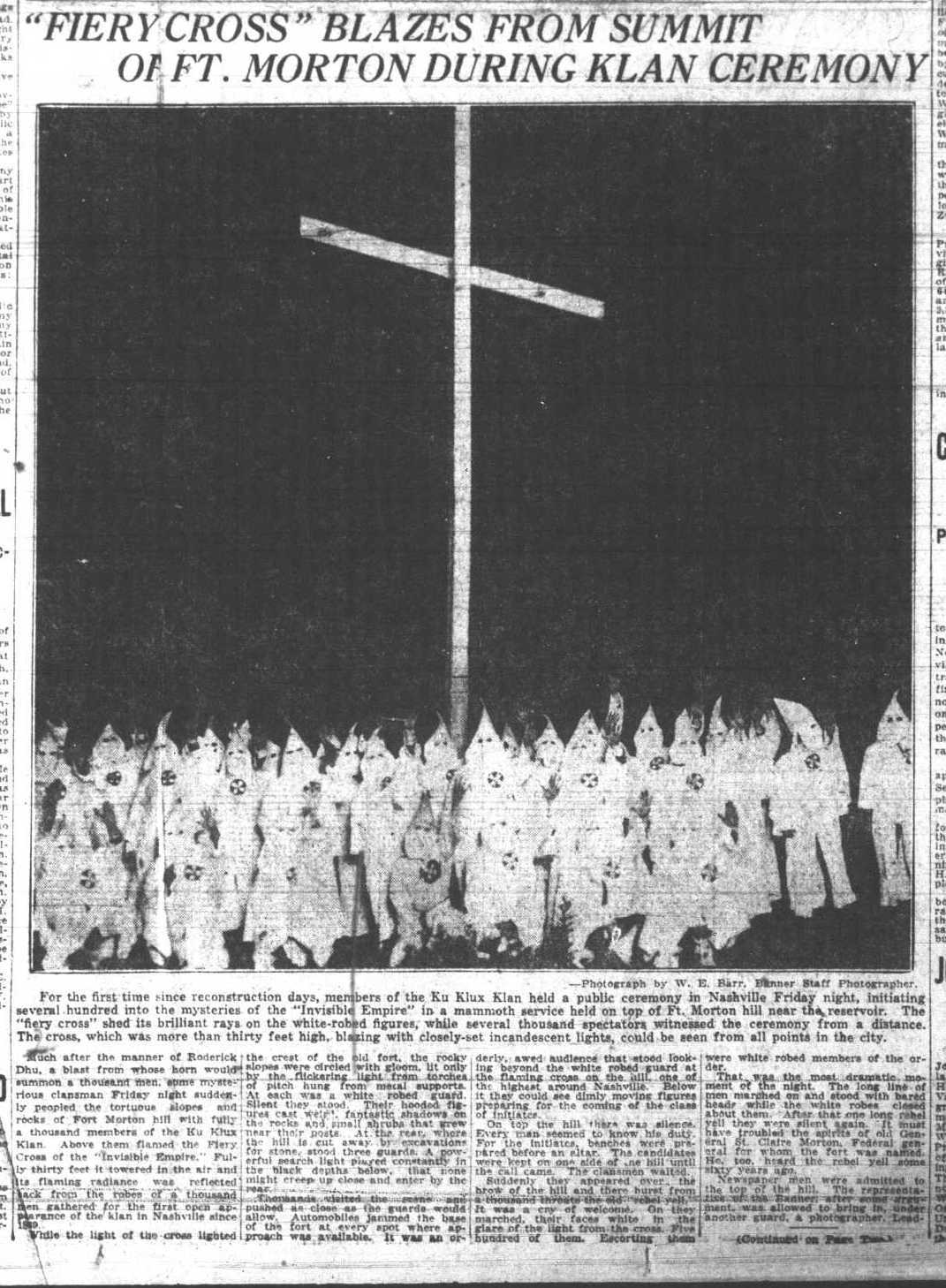 Click on the left to see a front-page story and photo that appeared in the Nashville Banner on June 2, 1923. Photos didn’t accompany local news stories very much in the 1920s, but it did on this occasion.
By the way, the hill where this massive Klan meeting occurred is now home to Carter Lawrence Elementary School and the Belmont University baseball stadium, and there is (obviously) no historic marker on the hill about the big KKK meeting that mesmerized Nashville on June 1, 1923.
Chapter 37: Trial of the Century
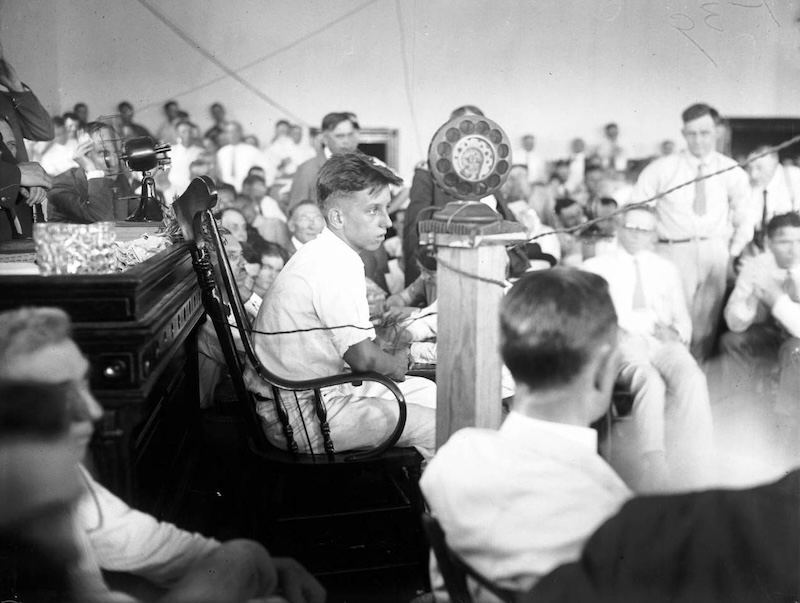
Chicago Tribune Historical photo
TN.52: Analyze how the Scopes Trial reflected societal tensions between tradition and modernity.
The photo on page 95 (shown on the right) had never been published in print prior to the publication of TN History for Kids workbooks. Here’s the story behind it:
The Chicago Tribune sent a photographer to Tennessee to take photos for the Scopes Trial. That photographer took and developed many photographs, but only a small number of them were actually printed in the Tribune during the weeks in which the Scopes Trial remained in the news. The one shown on pages 95, 96 and 97 are three of the many Scopes Trial photos which had been in the morgue of the Tribune for 90 years!
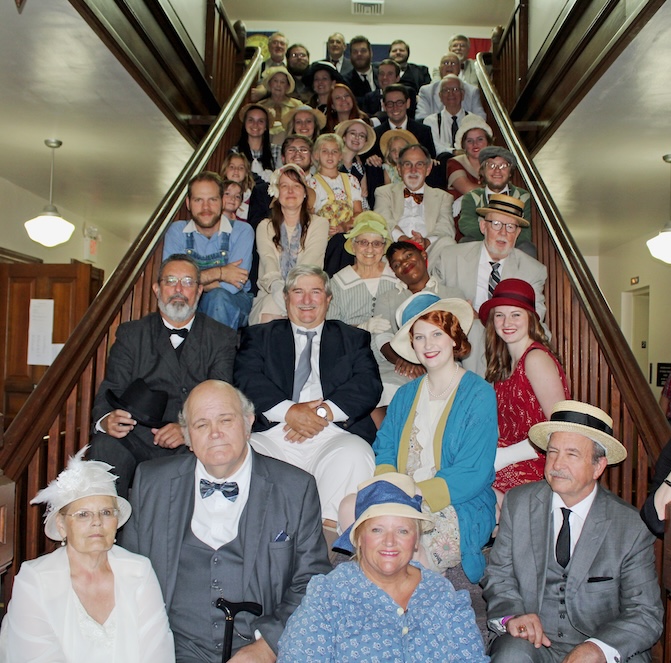
The 2018 cast of the drama put on at the Scopes Trial Festival (Tom Davis photo)
Click here to see A Civic Biology, the textbook at the center of the 1925 controversy.
I can’t say enough about the Scopes Festival, which the city of Dayton and the folks at Bryan College put on every year. Click here to check it out, and I strongly recommend going to see the drama they put on.
Click here to see a video that Tennessee History for Kids put together about the Scopes Trial.
Chapter 38: Tennessee’s New Deal
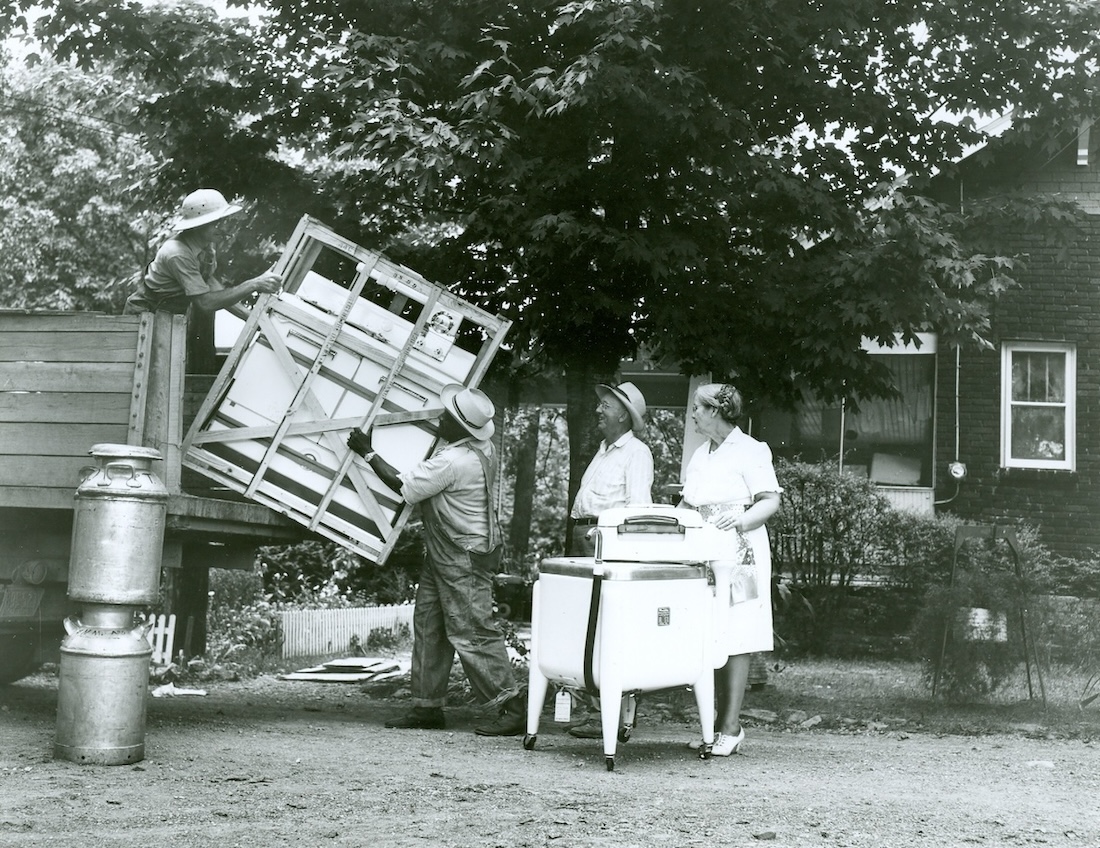
Tennessee Valley Authority photo
TN.54: Analyze how the Great Depression and New Deal Programs impacted Tennesseans, including: Agricultural Adjustment Act, Civilian Conservation Corps, Tennessee Valley Authority, and Great Smoky Mountains National Park.
Click on the images on the right column for detailed maps produced by TVA in 1939. Some of dams on the map that were in the planning stages then are later known by different names. For instance, Coulter Shoals Dam is now called Fort Loudoun Dam; Hales Bar Dam no long exists and Nickajack Dam is just downstream from its former site; and Gilbertsville Dam is now called Kentucky Dam.
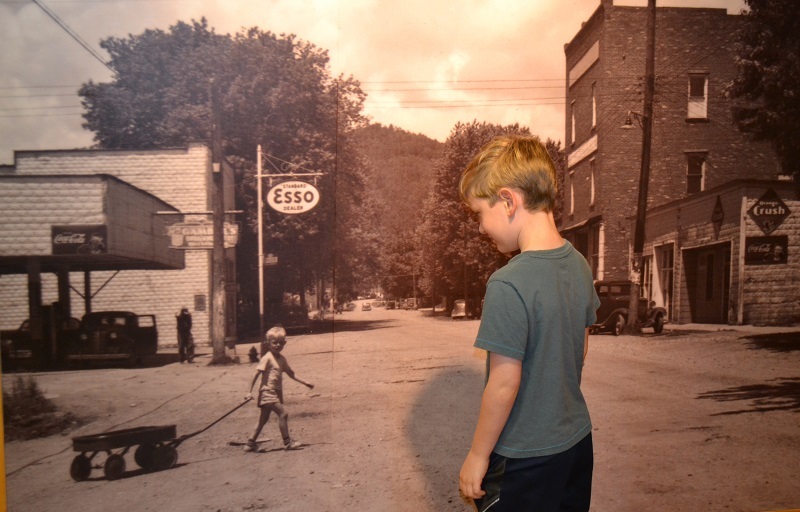
A young visitor at the Butler Museum
* Click here for a virtual tour of the Butler Museum in Johnson County.
* Click here for a virtual tour of Norris Dam and the area around it.
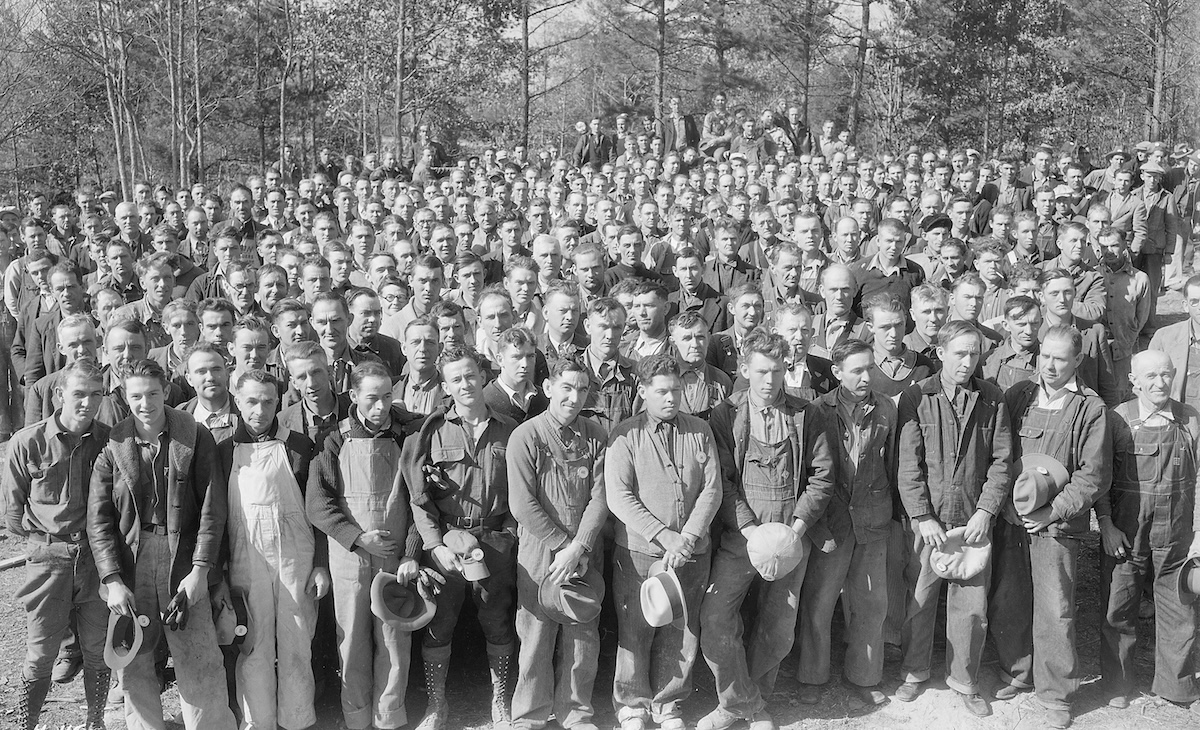
National Archives photo
* Here for the Marion County history page.
* Here for a column about hydroelectric dams built on the Tennessee River system about a generation before TVA.
Finally, I figure that about half of Anderson County has an ancestor who appear in the photograph on page 98. Click on it (to the right) to make it larger.
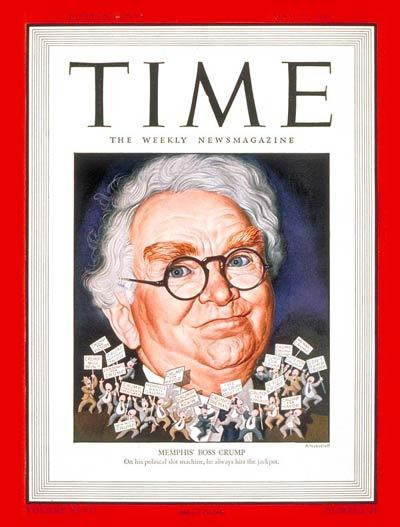
Crump on the cover of Time magazine, 1946
SIDEBAR: Boss Crump
TN.58: Analyze the significance of key Tennesseans on both state and national levels during the 1950s and 1960s, including Ed[ward] Crump.
Chapter 39: Planes Maneuvers and POW Camps
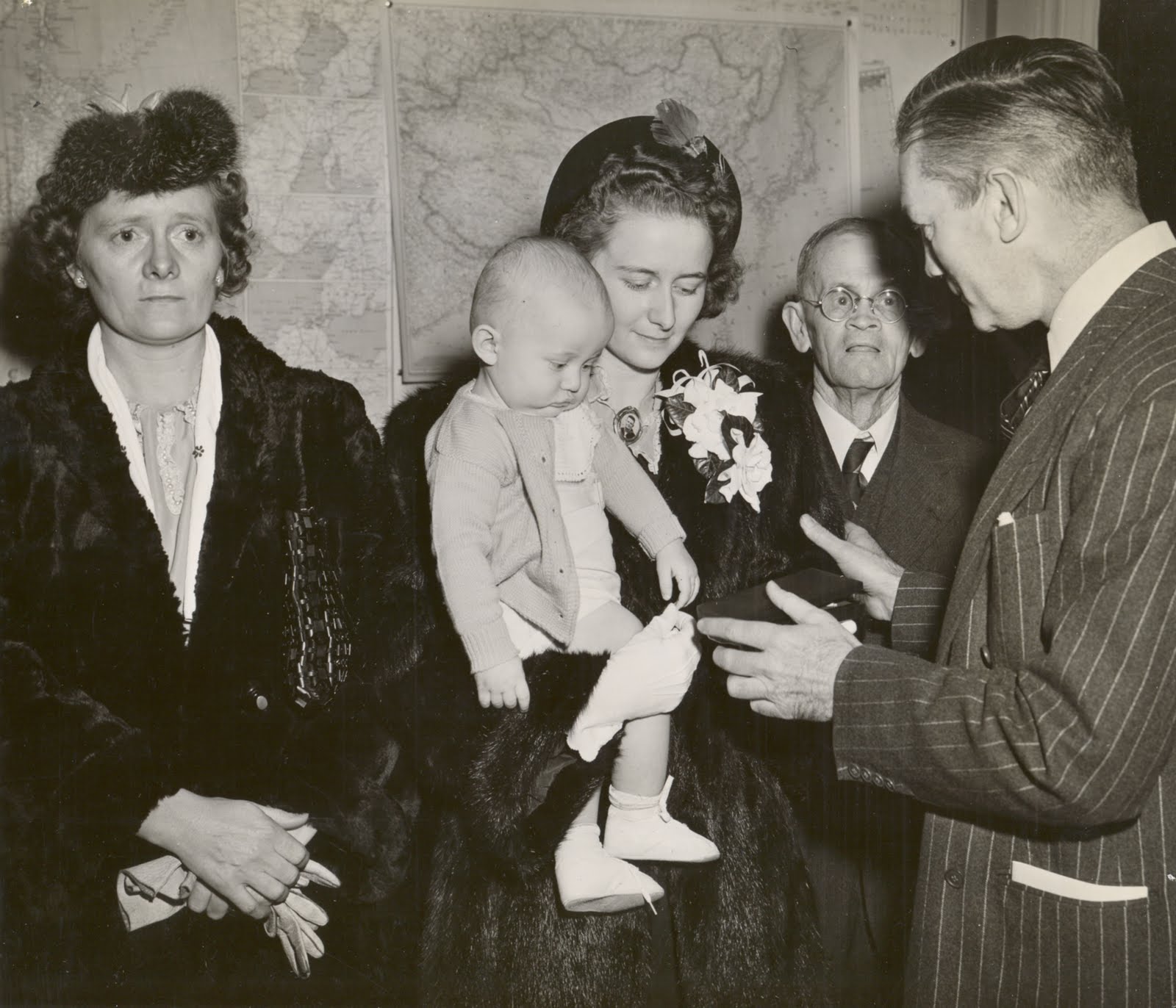
PHOTO: Family of John Willis
TN.56: Describe Tennessee’s contributions during World War II, including the impact of Camp Forrest, Camp Tyson, and Oak Ridge (e.g. Manhattan Project), as well as the influence of Tennesseans during the war (e.g. Cornelia Fort and Cordell Hull).
I’m disappointed that the Tennessee social studies standards does not require students IN ANY GRADE to learn the name of ANY Tennessean who fought in World War II. As the great grandson of General George Patton’s chief of staff, that bothers me very much, which is why I added the content on pages 51-54.
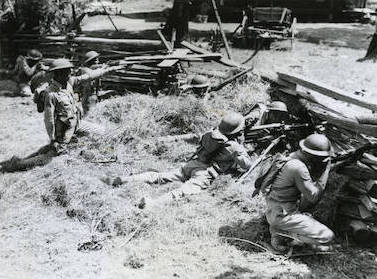
During the maneuvers, it wasn’t unusual in Middle Tennessee to look out your front window and see something like this! (PHOTO: TN Maneuvers Collection, Albert Gore Research Center, MTSU)
Click here to see more of the photos in the MTSU “Tennesseans in World War II” collection.
Click here for a column I wrote about Tennessee’s World War II Medal of Honor recipients.
Click here to read a column I once wrote about Gerhard Hennes and Camp Crossville. I’ve been doing this column for 19 years, and this one has had more reaction, by far, than any other column I’ve ever written.
Finally, an Army Master Sergent from Knoxville named Roddie Edmonds was recently nominated for the Congressional Gold Medal for something he did in an German prisoner of war camp during World War II. Click here to read about this remarkable man’s deeds.
Click here to be taken to the website of the Smith County Historical Tourism Society, which puts on an annual World War II living history event. If you can figure out of a way for your students to go to this May event, they will love it!
My friend Rob Simbeck has written a book about Cornelia Fort. It’s called Daughter of the Air: The Brief Soaring Life of Cornelia Fort, and I recommend it highly.
Chapter 40: Secret City
TN.56: Describe Tennessee’s contributions during World War II, including the impact of Camp Forrest, Camp Tyson, and Oak Ridge (e.g. Manhattan Project), as well as the influence of Tennesseans during the war (e.g. Cornelia Fort and Cordell Hull).
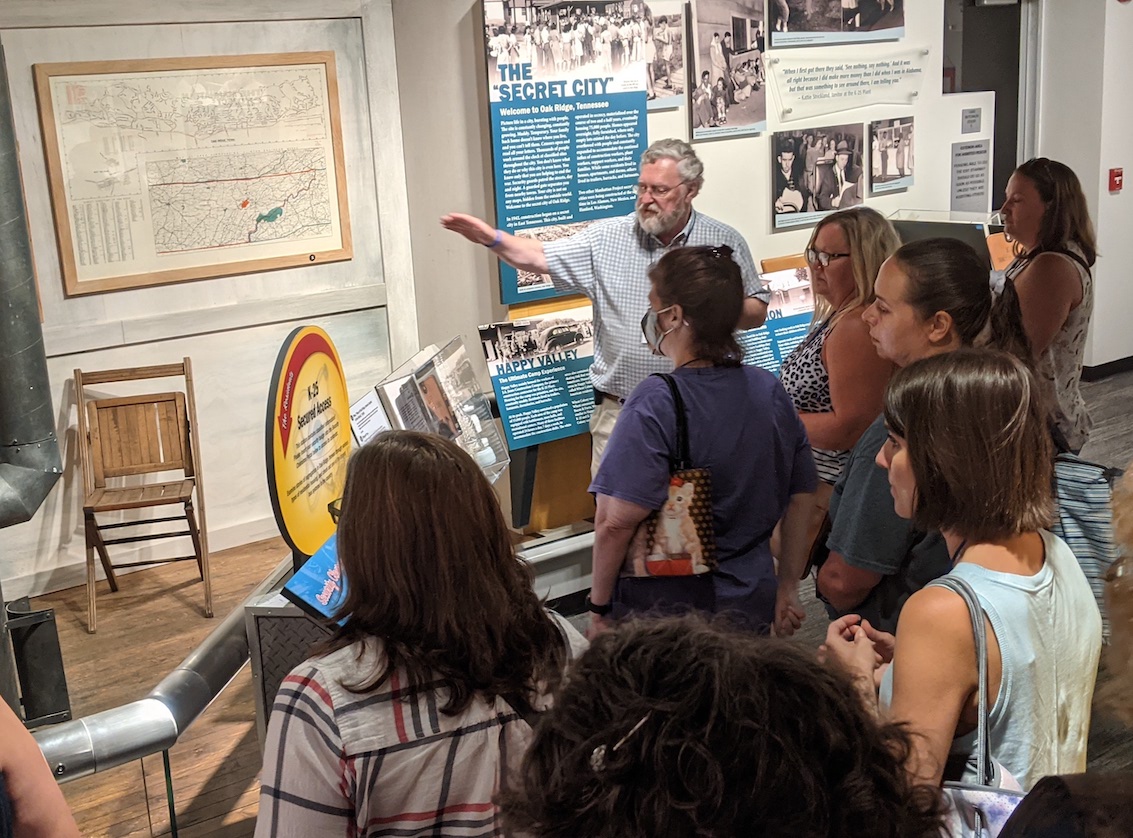
Ray Smith shows teachers around one of the museums in Oak Ridge, as part of a TN History for Kids inservice in July 2021.
Click here for a virtual tour of the historical exhibits at the Museum of Science and Energy at Oak Ridge. I’d like to thank Oak Ridge historian Ray Smith for his help in putting this material together. Ray frequently speaks at our inservices (in-person and virtual). Stay tuned for more of this wonderful appearances!
Almost all of the photographs taken at Oak Ridge during the Manhattan Project era were taken by one man–photographer Ed Westcott. Click here to see some of his photos.
Mr. Westcott died on March 29, 2019. Click here for his obituary.
Click here for a website associated with the USS Indianapolis survivors organization and here for the U.S. Naval Institute online archives of Alfred Sedivi’s photo collection.
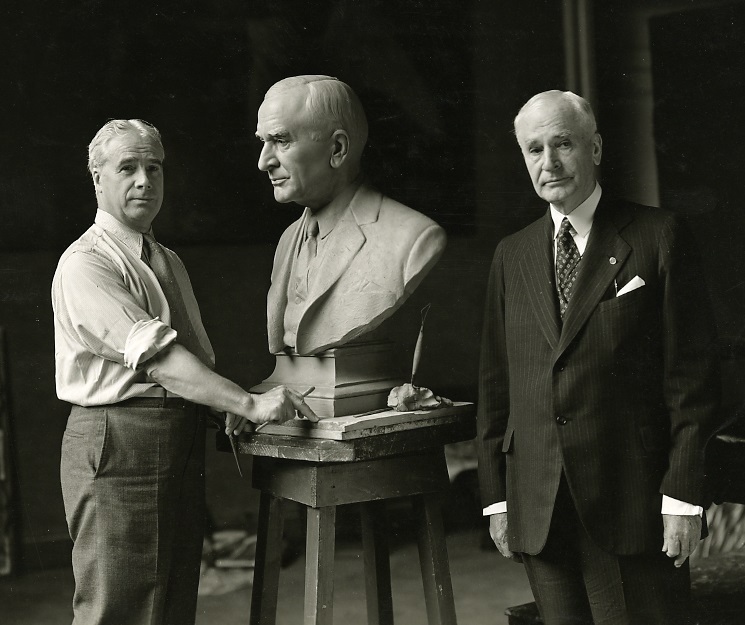
Sculptor Bryant Baker with Cordell Hull (TN State Library and Archives photo)
SIDEBAR: Pickett County to UN
TN.56: Describe Tennessee’s contributions during World War II, including the impact of Camp Forrest, Camp Tyson, and Oak Ridge (e.g. Manhattan Project), as well as the influence of Tennesseans during the war (e.g. Cornelia Fort and Cordell Hull).
Click here to take the TN History for Kids virtual tour of the Cordell Hull Birthplace.
Chapter 41: Superhighways
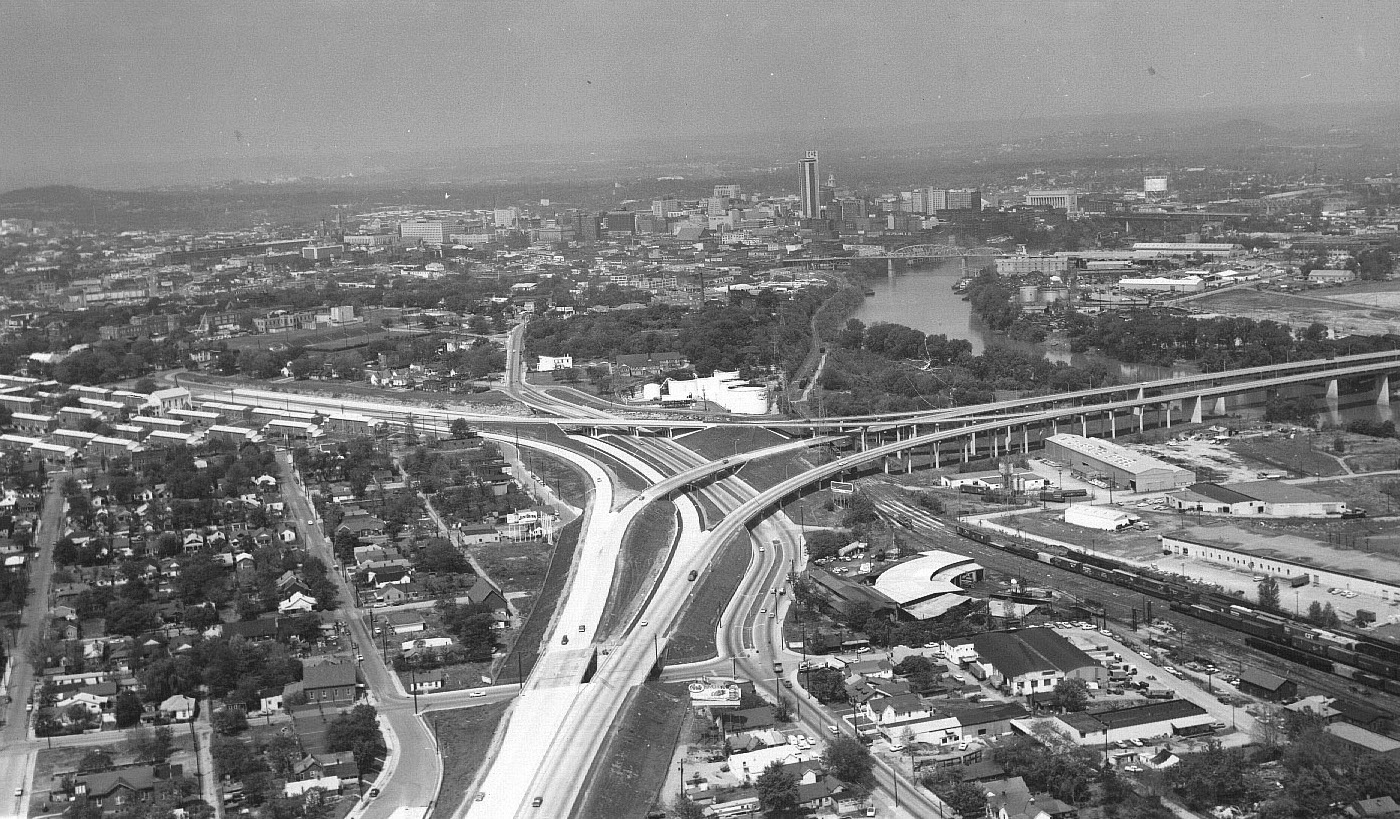
TN State Library and Archives
TN.51: Identify Governor Austin Peay and his influence on Tennessee’s infrastructure and education.
TN.58: Analyze the significance of key Tennesseans on both state and national levels during the 1950s and 1960s, including Al Gore, Sr.
Click here for a column I wrote about Citizens to Preserve Overton Park v. Volpe.
Click here to see parts of the important U.S. government document known as the “Yellow Book,” which would eventually determine where interstate corridors would go through Tennessee’s four major cities.
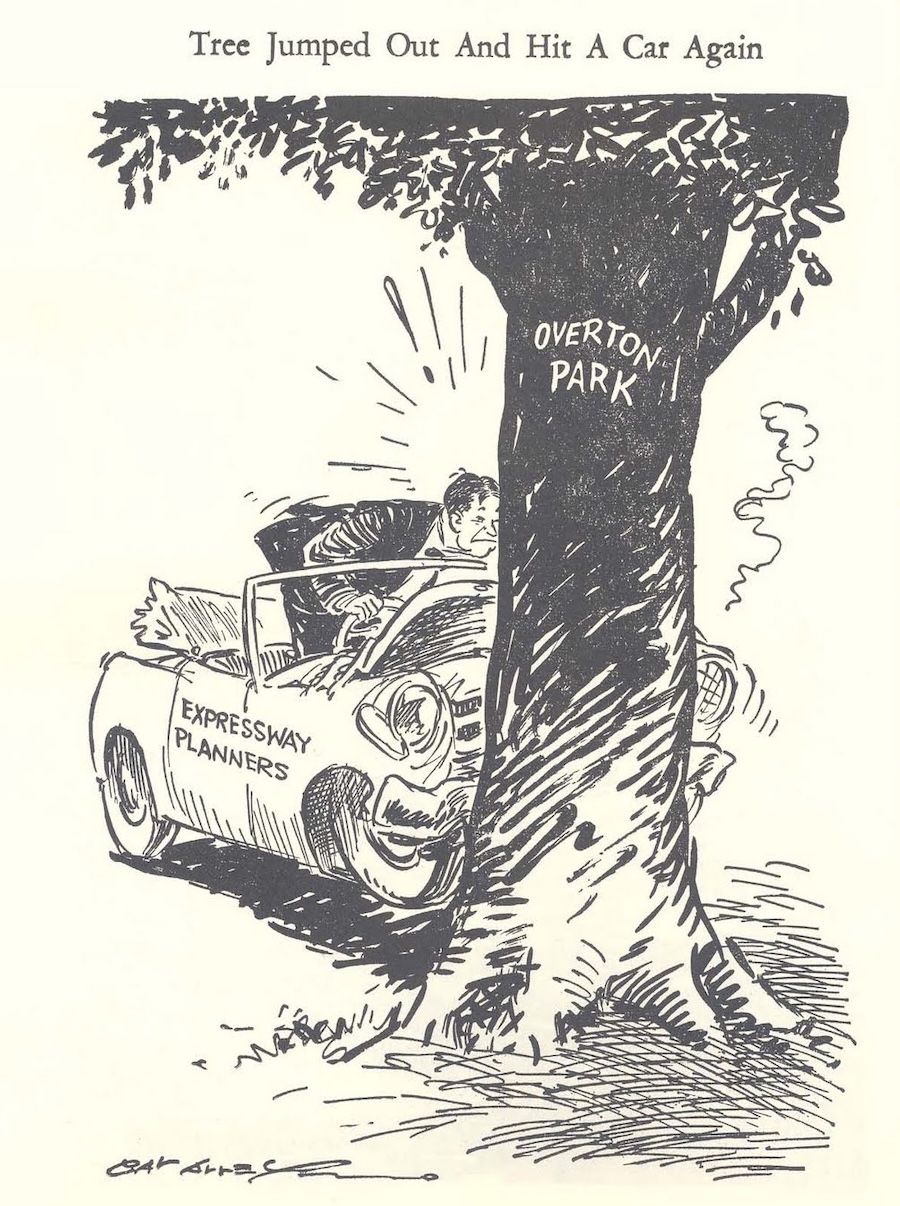
Click on the image on the left to show your students the editorial cartoon on page 110. (Obviously, students today need to know what editorial cartoons are, and they don’t have a chance to see them as much as people did in previous decades.)
Chapter 42: Money from Music
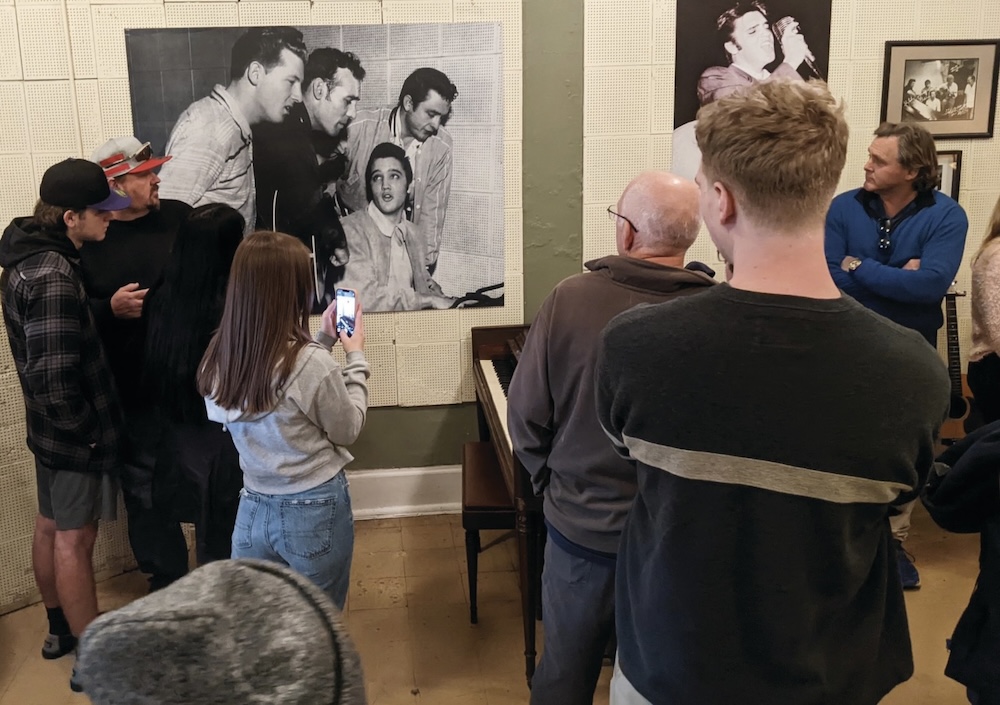
TN.62: Discuss the development of rock ‘n’ roll music in Tennessee and its impact on the changing American culture, including the significance of Elvis Presley, Stax Records and Sun Studio.
TN.65: Identify major attractions and events that fuel the tourism industry in Tennessee, including the impact of: CMA Music Festival
You can find information that goes along with this chapter on the Shelby, Davidson, Union and Hickman County history sites.
Click here to read a “History Bill”-written column about how Sun Studio launched Elvis Presley’s career.
Click here to taken to the website of the Sun Studio in Memphis and here to be taken to the website of the Stax Museum.
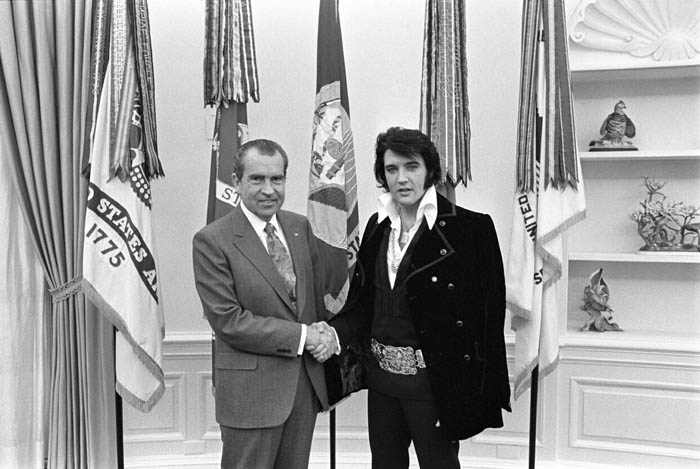
Library of Congress photo of The King with some president
SPECIAL PROJECT:
The best way to teach about the music of Tennessee is to PLAY the music of Tennessee, and a lot of this music can be found on the Internet. Here are some examples:
W.C. Handy playing “St. Louis Blues”
Dr. Humphrey Bate and the Possum Hunters performing “How Many Biscuits Can You Eat?”
DeFord Bailey playing “Pan American Blues”
The Carter Family singing “Wildwood Flower”
Isaac Hayes performing “Shaft”
Elvis Presley performing “Hound Dog”
Dolly Parton singing “I Will Always Love You”
FINALLY, click here to see Waylon Jennings singing with Big Bird in a pickup truck.
If that doesn’t make your students smile, then nothing will!
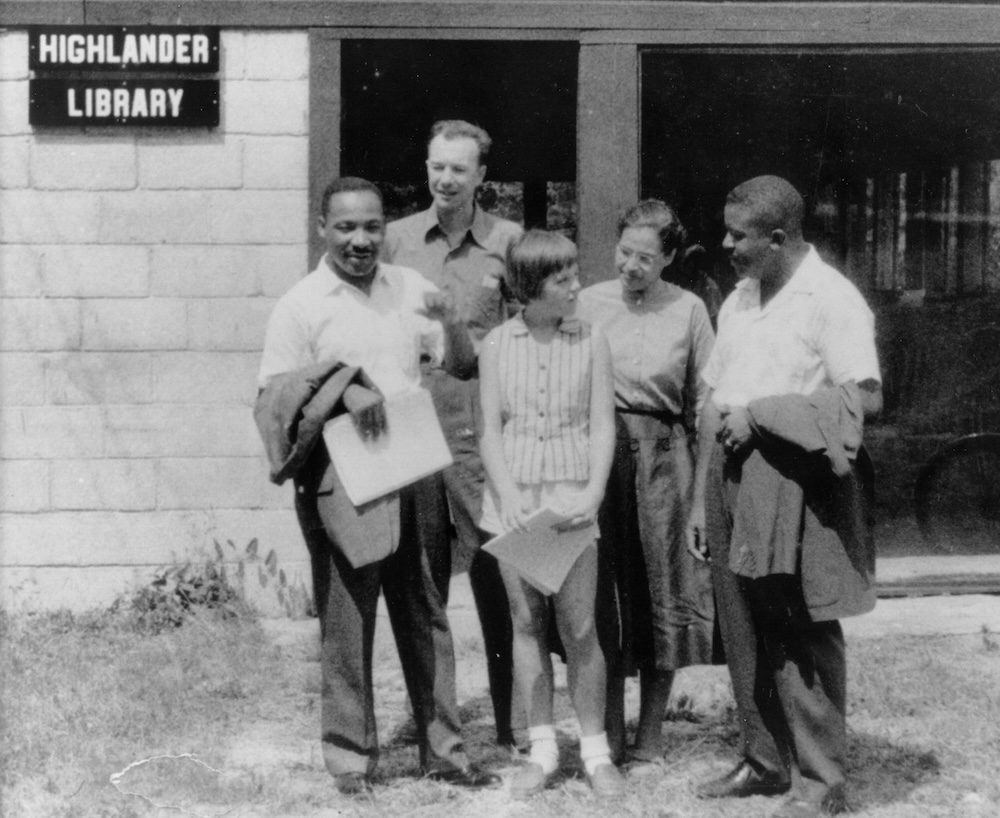
Highlander Research Center photo
Chapter 43: Training Ground
TN.58: Analyze the significance of key Tennesseans on both state and national levels during the 1950s and 1960s, including Frank Clement, Estes Kefauver and John Siegenthaler.
TN.59: Describe Tennessee’s role in the Civil Rights Movement, including the Highlander Folk School and the Columbia Race Riots
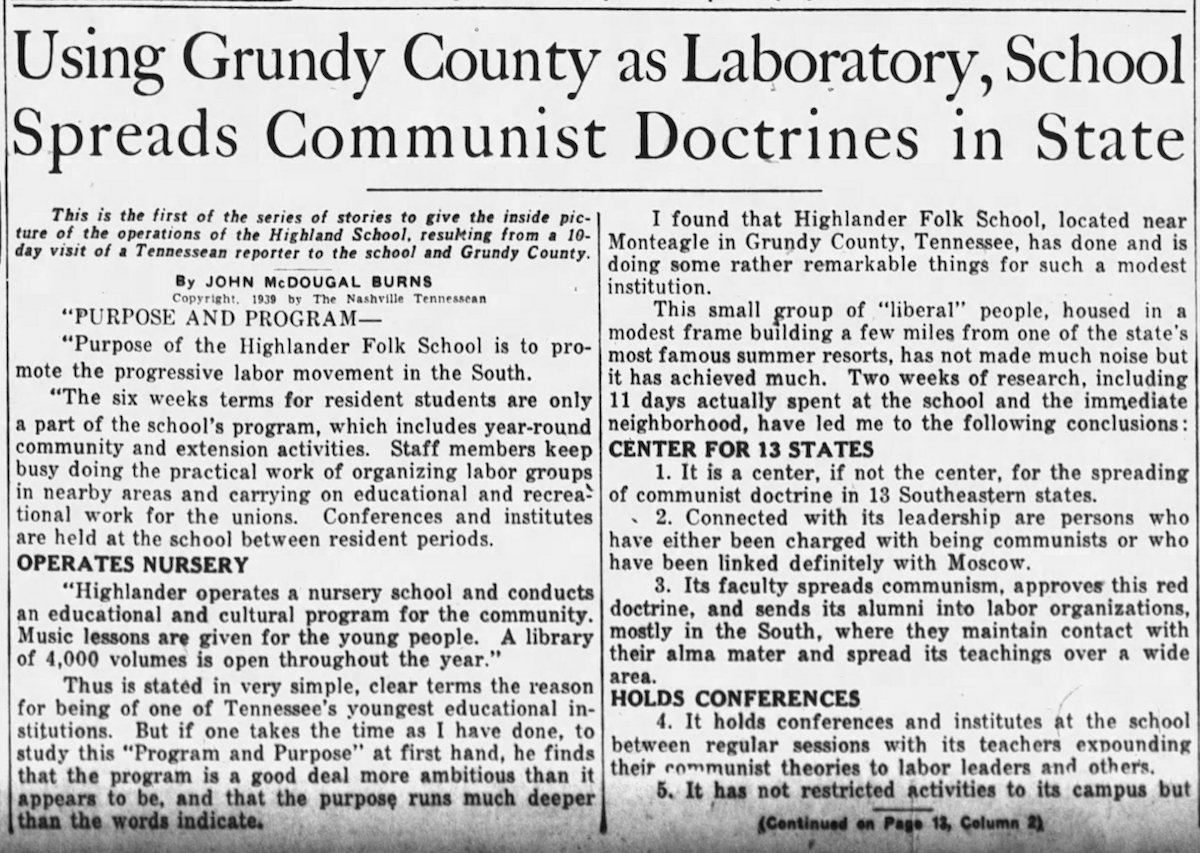
Nashville Tennessean; Oct. 15, 1939
Click here for a virtual tour of “In Search of Highlander Folk School.” This has been the subject of many Tennessee History for Kids inservices; please keep track of those and another one will come around!
A lot of people associate the Tennessean with liberal causes. but it wasn’t like that in 1939. Click on the image to the left to read the beginning of one of the articles about the Highlander Folk School that was published by the Tennessean in 1939.
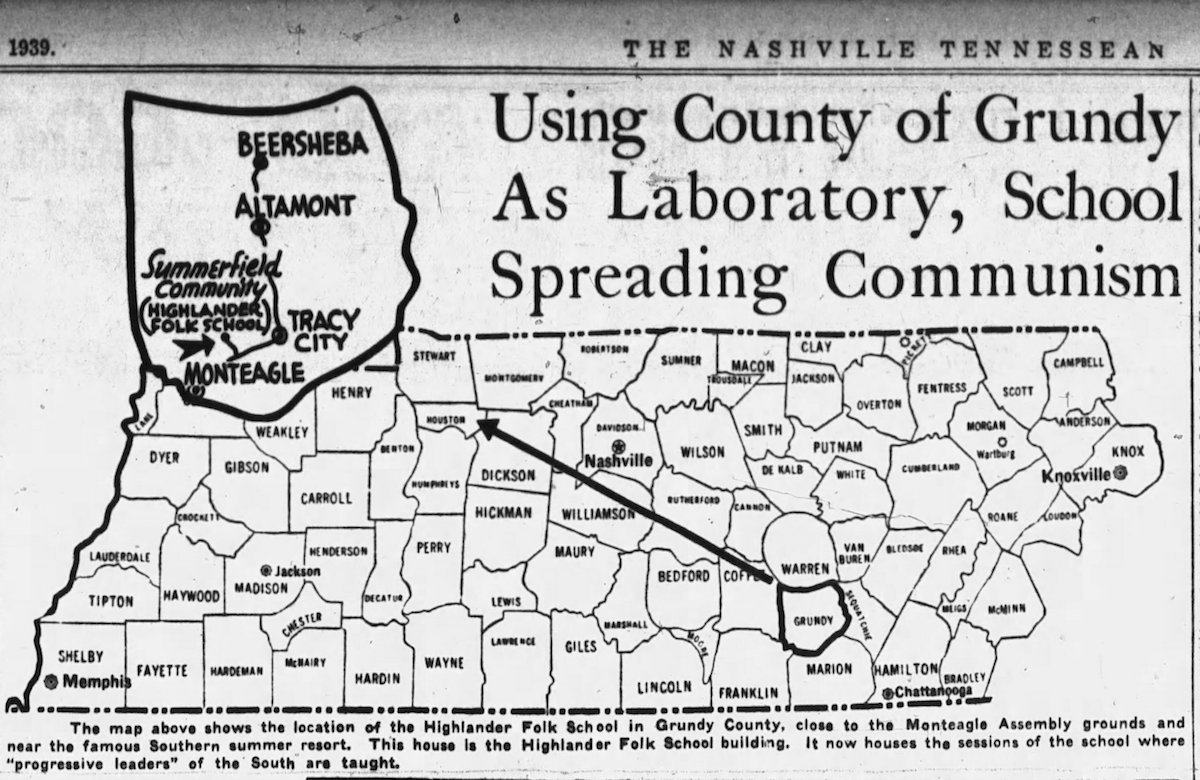
Nashville Tennessean, Oct. 15, 1939
Click on the right to see a map that was published along with that series of articles in the Tennessean.
This developing story: In April 2019, one of the buildings at the Highlander Education and Research Center burned in an apparent arson. A white power symbol was found on the site, raising the possibility that the fire was set by a terrorist organization. Click here to see a story about this.
Chapter 44: With All Deliberate Speed
TN.58: Analyze the significance of key Tennesseans on both state and national levels during the 1950s and 1960s, including Frank Clement and Estes Kefauver.
TN.59: Describe Tennessee’s role in the Civil Rights Movement, including Scarboro 85 and the Clinton 12
TN.60: Identify major Tennessee figures involved in the Civil Rights Movement (e.g. Rev James Lawson, Kelly Miller Smith).
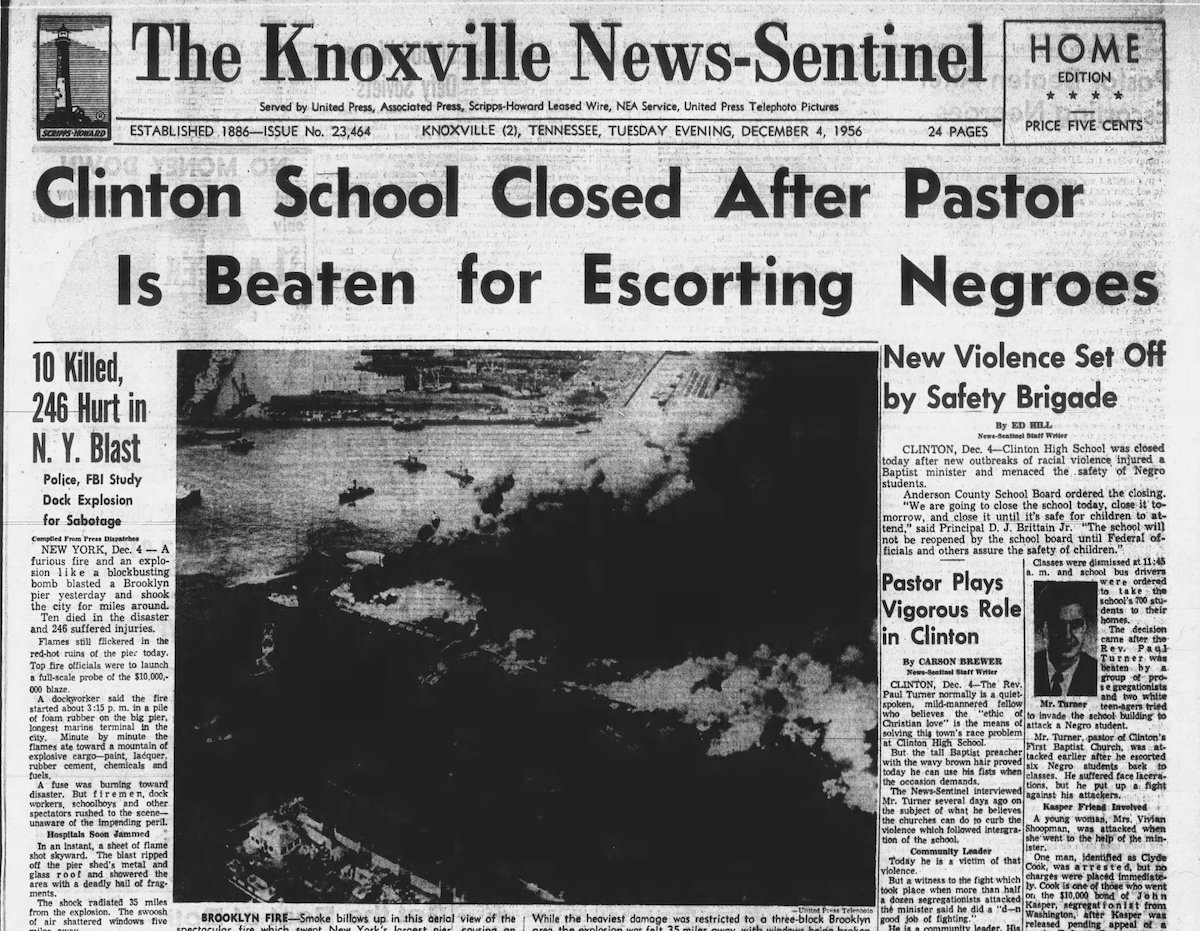
Knoxville News Sentinel, Dec. 4, 1956
In the fall and winter of 1956, the front page of the Knoxville News Sentinel was frequently dominated by news of the Clinton High School desegregation. Click on the image on the right to see what I mean.
In July 2017 I interviewed Bobby Cain on stage at the Tennessee History for Kids tent revival. Here is a column about what he said and here is a story about the event that was produced by Nashville’s public radio station.
Bobby Cain died in September 2025. Click here to read his obituary on the webpage of his college fraternity, Omega Psi Psi.
Chapter 45: Sit Ins
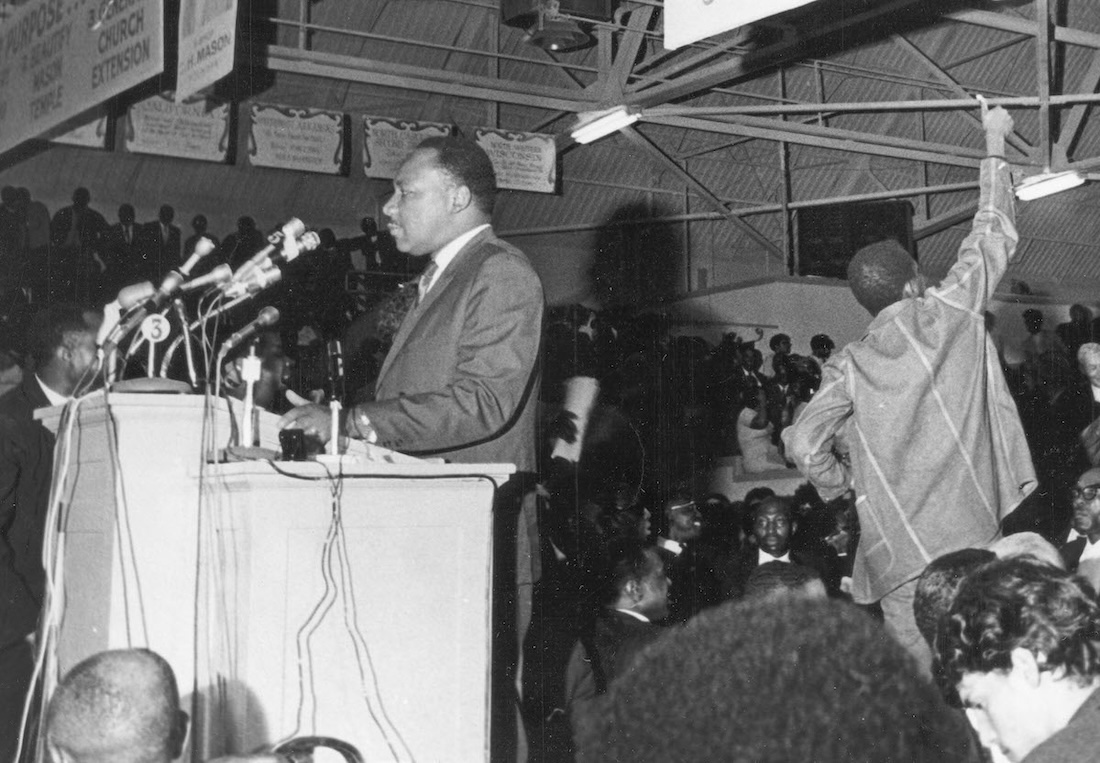
University of Memphis Library Special Collection photo
TN.58: Analyze the significance of key Tennesseans on both state and national levels during the 1950s and 1960s, including John Seigenthaler.
TN.59: Describe Tennessee’s role in the Civil Rights Movement, including Sit Ins, Diane Nash and John Lewis 85.
TN.60: Identify major Tennessee figures involved in the Civil Rights Movement (e.g. Rev James Lawson, Kelly Miller Smith).
The best resource in terms of covering the Nashville Sit Ins is a 1960 documentary produced by Robert M. Young. The documentary is notable for the fact that, since people’s attention spans were longer then, the interviews in this documentary are longer than we we are used to seeing today. I suggest teachers show the whole thing because it tells the story very well.
Click here to see it.
I need to point out that the young attorney named George Barrett, who is interviewed starting at the 3:09 point, represented ME about 40 years later in a lawsuit over secret meetings at the legislature! It was quite a thrill having George Barrett represent me in a lawsuit!
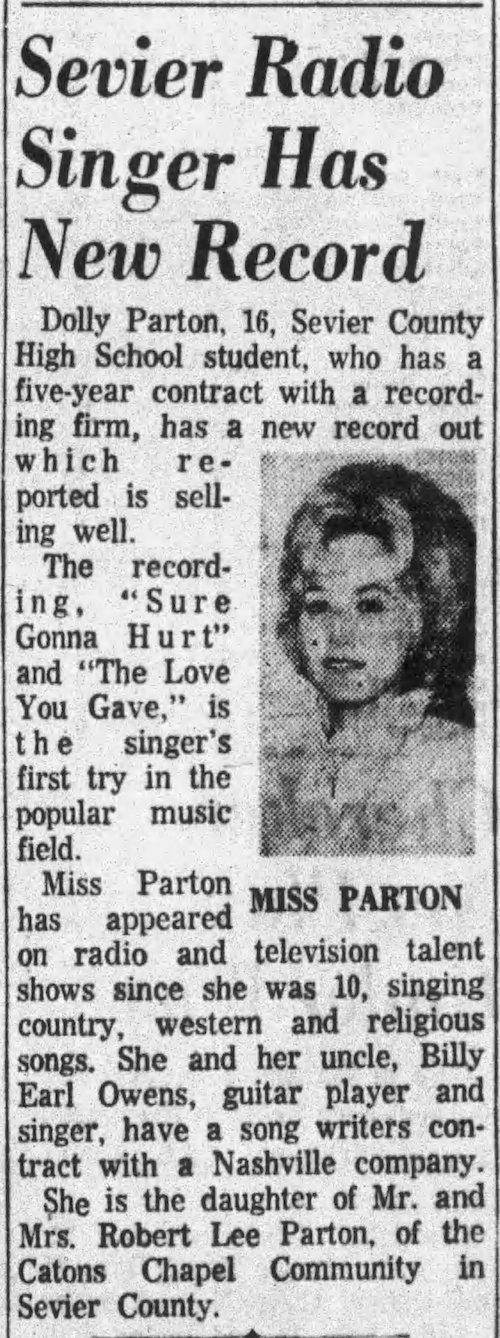
Knoxville Journal; Aug. 25, 1962
Chapter 46: Making History
TN.64: Identify the contributions of influential Tennesseans of the era, including Al Gore Jr., Alex Haley, Dolly Parton, Wilma Rudolph, Pat Summitt and Oprah Winfrey
Click here to see the PEOPLE page of the TN History for Kids website, which features short biographical sketches of some the people mentioned in this chapter.
Click on the right to read the first article about Dolly Parton in the Knoxville newspaper, from 1962.
Chapter 47: Why People Visit Tennessee
TN.63: Describe cultural developments in the 1970s and 1980s, including the Country Music Hall of Fame, Music Row and Opryland.
TN.65: Identify major attractions and events that fuel the tourism industry in Tennessee, including the impact of: Bristol Motor Speedway, Gatlinburg/Pigeon Forge, Civil War sites, State and national parks, CMA Music Festival, Tennessee Aquarium, Graceland, and the National Civil Rights Museum.
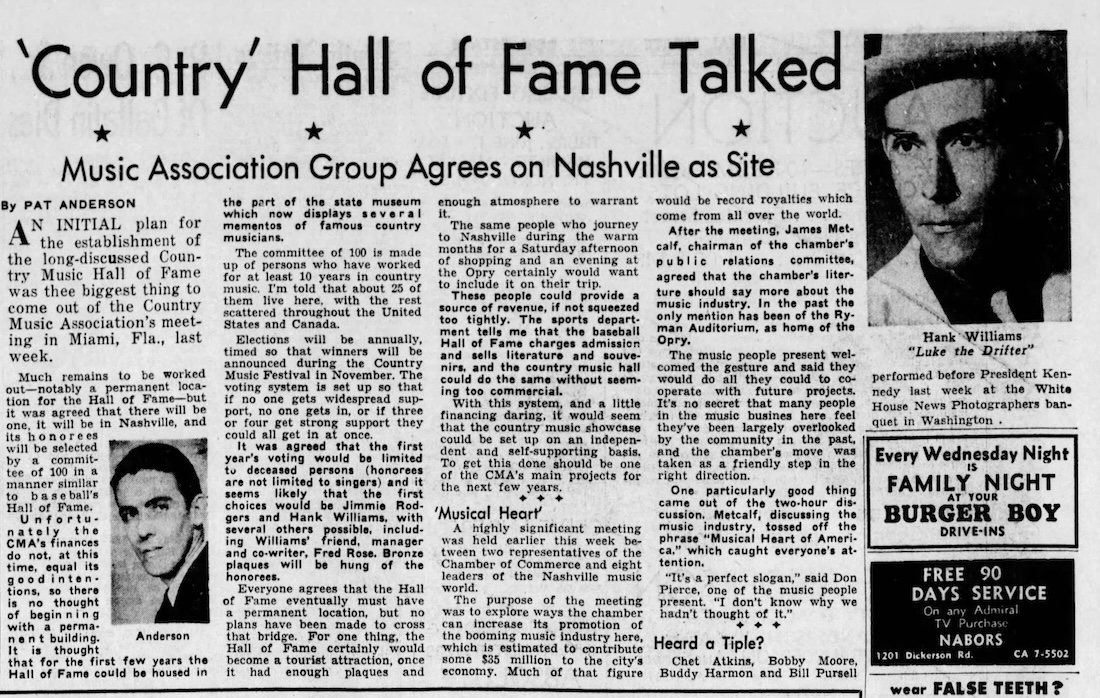
Tennessean; May 28, 1961
Here’s a weird historical link:
Click on the right to see the first article about the Country Music Hall of Fame in 1961. At that point, it was in the “idea” phase.
As it turns out, the original County Music Hall of Fame went to a site previously mentioned in this book, on page 94 — the corner of 16th Avenue and Division — a lot occupied in the 1920s by the Tennessee headquarters of the Ku Klux Klan!
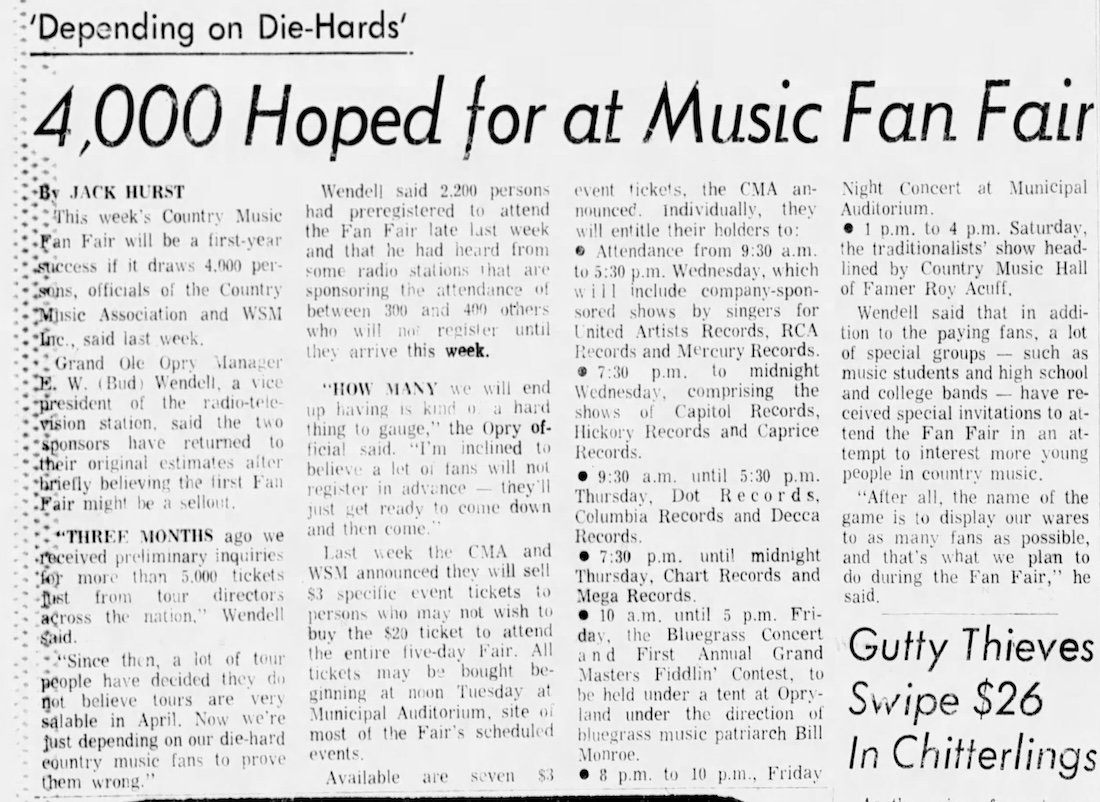
Tennessean; April 9, 1972
I first became aware of this when Mr. Andrew Benedict, who was involved in fundraising for the Hall of Fame, told this, in 1999.
(It goes without saying that no one associate with the Country Music Hall of Fame ever pointed this out, and that very few of them even knew this.)
Speaking of country music, click on the article on the left to see a Tennessean story about Fan Fair published in 1972. It goes without saying that CMA Week got off to a humble start!
Chapter 48: Business and Political Shifts
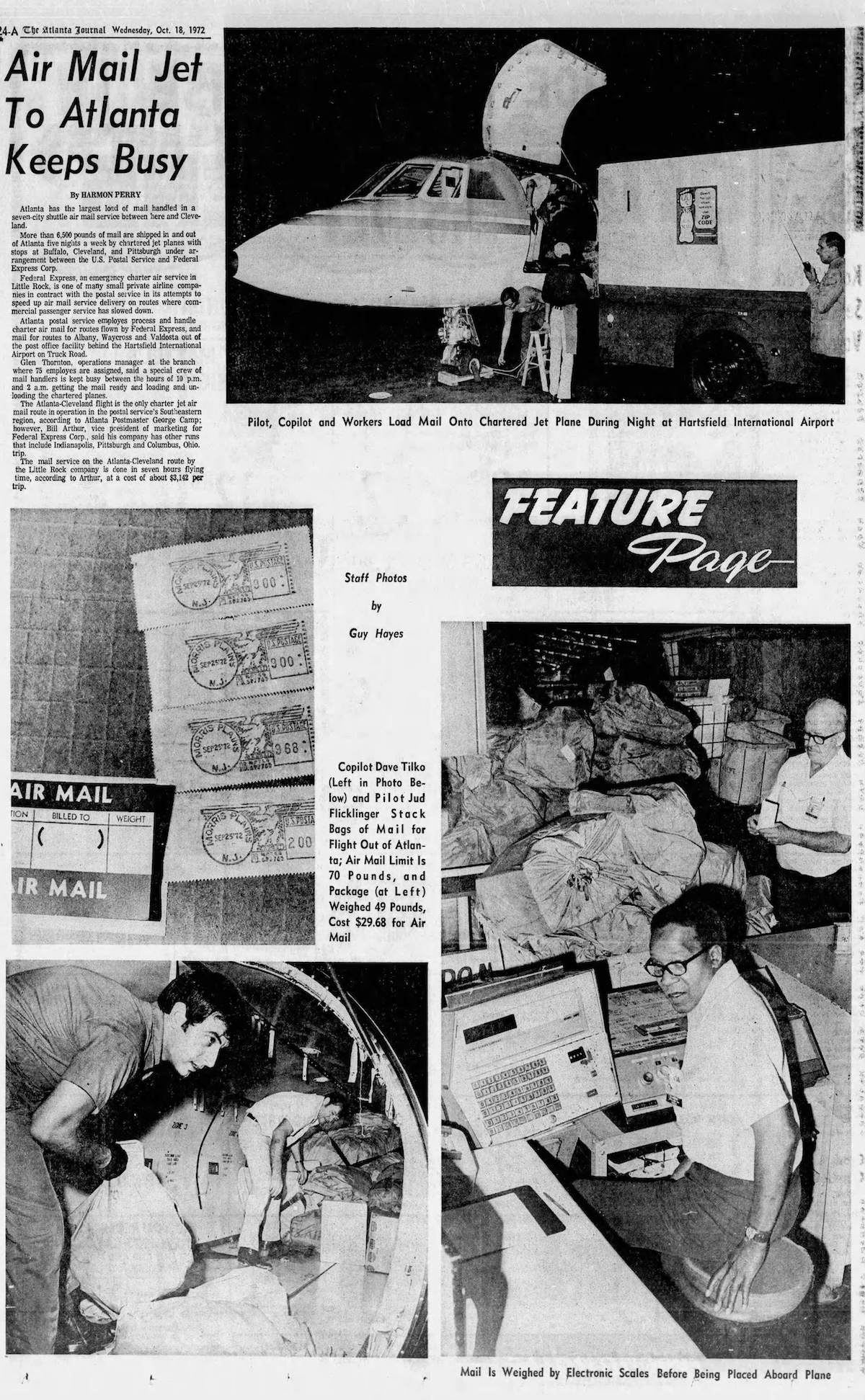
Atlanta Journal; Oct. 18, 1972
TN.63: Describe cultural developments in Tennessee during the 1970s and 1980s, including the 1982 World’s Fair.
TN.64: Identify the contributions of influential Tennesseans of the era, including Howard Baker and Lamar Alexander.
TN.66: Discuss the impact of major businesses in Tennessee, for example: Autozone, Nissan, Eastman, Toyota, FedEx, Volkswagen, and HCA.
What I tried to do in Chapter 48 was succinctly explain what’s happened in Tennessee’s economy and politics during the last 40 years.
Click on the right to see one of the first-ever articles about Federal Express Corp.
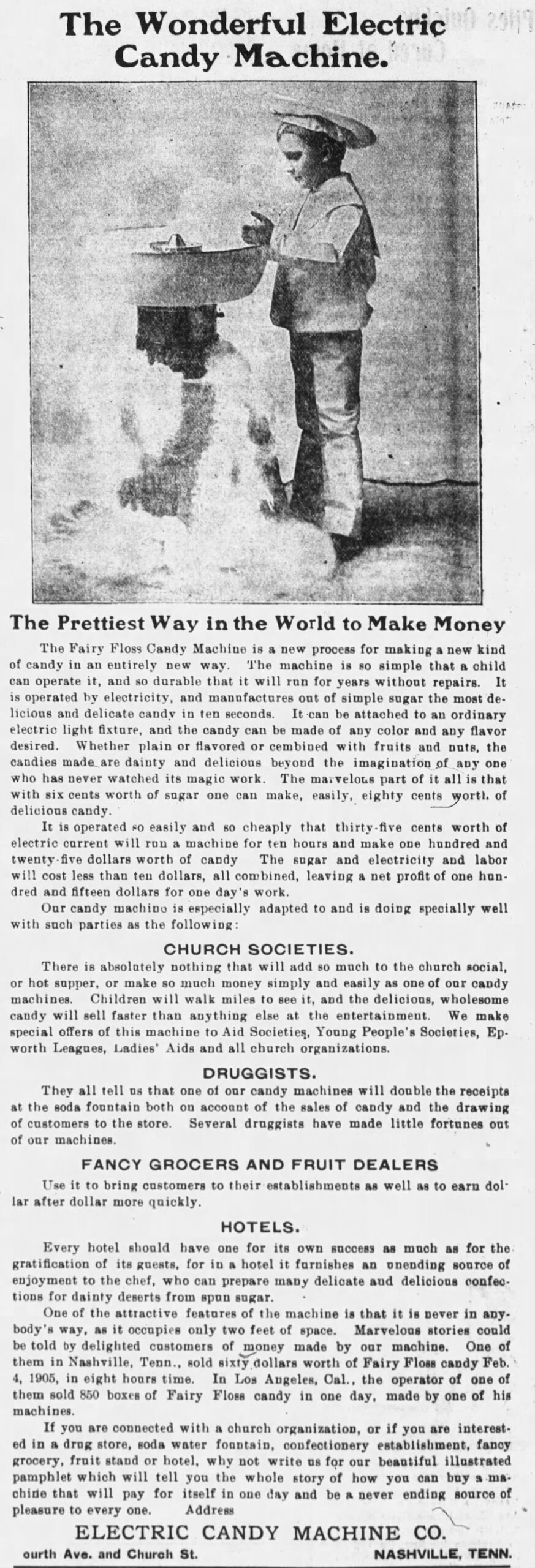
An early ad for fairy floss — later known as cotton candy — in the Jan. 25, 1906 [Tennessee] Baptist Reflector.
Sidebar: Moon Pies and Cracker Barrel
TN.67: Describe significant and/or unique products from Tennessee (e.g. Cracker Barrel, Goo Goo Cluster, Moon Pie, Mountain Dew, Jack Daniels/Uncle Nearest).
Click on the right to see an early ad for “fairy floss” (now known as cotton candy), which was invented by two Nashville men in 1897.
This workbook was written for students taking the high school elective on Tennessee history, and this web page contains further information about the events and names contained in chapters 17-32 of the workbook.
For the online teacher’s guide to chapters 1-16 click here; for the online teacher’s guide to chapters 17-32, click here.