Teacher’s Guide to Free and Independent State (2027 edition)
Welcome to the teacher’s guide to the 2027 edition of the Tennessee History for Kids workbook Free and Independent State.
Rather than buying a single classroom set, please consider buying one for every student. TN History for Kids sells these workbooks for only $3 each and prints them on non-glossy paper because we want students to write in their booklets and keep them.
Please do NOT copy the booklets. That is a violation of our copyright and makes it difficult for our non-profit organization to exist.
If you would like the answers to the quiz questions in the workbook, please email bill@tnhistoryforkids.org,using your work email address, and tell him your name and the school at which you teach.
Chapter One: Journey Downriver

Standard(s):
8.14. Identify the influence of the Cumberland Gap in the settling of Tennessee
8.31 Identify how westward expansion led to the statehood of Tennessee
A first-person account of the events described in this chapter (called Donelson Party journal) still exists, and transcripts of it can be found on the internet. Click here to be taken to the TN State Library and Archives photo showing it.
In recent years historian Paul Clements has proven that parts of the journal were, in fact, written by Colonel Donelson, while other parts were written a generation later by his son, who was also on the journey.
Click here to read more about this.
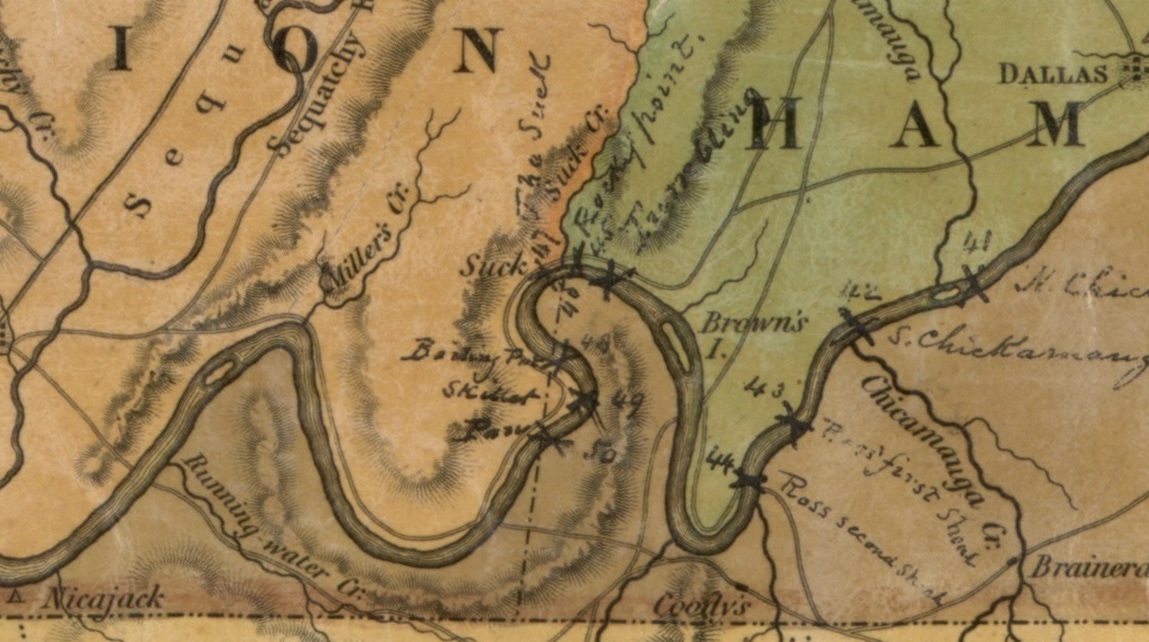
Matthew Rhea 1832 map
If you live in northeast Tennessee, a great place to learn more about the Donelson journey is at Sycamore Shoals State Historic Park. Click here for a virtual tour of it.
Finally, the map shown on page 15, and on the left, is fascinating to say the least. The original map was created by Matthew Rhea in 1832; it is part of a much larger map of the entire state. However, the TN State Library and Archives does not know who hand wrote the barriers that you see marked along the map (Suck, Boiling Pot, Skillet, etc.) These navigational barriers were buried forever when the Tennessee Electric Power Company built Hales Bar Dam in the early 1900s, but this map shows exactly where they were.
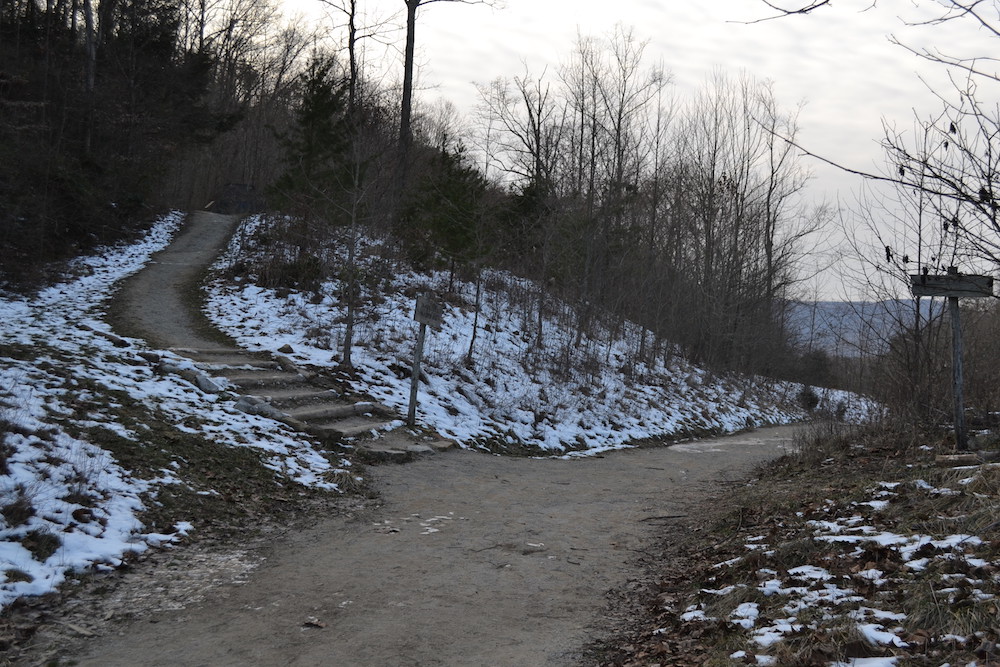
Here is where the foot path crosses the actual “saddle” of the Cumberland Gap.
Cumberland Gap
Standard(s):
8.14. Identify the influence of the Cumberland Gap in the settling of Tennessee
Click here to take the Tennessee History for Kids virtual tour of the Cumberland Gap and here to see the video where “History Bill” goes through the gap with none other than Daniel Boone.
Chapter Two: Kings Mountain
Standard(s):
8.14. Identify and explain the significance of the following during the American Revolution:
Battle of Kings Mountain
Click here for the TN History for Kids virtual tour of Kings Mountain National Military Park.
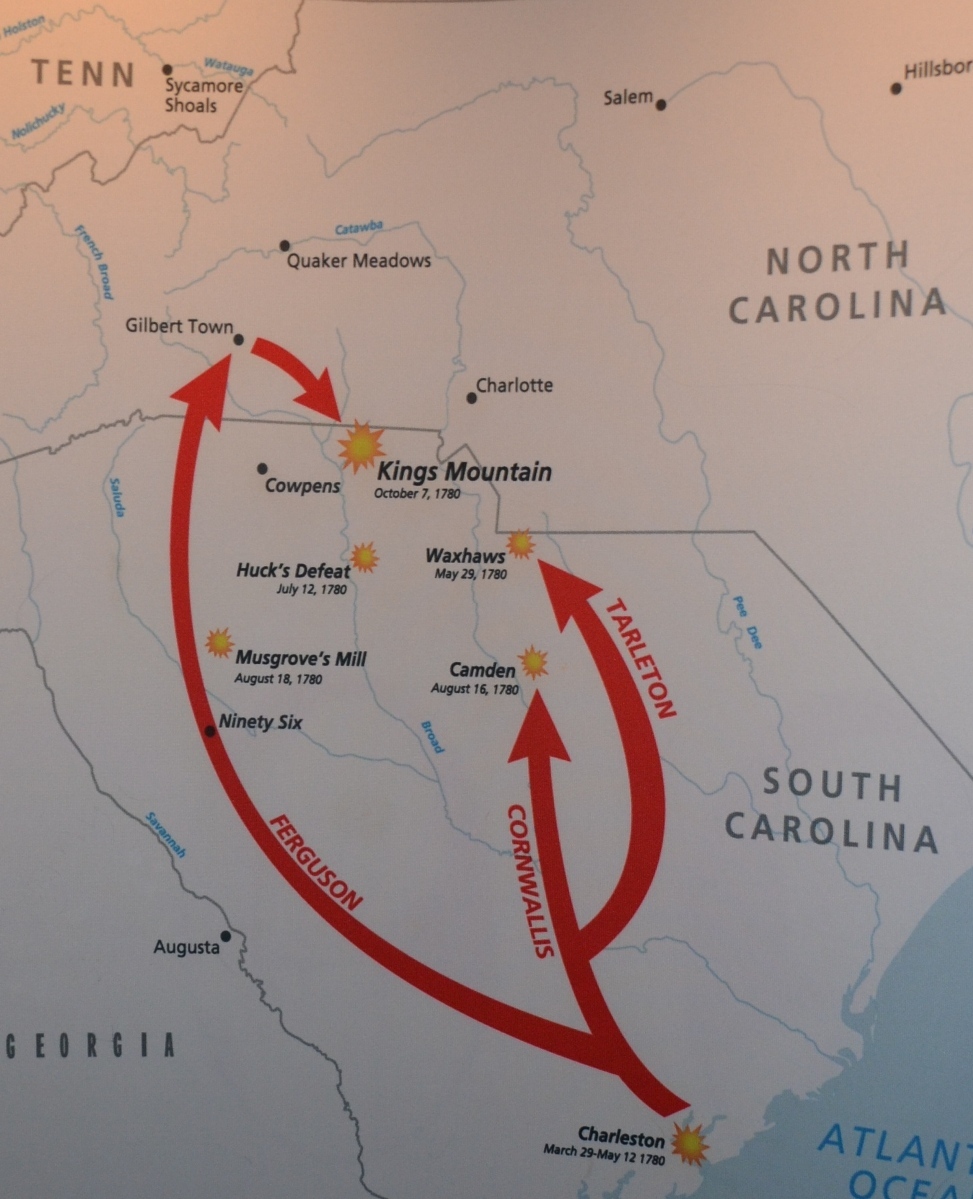
If you click on the map to the left, you can see it better than you can in the workbook. To me, the most interesting thing about this map is how Sycamore Shoals is nearly directly NORTH of Kings Mountain. Normally, we think of South Carolina as east of Tennessee… but in fact, parts of South Carolina are west of parts of Tennessee.

Shelving Rock
Shelving Rock, shown on page 19, sits alongside state highway 143, just south of the town of Roan Mountain. I have to admit that I drove right past it the first time without realizing what it was.
There is a point about the Battle of Kings Mountain which sounds made up, but apparently isn’t. Major Patrick Ferguson traveled with two girlfriends, one of which was called Virginia Sal and the other Virginia Paul. This information apparently came from the interviews of historian Lyman Draper, and it is mentioned several times in this video shown at the Kings Mountain National Battlefield.
For more information about Kings Mountain, I recommend this book of first-person accounts of the battle.
 Chapter Three: Franklin–Lost in More Ways Than One

Standard:
8:23. Identify the Articles of Confederation as America’s first constitution, and explain its weaknesses as exemplified by The Lost State of Franklin
Click here for our virtual tour of the Lost State of Franklin.
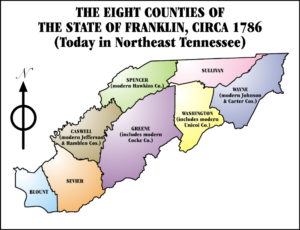
Click on the right to show your students a much larger version of the map shown in this chapter.
Chapter Four: A State Far From Complete
Standards:
8.31 Identify how westward expansion led to the statehood of Tennessee and the importance of its first state constitution
8.34 Evaluate the effectiveness of negotiations between the U.S. government and American Indians during the time period.
 On the right is the map on page 31. Click on it to make it bigger. This map leads to two questions: First of all, if you were a U.S. Congressman in 1796, would YOU have voted to allow Tennessee to become a state? I probably wouldn’t have. After all, Tennessee hardly looked ready for statehood.

The former site of Fort Blount (Brian Stansberry photo)
Also, does the fact that Tennessee became a state so early, when its map looked like that, indicate that there was ALREADY an assumption that the Cherokee and Chickasaw Indians were going to be sent west? It makes you wonder.
There are two TN History for Kids virtual tours that are related to the topics in this chapter. Click here for a virtual tour “in search of” the first road across the Cumberland Plateau. Click here for a virtual tour of the parts of Philadelphia, Pennsylvania, that would have been the center of the U.S. government when Tennessee became a state.
Chapter Five: Vols Win at New Orleans

Standard(s):
Explain the causes, course and consequences of the War of 1812, including the roles of Andrew Jackson and Tecumseh
Click here for a tour of Horseshoe Bend National Military Park in Alabama and here for a virtual tour of the battlefield of New Orleans.
 Chapter Six: Land of Hardwood and Cotton

Standards:
8.31 Identify how westward expansion led to the statehood of Tennessee and the importance of its first state constitution
8.42 Describe the development of the agrarian economy of the South, including the location of the cotton belt, the significance of cotton and the cotton go, the growth of enslavement and the significance of the planter class and yeoman farmers.
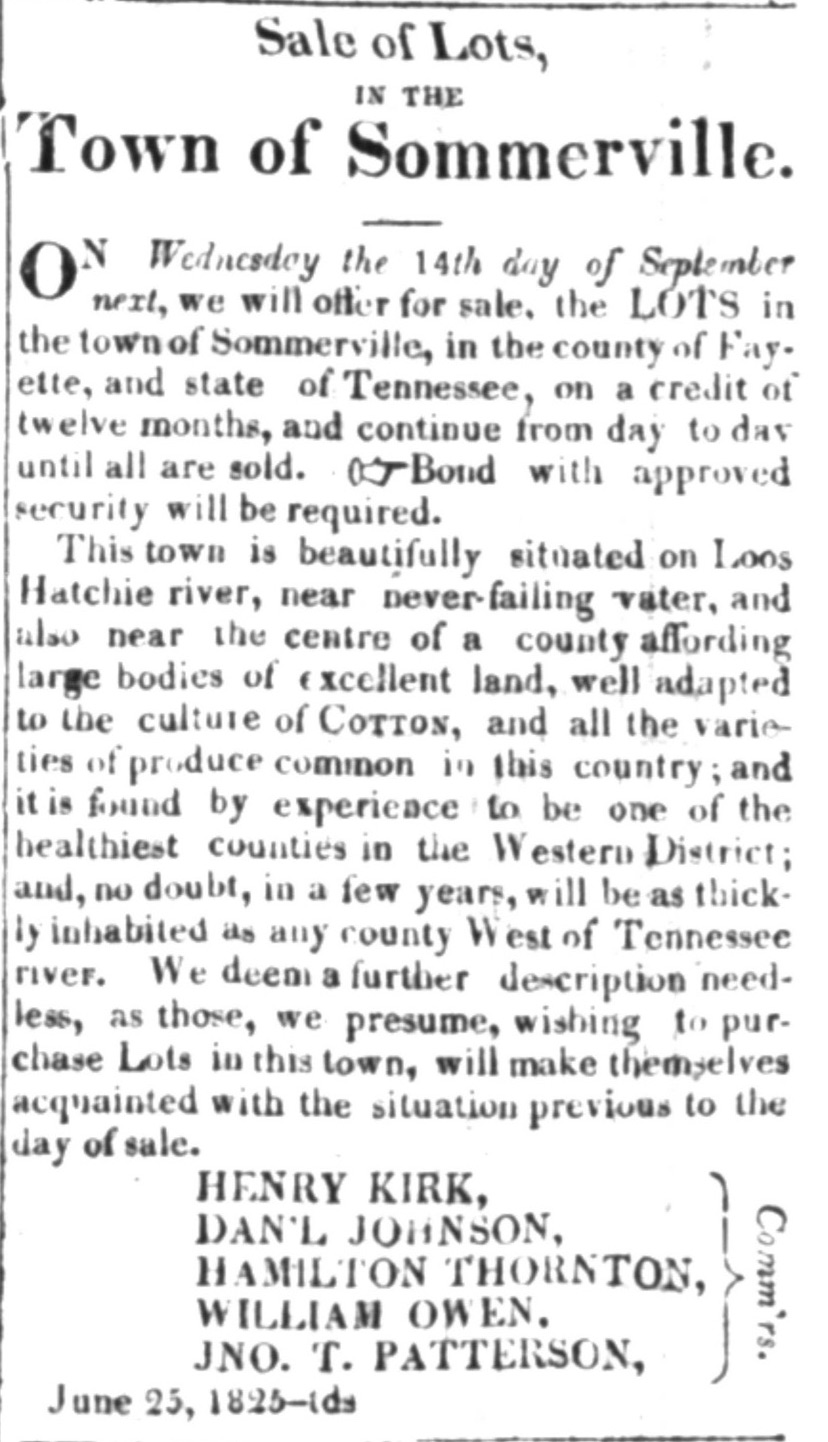
I have many “promotional articles” from old Tennessee newspapers about West Tennessee towns that were being formed in the 1820s.
I’ve uploaded three of them here — one for Memphis, one for Somerville (which was originally spelled with two m’s), and one for Dresden.
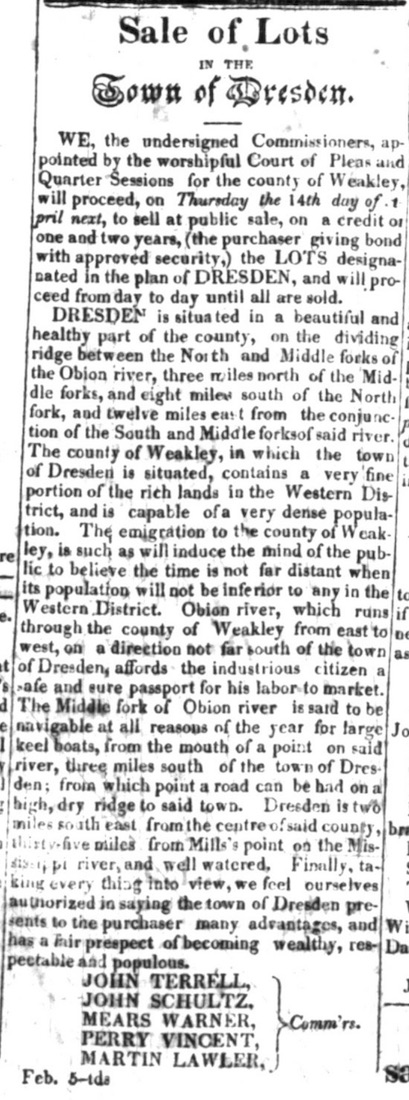 The quality of some of them isn’t great. But remember: These are saved from microfilm! It is remarkable that the quality is as good as it is.
Just click on them to make them larger.
Click here for a virtual tour of the former site of Randolph — a ghost town mentioned in this chapter.
Click here for an amusing (but informative) TN History for Kids video where “History Bill” learns all about the cotton trade.
Finally, I strongly recommend purchasing a copy of David Crockett’s autobiography. Assuming you can’t, click here to read a transcript of it online.
Chapter 7: Constitution of 1834
Standard:
8.41: Identify changes to voting rights under the Tennessee Constitution of 1834, including the expansion of voting rights to non-property owners and the removal of voting rights for free African American men.
Click here to read the Tennessee Constitution of 1834 on the TN State Library and Archives website.
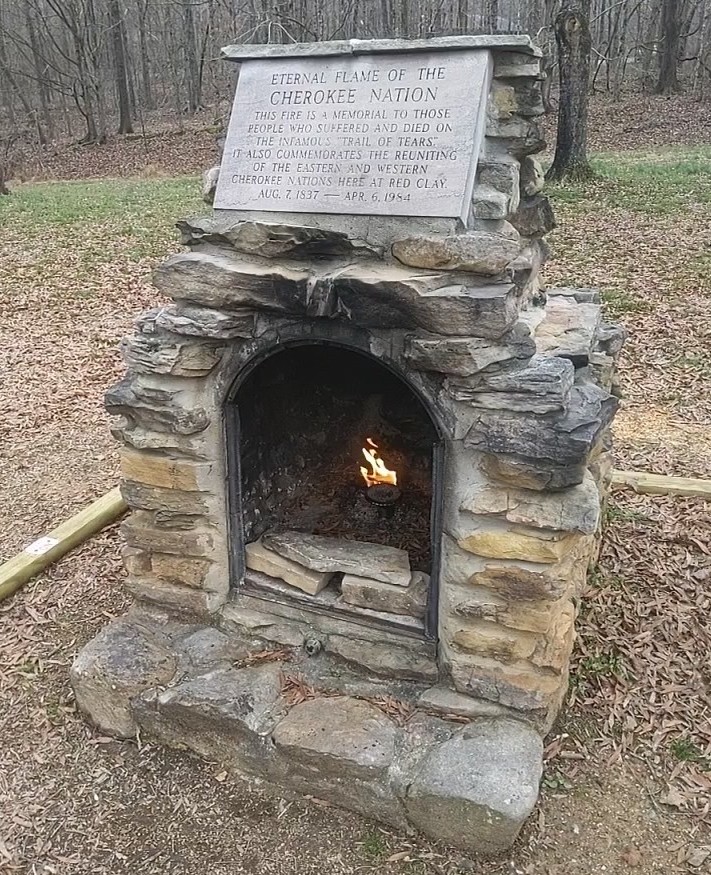
 Chapter 8: Red Clay to Trail of Tears
Standards:
8.34 Evaluate the effectiveness of negotiations between the U.S. government and American Indians during the time period.
8.40: Describe the impact of the Indian Removal Act and the struggle between the Cherokee Nation and the U.S. government, including the significance of Worcester v. Georgia and the Trail of Tears
Click here for a virtual tour of Red Clay State Historic Park; here for a virtual tour of New Echota State Park in Georgia; here for a virtual tour of the Museum of the Cherokee Indian in North Carolina; and here for tour “In Search of” Sequoyah.
Chapter Nine: The Other 25%
Standards:
8.42 Describe the development of the agrarian economy of the South, including the location of the cotton belt, the significance of cotton and the cotton go, the growth of enslavement and the significance of the planter class and yeoman farmers.
8.43: Describe the daily life and culture of enslaved person in the South prior to the Civil War, such as jobs performed, punishments and consequences, oral history, and the influence of religion and music.
8.44: Explain how enslaved persons resisted bondage in their daily lives, including passive and overt resistance and Nat Turner’s rebellion

Click here to see the half-hour long “KidsInar” which covers some of this same material.
Click here to read original issues of The Emancipator.
Click here to read the autobiography of J.W. Loguen, who was born into slavery in Sumner County, was sold to another slaverholder in Maury County, and then escaped to Canada when he was about 21 years old.
Click here to read about a permanent exhibit at the Robertson County Museum about the Wessyngton Plantation.
Click here to read more about a hardback book I wrote about slavery in Tennessee. Among other things, the book contains detailed data from no less than 906 different runaway slave ads which were published in Tennessee newspapers between 1793 and 1864.
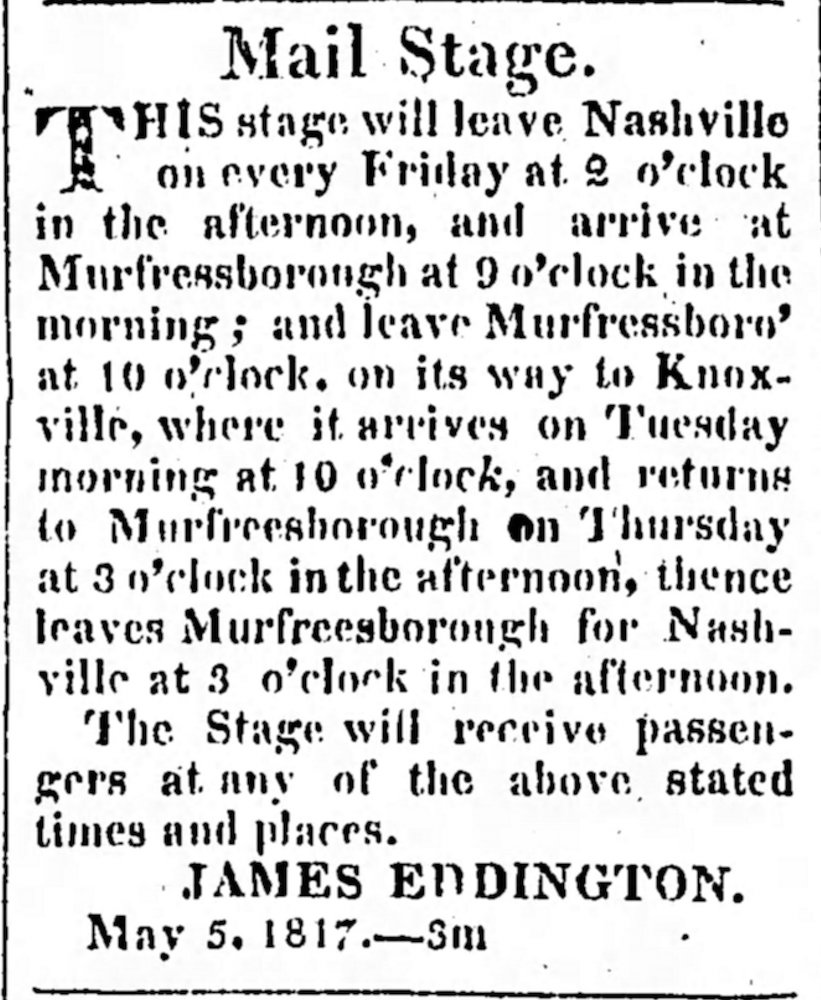
Nashville Whig; May 5, 1817
Chapter 10: Stagecoach to Railroad
Standard:
8.48: Analyze the development of roads, canals, railroads and steamboats throughout the United States, including the Erie Canal.

Knoxville Register; May 29, 1829
Regarding STAGECOACHES:
In the course of researching old Tennessee newspapers, I have frequently found advertisements about coach service, and it is from those ads that Chapter 10 came about.
Two mentioned in this chapter are on the right and left. Click on each to read it.
Regarding STEAMBOATS:
The journey of the New Orleans is well documented. Click here for the journey’s wikipedia page, which has a lot of information.
Click here for a TN History for Kids virtual tour that tells a lot of fascinating detail about the New Madrid Earthquakes.
If you wish to read a much longer version of the story of the steamboat New Orleans, see the Tennessee History for Kids workbook called Comet, Earthquake and Fire Canoe.

[Nashville] National Banner; March 15, 1828
Click on the image on the right to read an article in the Banner reporting the arrival of the steamboat Atlas in Knoxville.
And speaking of steamboats, click here to read a column about the steamboat that merchants of Fayetteville regretted buying.
Regarding RAILROADS:
Click here to read an ORIGINAL column I wrote on the subject of the Nashville and Chattanooga Railroad way back in 2007.
Click here to read a column I wrote on a related subject in 2015.
Also, click here for a virtual tour of the Baltimore and Ohio Railroad Museum in Maryland, and here for a virtual tour related to the Tennessee Central Railway.
Chapter 11: Remember the Tennesseans
Standard:
8.54: Describe the motivations for American settlements in Mexico-ruled Texas after 1821 and the causes of the Texas War for Independence, and determine the legacy of the Alamo, including Davy Crockett and Sam Houston.
Click here for a TN History for Kids virtual tour of the Alamo and here for a virtual tour “In Search of David Crockett.”
Finally, click here to see a video where “History Bill” visits the Alamo.
Chapter 12: Arrested for Selling a Sketch
[Nashville] Republican Banner; Feb. 6, 1846
Standards:
8.51: Analyze the significance of leading abolitionists, including William Garrison Lloyd, Frederick Douglass and Harriet Tubman, and the methods they used to spread the movement
8.58: Explain the reasons for and impact of the Compromise of 1850, including Harriet Beecher Stowe’s influence with Uncle Tom’s Cabin
Click here to read a detailed Tennessee Magazine column about the Peter Fisher case.

Nashville Daily Union; Dec. 7, 1848
Click here for more about Amos Dresser (from wikipedia).
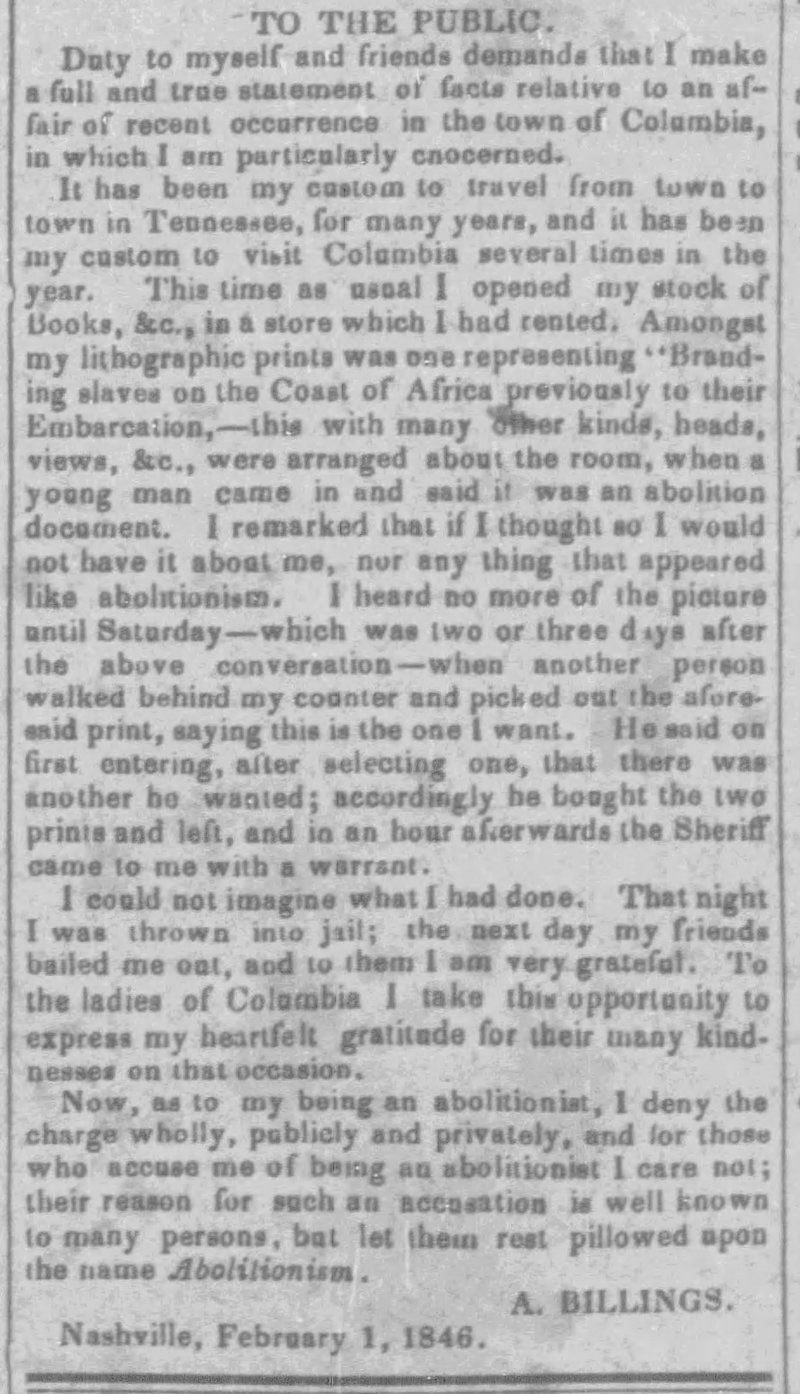
Click here to read a Tennessee Magazine column about the Alanson Billings’ case, and click on the image on the right for Billings’ explanation of what occurred when was arrested in Columbia in 1846.
Click on the left to read the article published about Richard Dillingham’s arrest in 1848.
Chapter 14
Standards:
8.59: Analyze the motivations and divisional effects of the Kansas-Nebraska Act of 1854, including the Rise of the Republican Party
8.62: Describe how sectional division in the United States led to Abraham Lincoln’s victory in the election of 1860
8.63: Describe the significance of the Battle of Fort Sumter and Tennessee’s struggle over the decision to secede
Click here for a TN History for Kids virtual tour “In Search of” William Walker (that includes photos taken in Central America!)
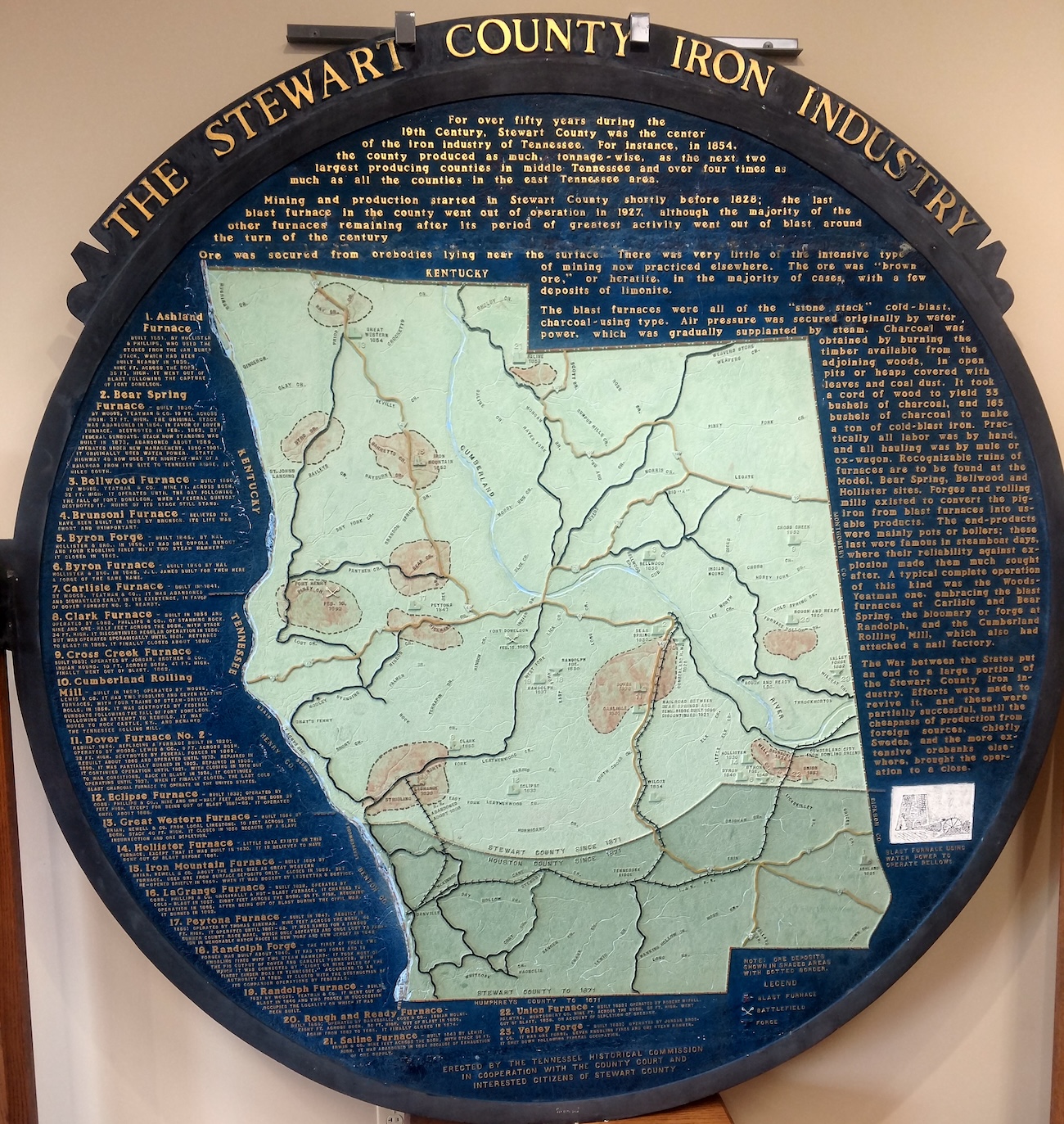
There are remnants of 19th century iron furnaces all over Middle Tennessee. There are photos of some of these on our Decatur, Hickman and Stewart County pages.
Click on the image on the top right to see a historic marker in Stewart County that talks about the 19th century iron industry in detail.
I didn’t say this in the workbook, but the author of the pro-Confederate Christian Advocate editorial was Holland McTyeire, who later co-founded Vanderbilt University. Click here to read a Tennessee Magazine column about him and the dormitory named for McTyeire.
Chapter 14
Standards:
8.64: Compare and contrast the Union and Confederacy at the outbreak of the Civil War, including military and political leadership, military strategies, infrastructure, agricultural and industrial strengths and population
8.65: Examine the goals, strategies and outcomes throughout the Civil War, including the Union campaign (e.g., General Ulysses S. Grant), the Confederacy’s Campaign (e.g., General Robert E. Lee), General William T. Sheman’s use of total war, and control of Tennessee.

Hal Jesperson map
Click on the right to see the map on page 69.
There are many TN History for Kids virtual tours of Civll War battlefields.
Click here for a virtual tour of Fort Donelson.
Click here for a virtual tour of Shiloh.
Click here for a virtual tour of Stone’s River.
Click here for a virtual tour of Carnton/Carter (the Battle of Franklin).
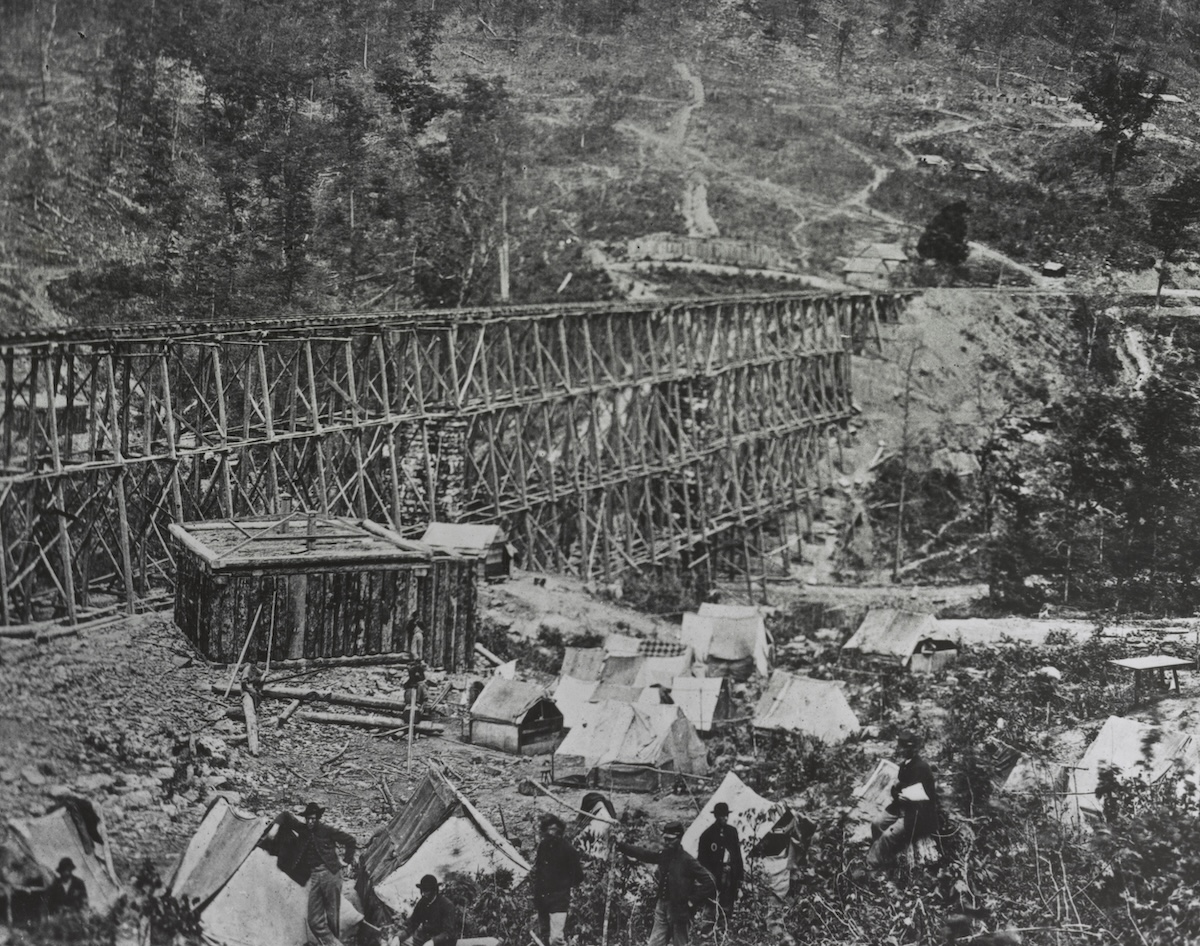
The railroad bridge across the Tennessee River in Marion County (Library of Congress photo)
Click here for a virtual tour in search of the Battle of Nashville.
Click on the image on the left to see the remarkable photo of the Running Water bridge across the Tennessee River shown on page 70.
Also, I highly recommend that all students in Tennessee go to a Civil War battlefield for a field trip. Plan ahead and go on the anniversary of the battle, when many national and state historic parks have living history programs.
Chapter 15
Standards:
8.64: Compare and contrast the Union and Confederacy at the outbreak of the Civil War, including military and political leadership, military strategies, infrastructure, agricultural and industrial strengths and population
8.65: Examine the goals, strategies and outcomes throughout the Civil War, including the Union campaign (e.g., General Ulysses S. Grant), the Confederacy’s Campaign (e.g., General Robert E. Lee), General William T. Sheman’s use of total war, and control of Tennessee.
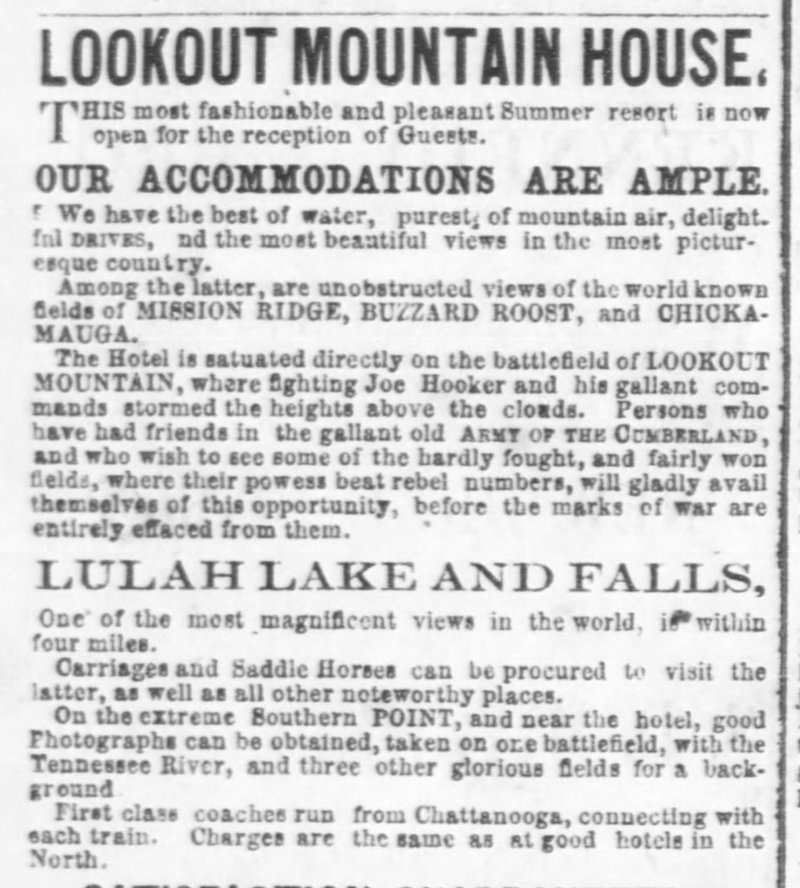
Knoxville Whig; August 16, 1865
Click on the right to see the Lookout Mountain House advertisement mentioned in this chapter.
Click here to read a Tennessee Magazine column about William Driver and his “Old Glory” American flag.
Click here to learn about a wonderful graphic novel by Nathan Hale about John Wesley Powell.
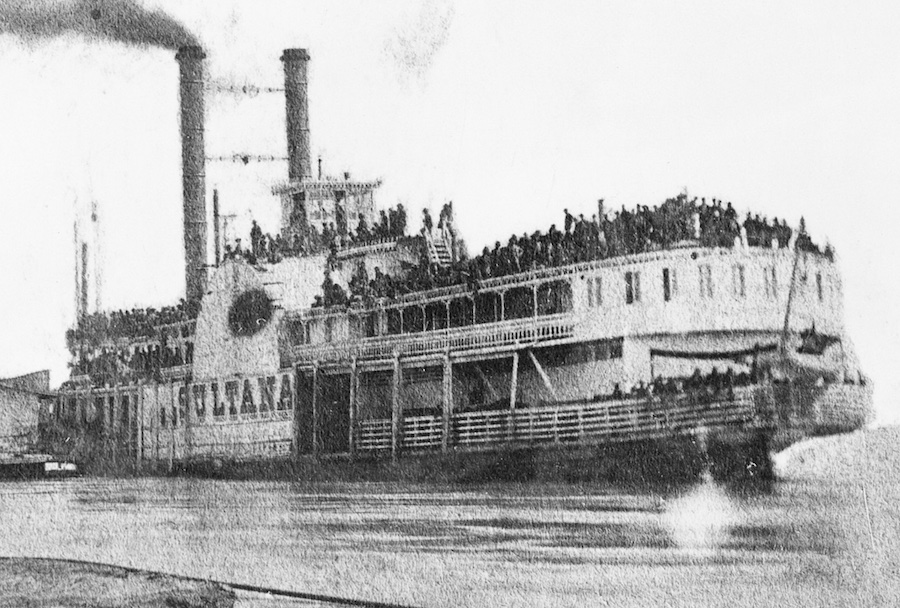
The Sultana the day before it exploded and sank on the Mississippi River (Library of Congress, T.W. Bankes photo)
Click here for a virtual tour of Fort Pillow.
Click here for a virtual tour in search of the Sultana disaster, and here to be taken to the website of the wonderful Sultana Disaster Museum in Marion, Arkansas.
Chapter 16
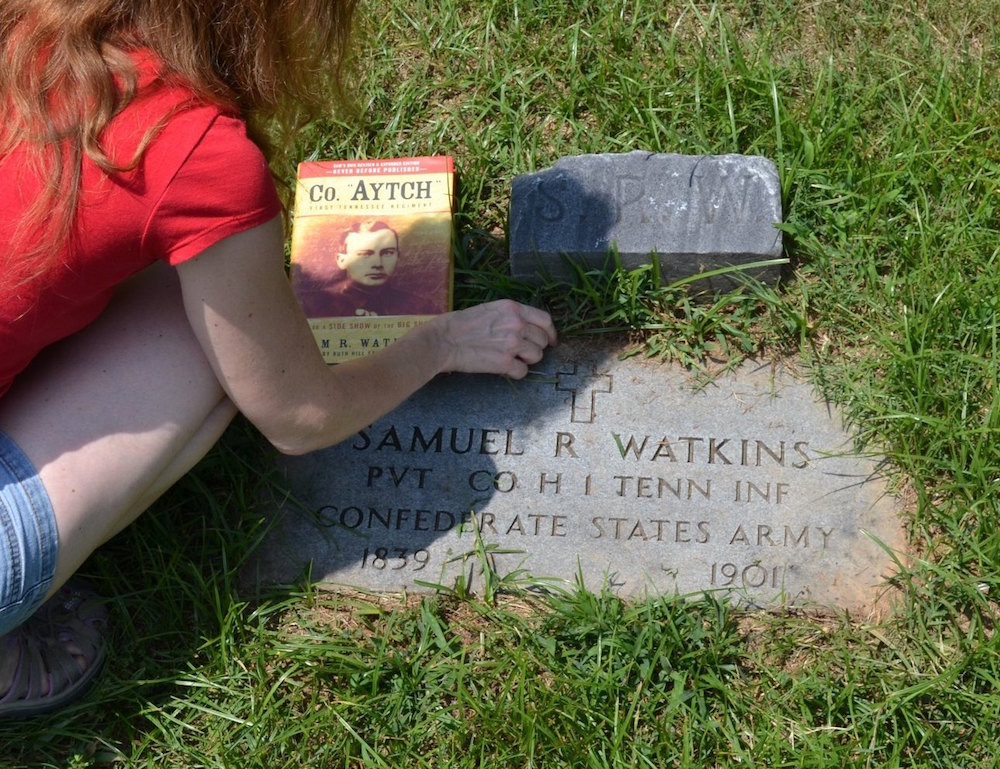
Sam Watkins’ grave
Standards:
8.64: Compare and contrast the Union and Confederacy at the outbreak of the Civil War, including military and political leadership, military strategies, infrastructure, agricultural and industrial strengths and population
8.65: Examine the goals, strategies and outcomes throughout the Civil War, including the Union campaign (e.g., General Ulysses S. Grant), the Confederacy’s Campaign (e.g., General Robert E. Lee), General William T. Sheman’s use of total war, and control of Tennessee.
Click here to see photographs of Zion Cemetery in Maury County, where Sam Watkins is buried.
Click here to read a New York Times story about Sam Watkins that was published in 2013.
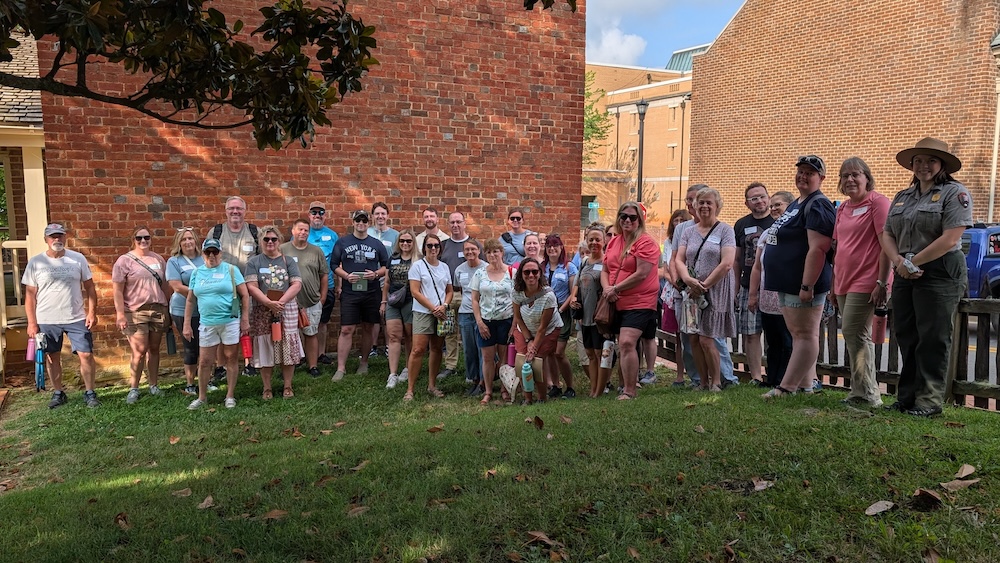
TN History for Kids had a summer inservice at Andrew Johnson National Historic Site on July 11, 2025. Here’s the crowd on that day!
Chapter 17
Standards:
8.71: Identify the significance of the Tennessee Constitution of 1870, including the right of all men to vote and the authorization of a poll tax.
8.72: Examine the conflict between President Andrew Johnson and the Radical Republicans over Reconstruction, and determine the significance of Johnson’s impeachment
8.73: Explain the opportunities for and restrictions placed on freedmen, including the emergence of vigilante actions by the Ku Klux Klan
Click here to take a TN History for Kids virtual tour of the Andrew Johnson National Historic Park in Greeneville.
If you want to read more of Parson Brownlow’s insults, click here to read plenty of them.
Chapter 18
Standard:
8.71: Identify the significance of the Tennessee Constitution of 1870, including the right of all men to vote and the authorization of a poll tax.
Click here for a Tennessee Magazine column about this subject.
Click here to see the original copy of the Tennessee Constitution of 1870 on the TN State Library and Archives’ website.
There are a few virtual tours of the TN History for Kids website that are related to early U.S. history, but not reference otherwise in this online teacher’s guide to Free and Independent State.
Here they are:
Click here for the TN History for Kids virtual tour of The Hermitage.
Click here for the virtual tour “In Search of” James K. Polk’s homes.
Click here for a virtual tour that tells you more about the Dred Scott decision.